
Q&A with Hinge Founder Scott Kosmecki
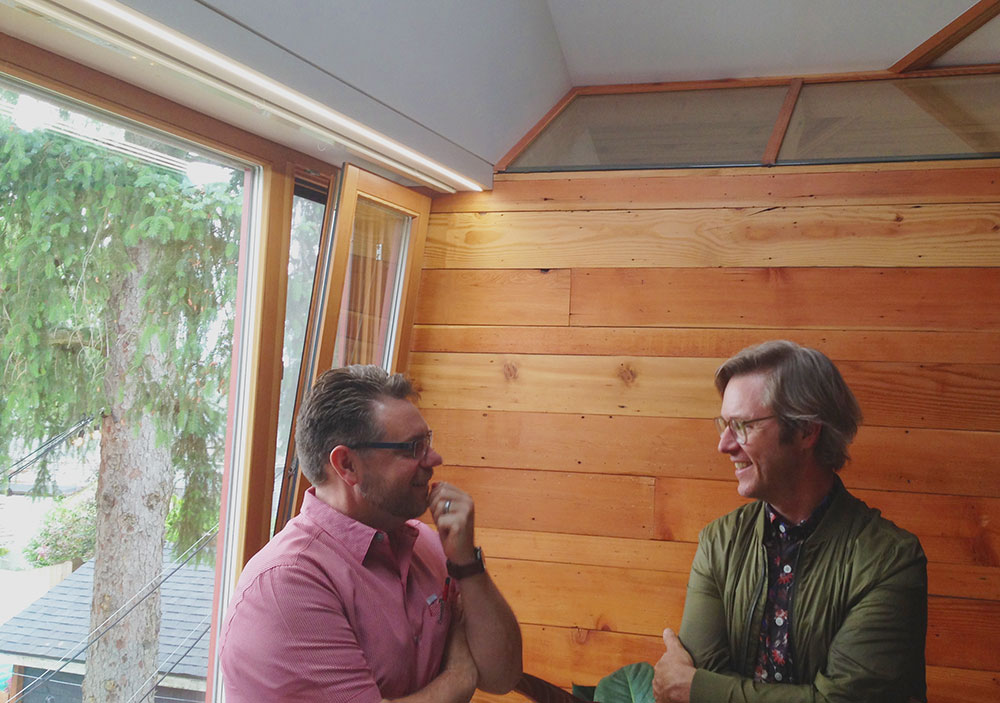
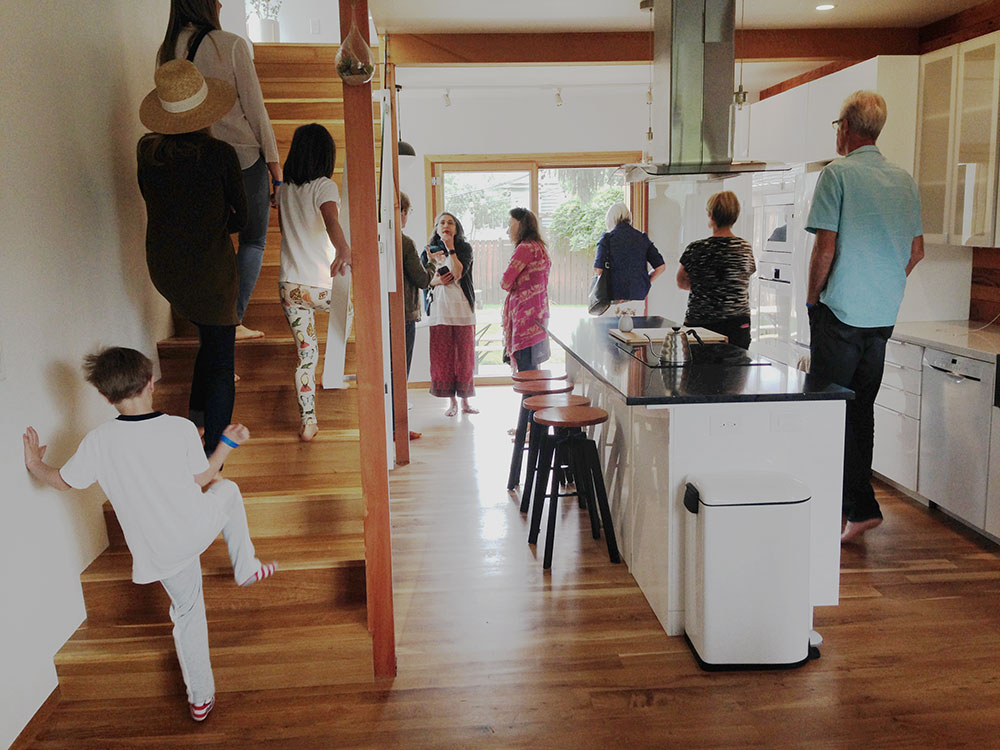
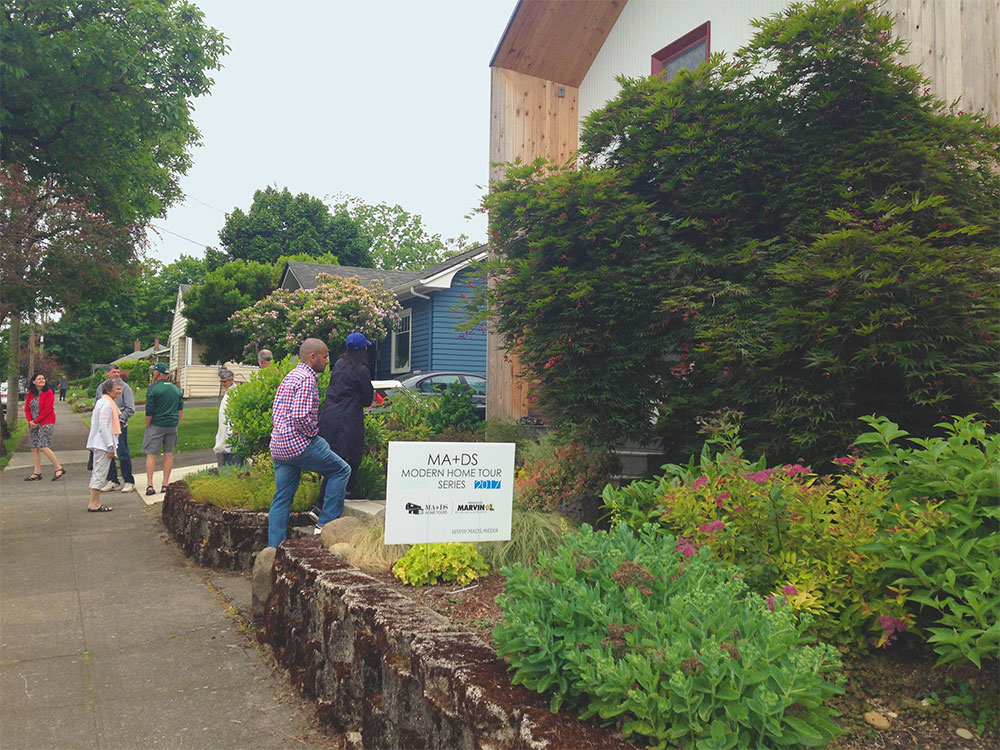
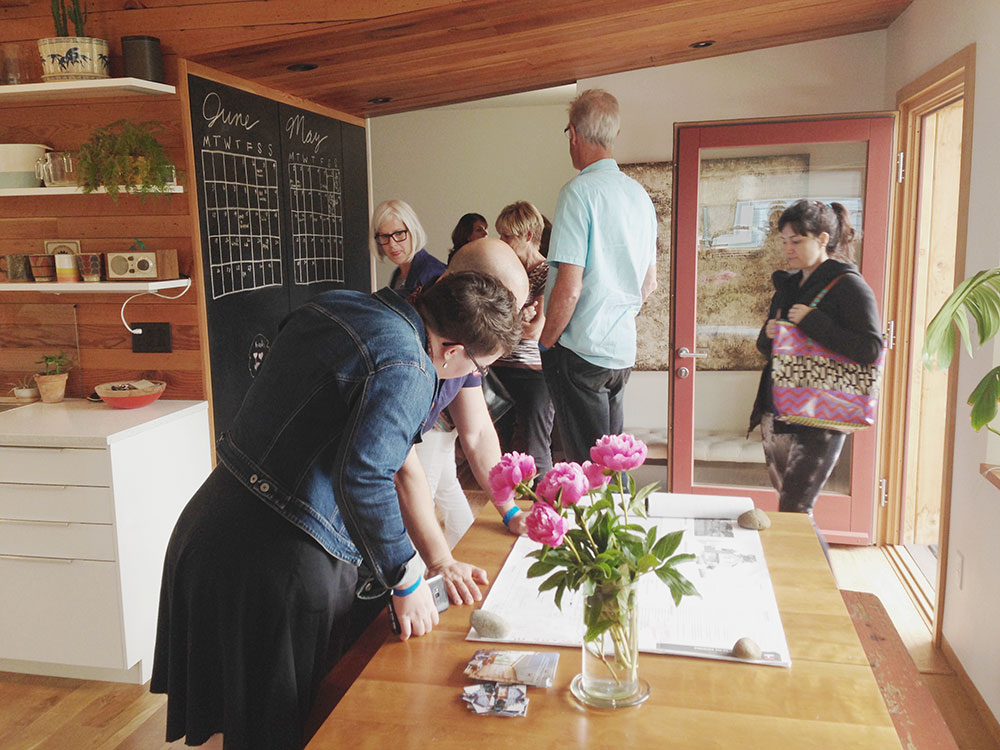
I recently caught up with Hinge Build Group (HBG) Founder, Scott Kosmecki to discuss the 2017 Portland Modern Home Tour featuring his Phoenix Passive House. The annual event, hosted by the Modern Art & Design Society (MADS), gives visitors a one-of-a-kind chance to “meet the architect, talk to the homeowners, and explore the living spaces of Portland’s most innovative modern homes,” according to MADS. Please enjoy my conversation with Scott:
HBG: How did your Phoenix Passive House get selected for the 2017 Modern Home Tour?
Scott: The homeowners were approached by MADS, who host this tour once a year in Portland and run programs like this all over the country. It was a really huge honor to have our project requested. I have to thank the homeowners who to let me come along and spend the day talking to all the visitors (300+!). It was really fun to talk about this project again!
HBG: What was the inspiration behind the home and what do you consider its most interesting features?
Scott: The home was inspired by the Passive House Standard for sure. Because of the somewhat restrictive placement of the windows and doors for this project, I focused a lot more attention on the daylighting than you typically would in a residential project. You can see this attention to detail in the way the home is always filled with such great daylight, even on those Portland cloudy days. Another big feature is its unusually thick walls. This is what drove the overhang in the front and gives this home its distinct look.
HBG: What is the current or expected energy usage of the home? And will any of it be offset by solar?
Scott: We built the home to be “solar ready” and the homeowners are talking about installing an array soon. I certainly designed it to have a large (7.5kWh) array by setting the south-facing roof at the proper angle to get the best solar yield possible. I’m not certain exactly what their energy use is, but I know it is significantly lower than a typical code built home and up to 90 percent more efficient than the 1942 home it replaced. Though this home will not use much energy to heat and cool itself because of all the Passive House techniques we built into it, other energy usage really comes down to occupant behavior. Turning off lights and equipment when not in use adds up to substantial savings over time—you don’t have to own a Passive House to reap those kinds of rewards. The homeowners also talked about other rewards of living in a home that is so well built like the level of quietness due to the extra insulation and super robust windows and doors. This along with the resiliency of the home and the piece of mind of knowing that they could ‘float’ without heat for several days if they needed to are among the priceless benefits of this type of building. These health, comfort and energy-saving benefits are certainly due to the high Passive House Standard we designed and built to.
HBG: What comments or observations did you hear from guests during the home tour?
Scott: The biggest thing that folks take away from this home is the amount of daylight you get without having to have floor to ceiling windows. So many homes have way too much glazing and this not only makes the home less comfortable by literally creating cold drafts in the home, but it also lends to a feeling of insecurity. Maybe less to worry about in rural locations, but if you look around city neighborhoods and count how many window coverings are never, ever opened, you will see what we mean.
We think that when you are designing homes in the urban and suburban environment you need to balance a sense of openness with security. We love windows of course, but we like to think of them as openings onto a stage. We can then direct their views to something engaging and oriented to the sun, appropriately for the space. This was noticed by several visitors last weekend. Besides the windows and doors, the use of reclaimed material from the original home was one of the most commented on. By not simply pulverizing the previous home—by carefully taking it apart, reusing or recycling the material—we were able to reclaim much of the original wood and use it as the main color accent. I think this really adds to the unique sense of place people feel in this home.
Phoenix Passive House Completed!
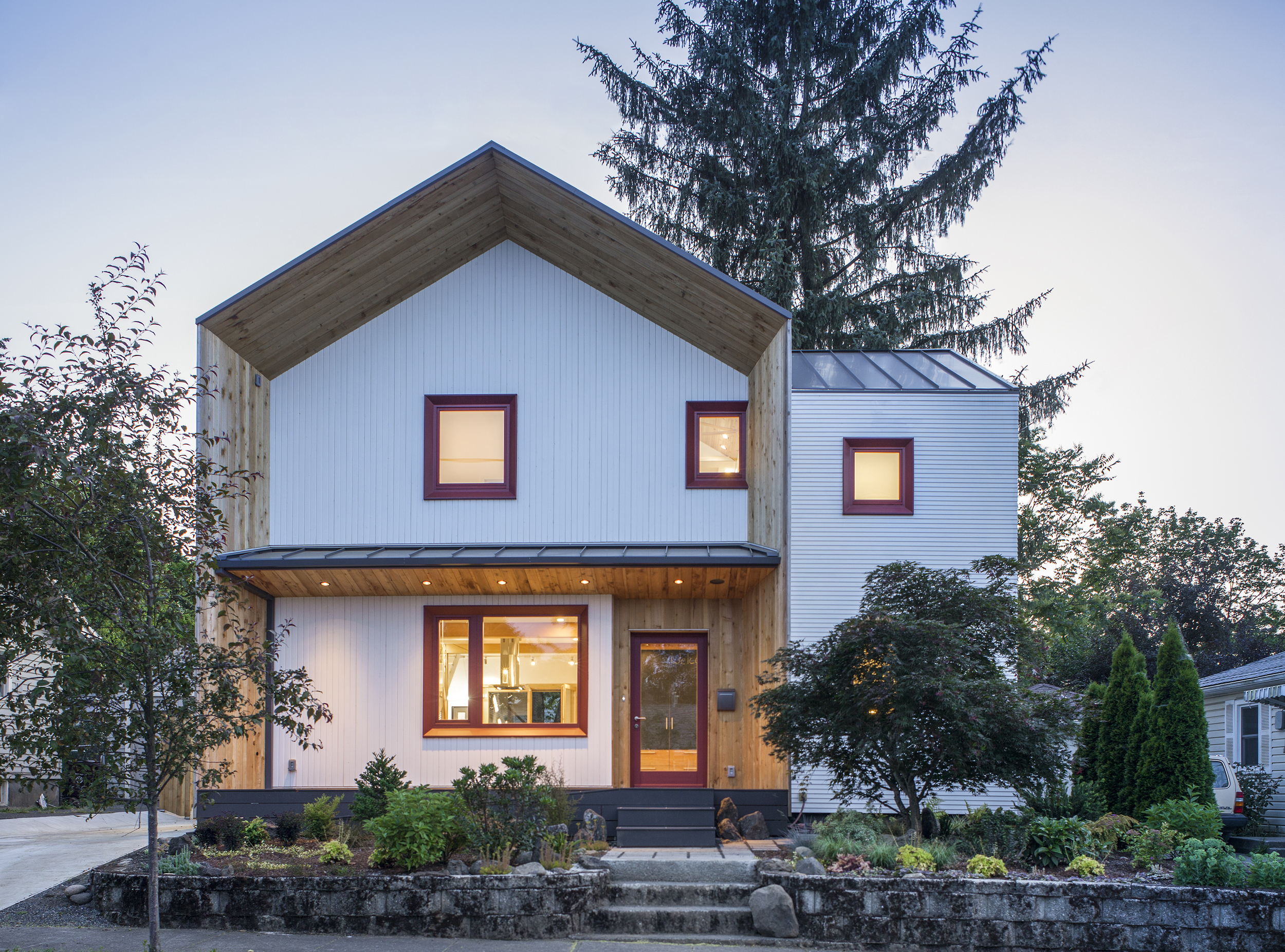
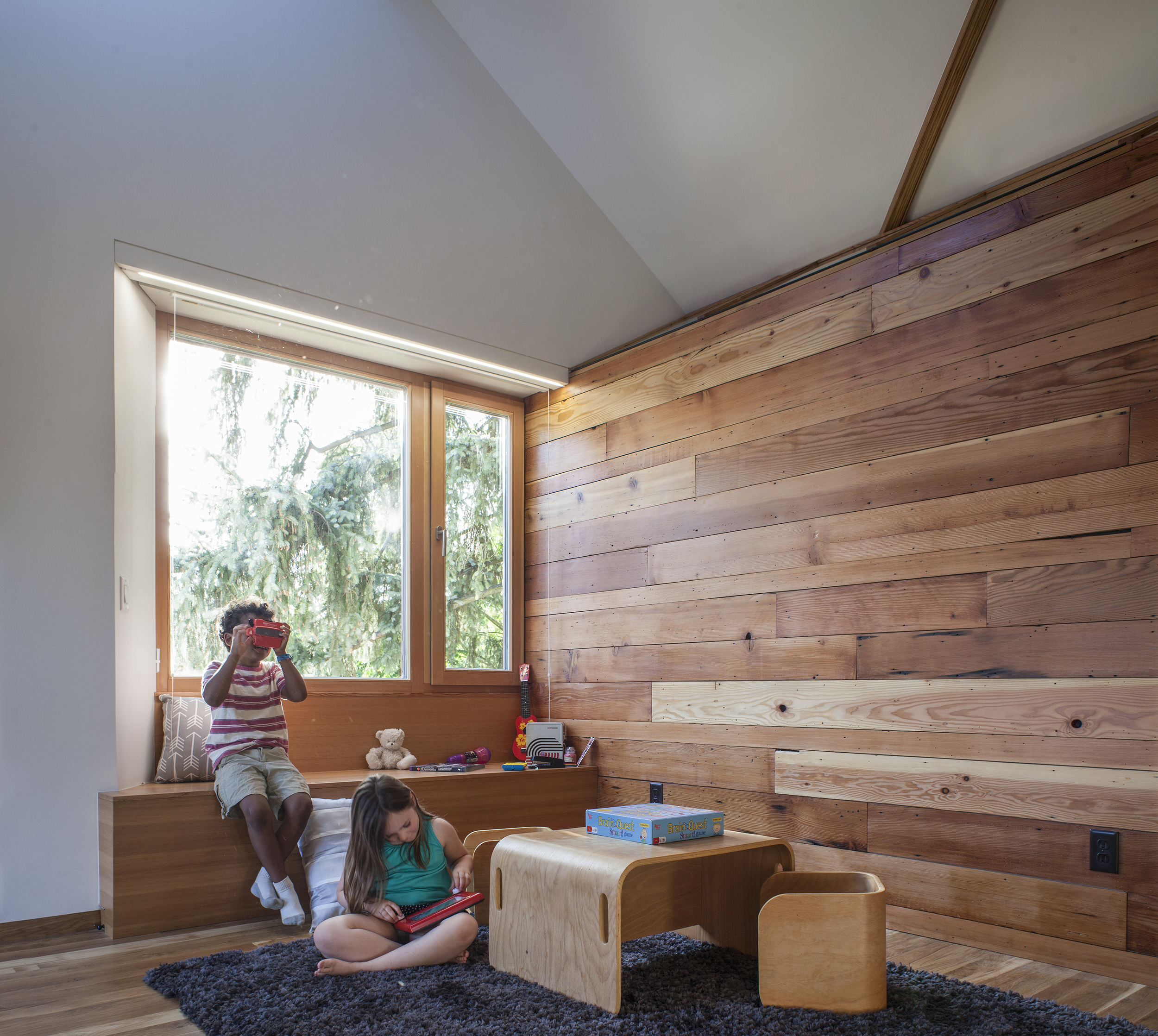
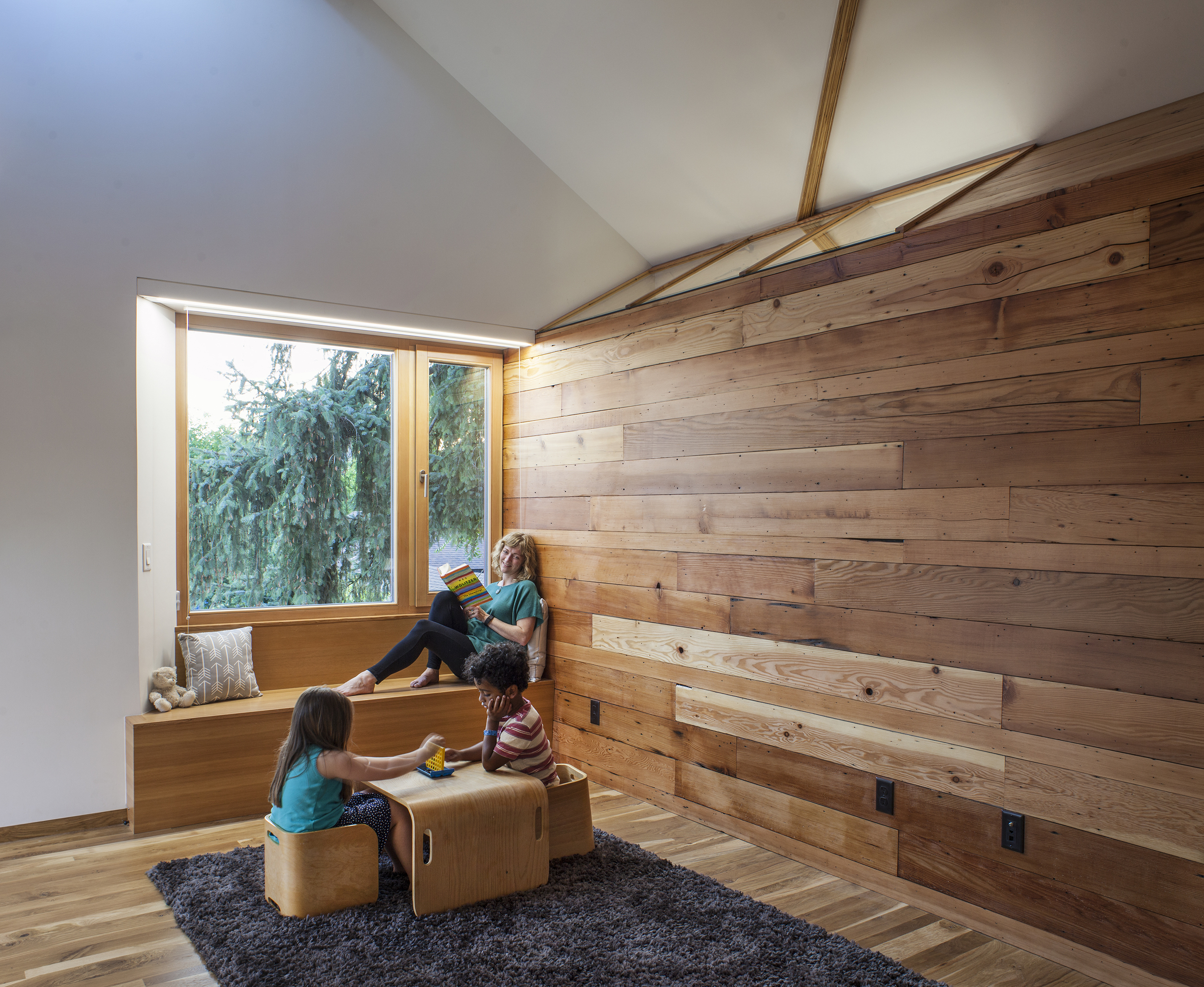
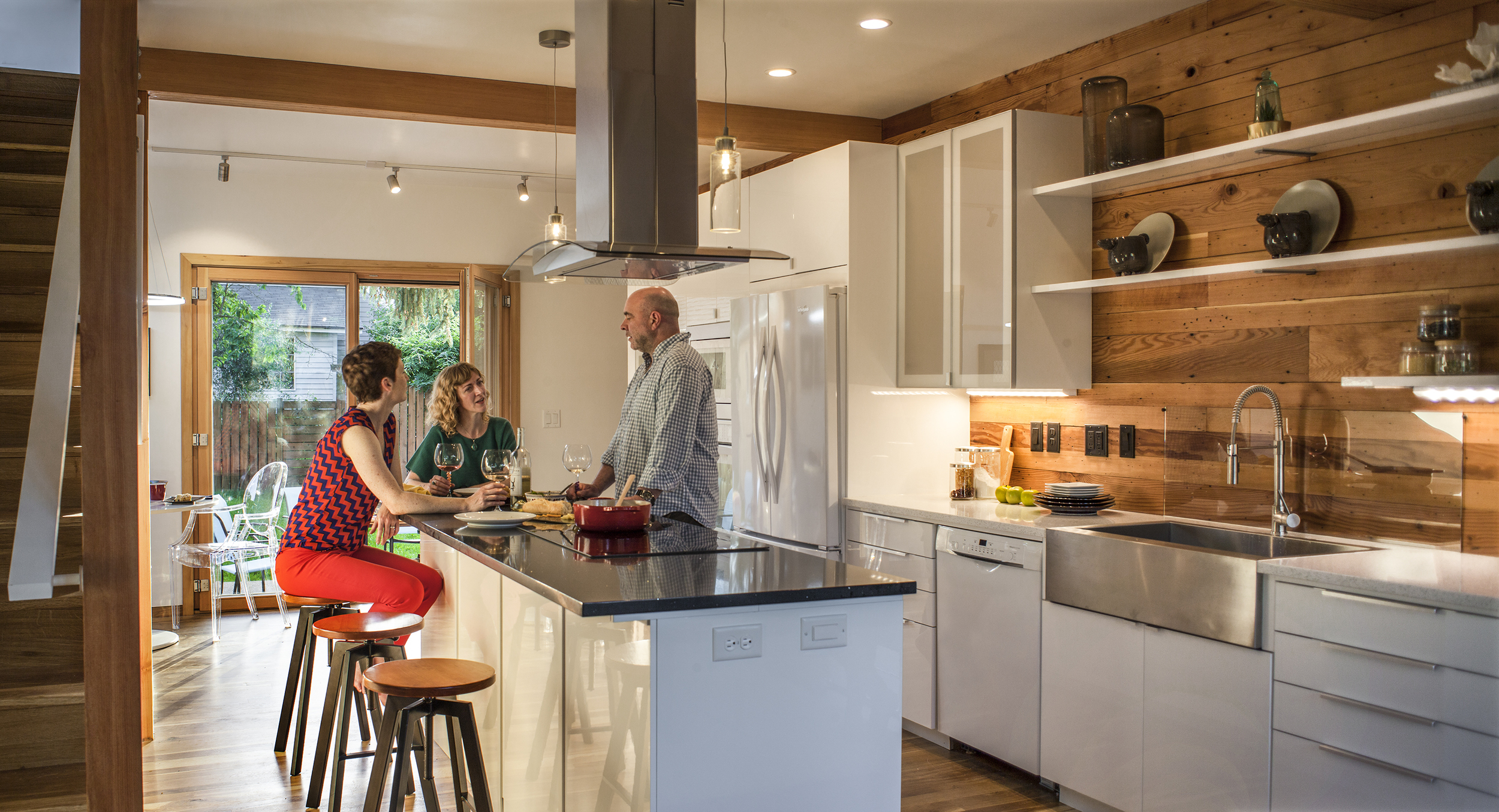
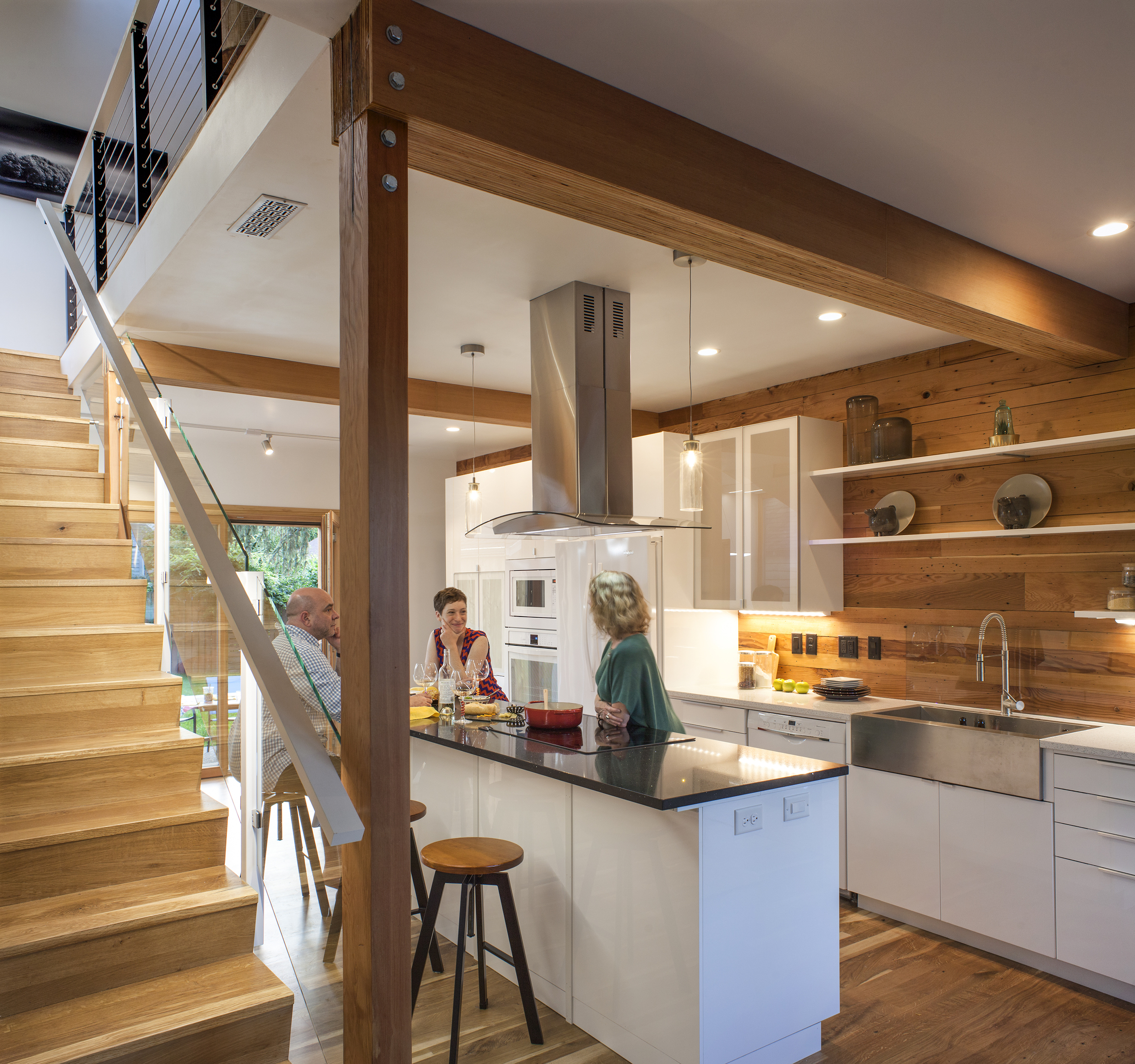
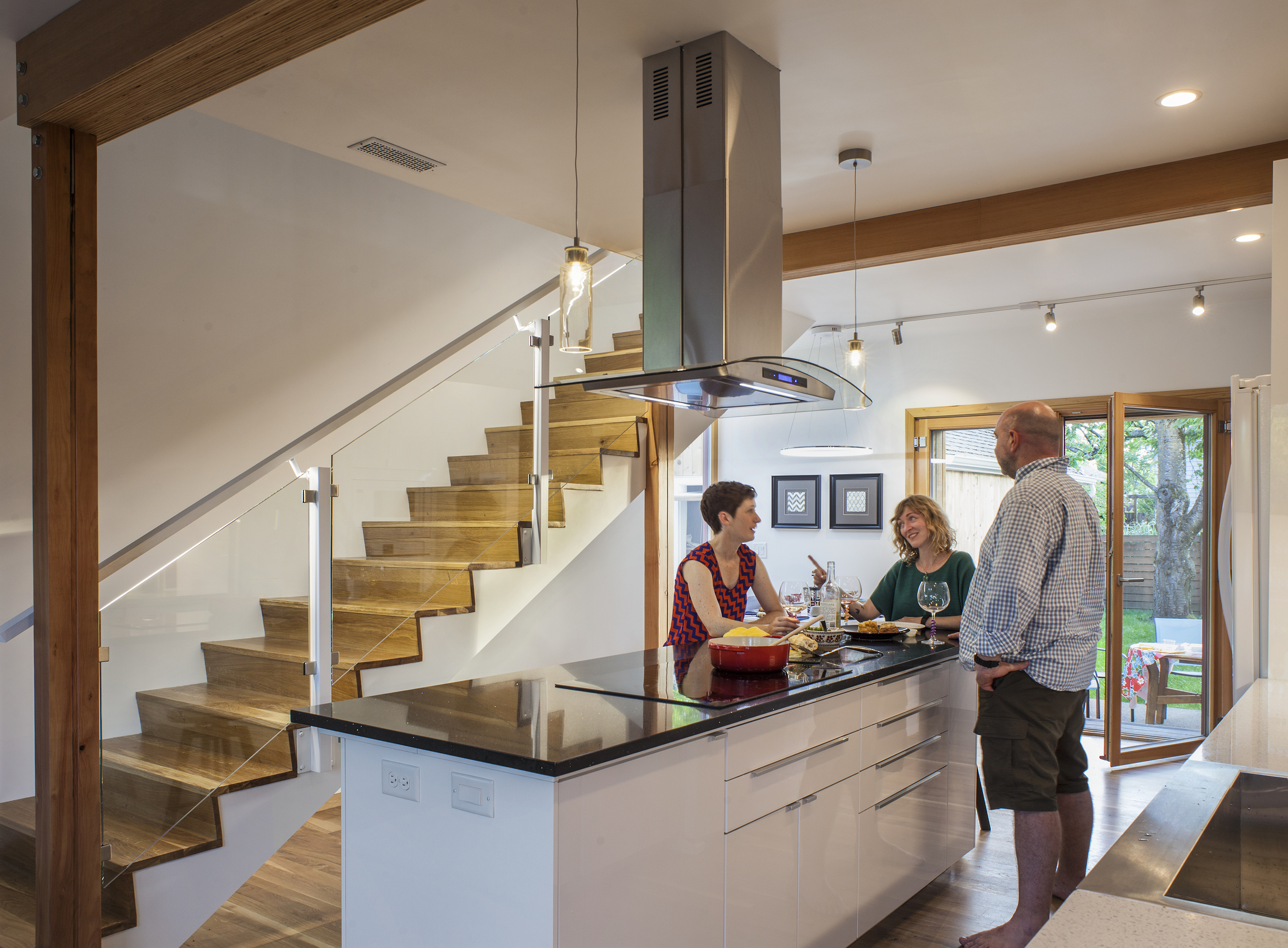
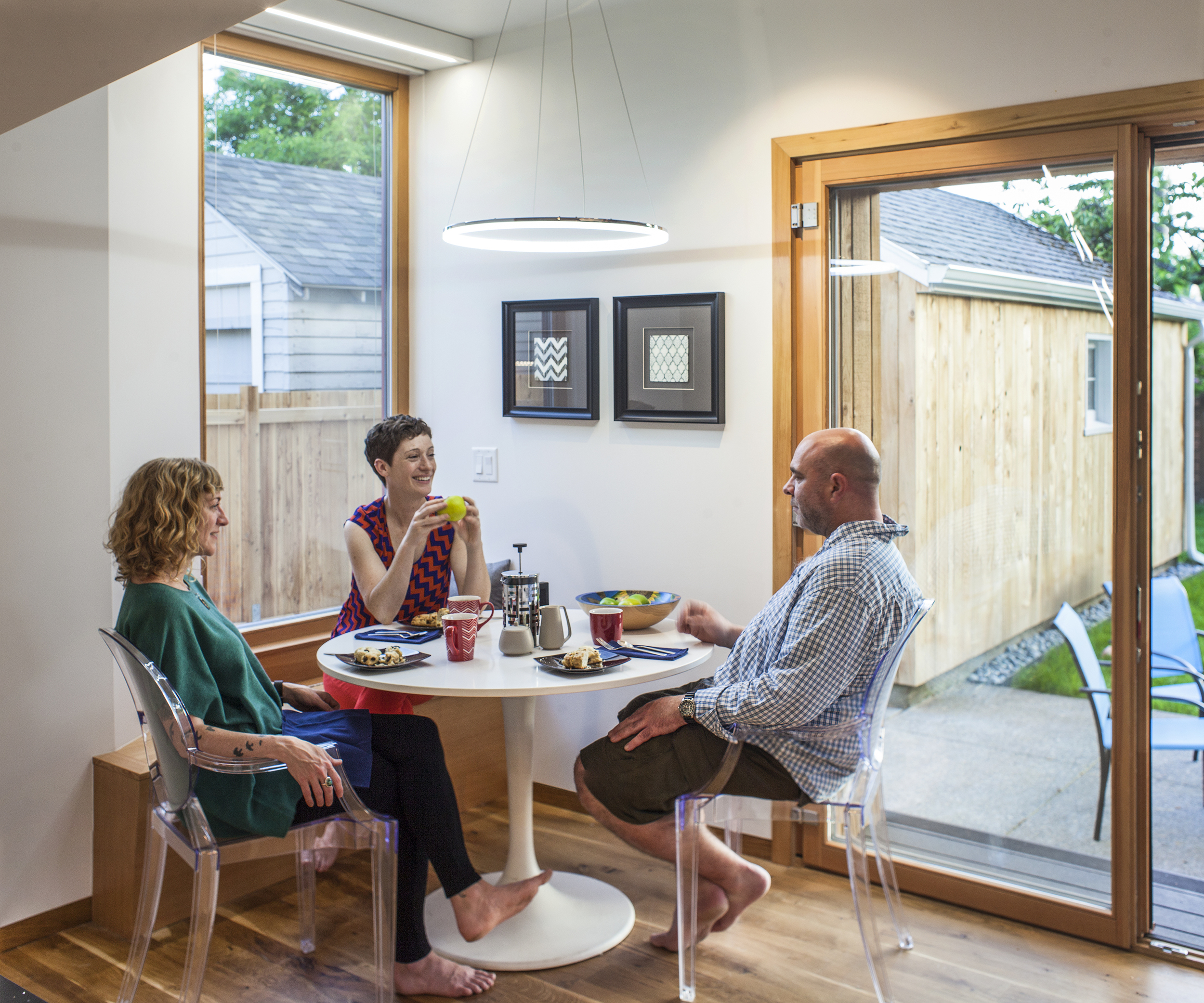
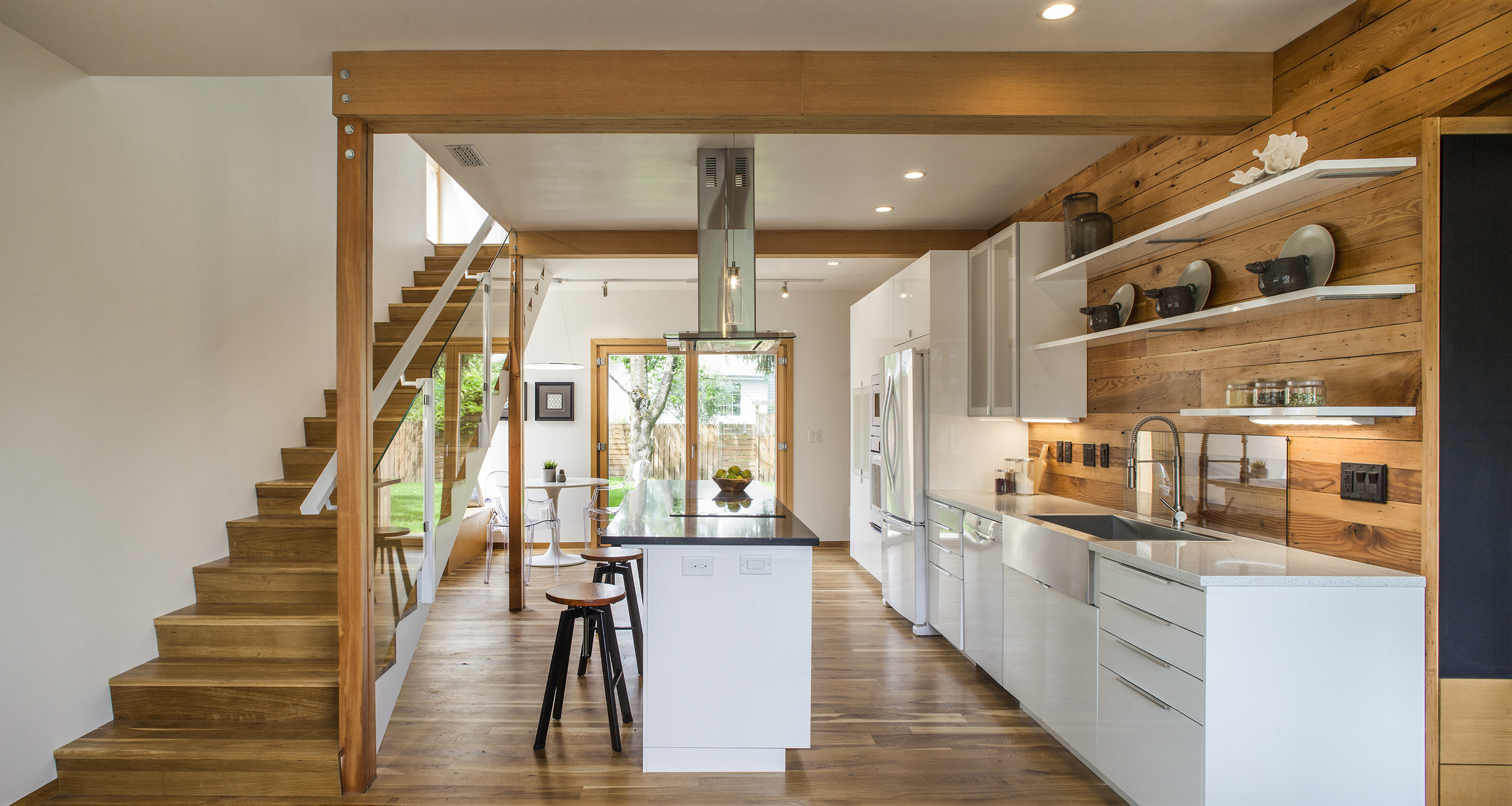
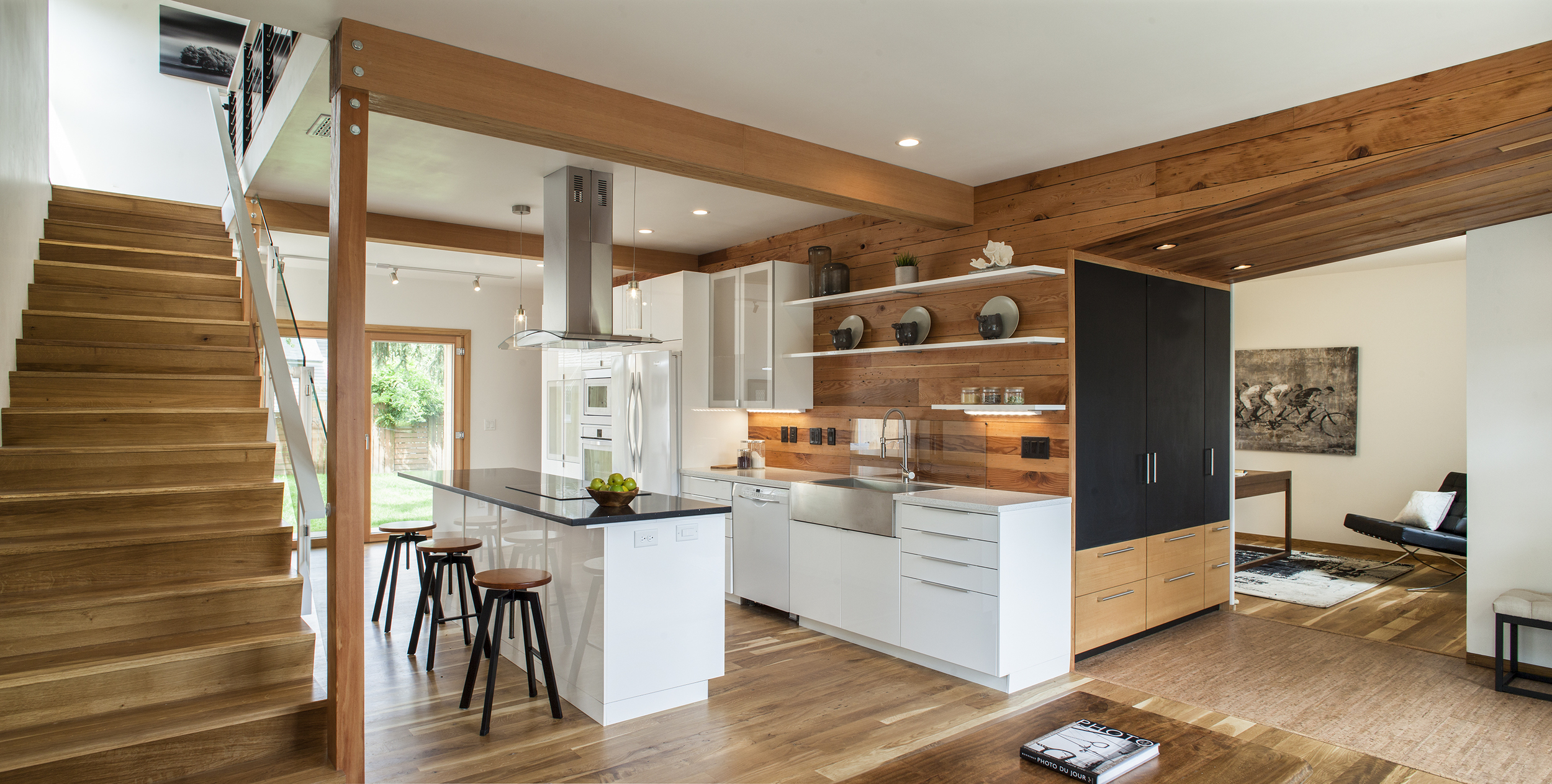
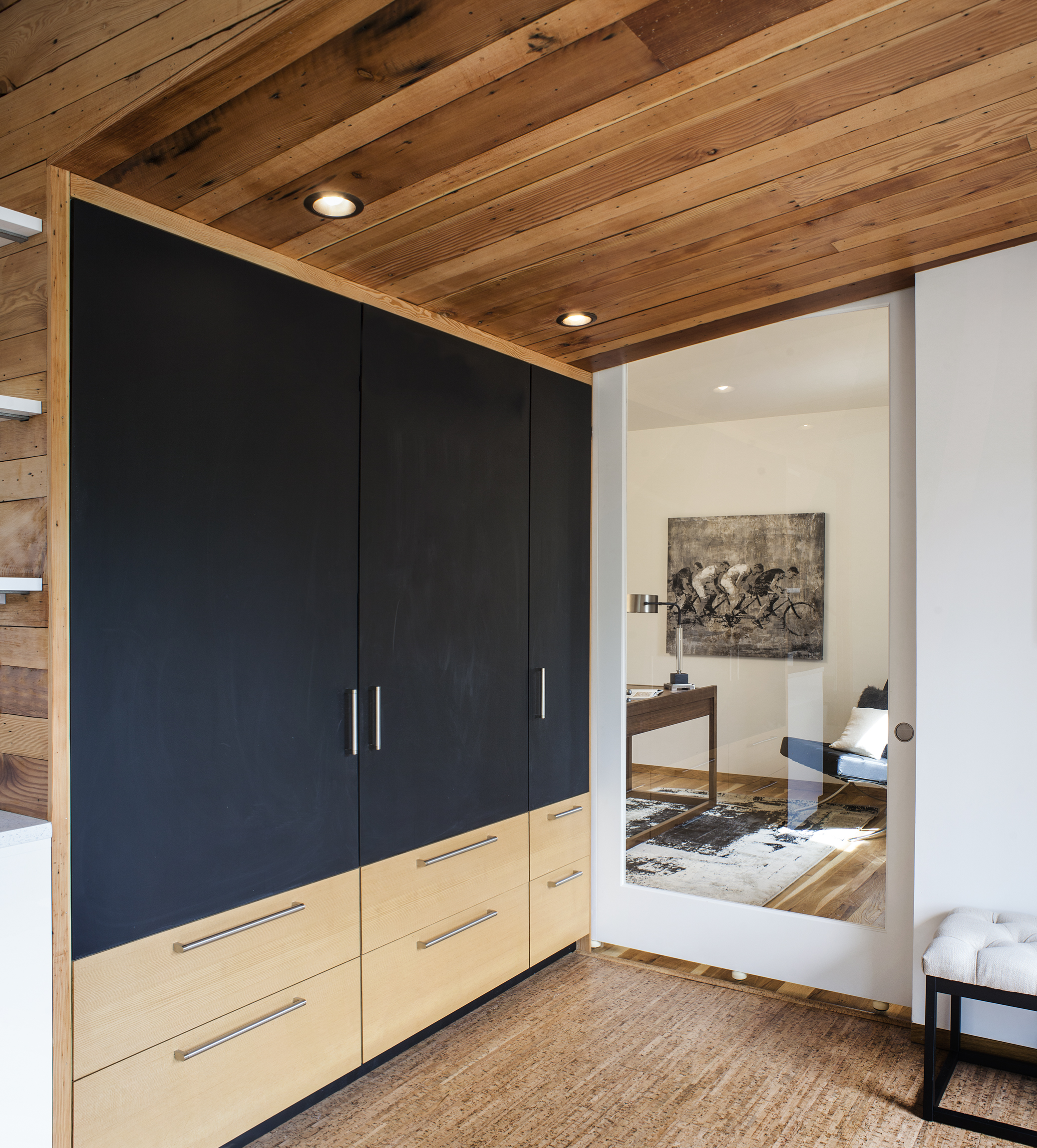
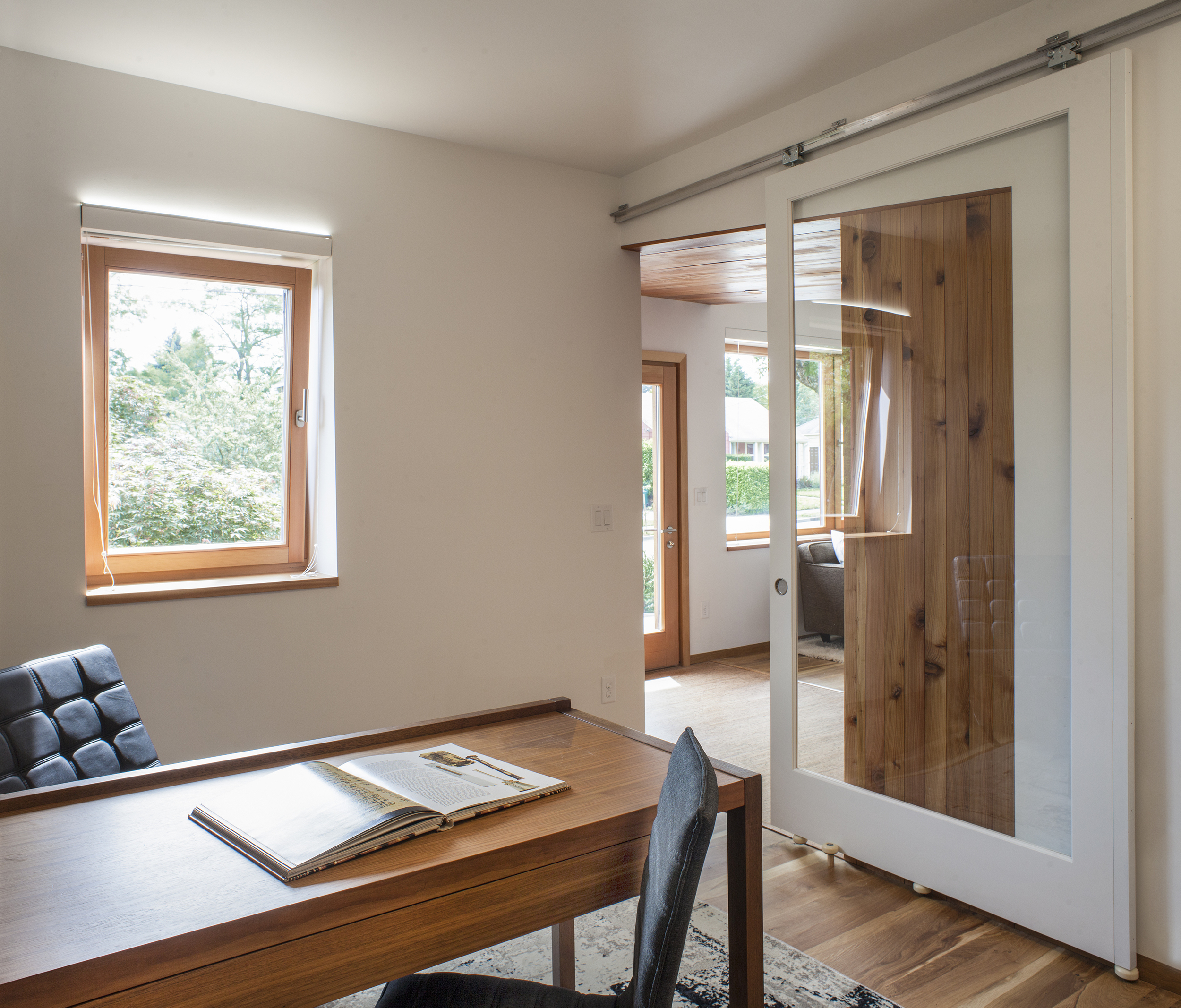
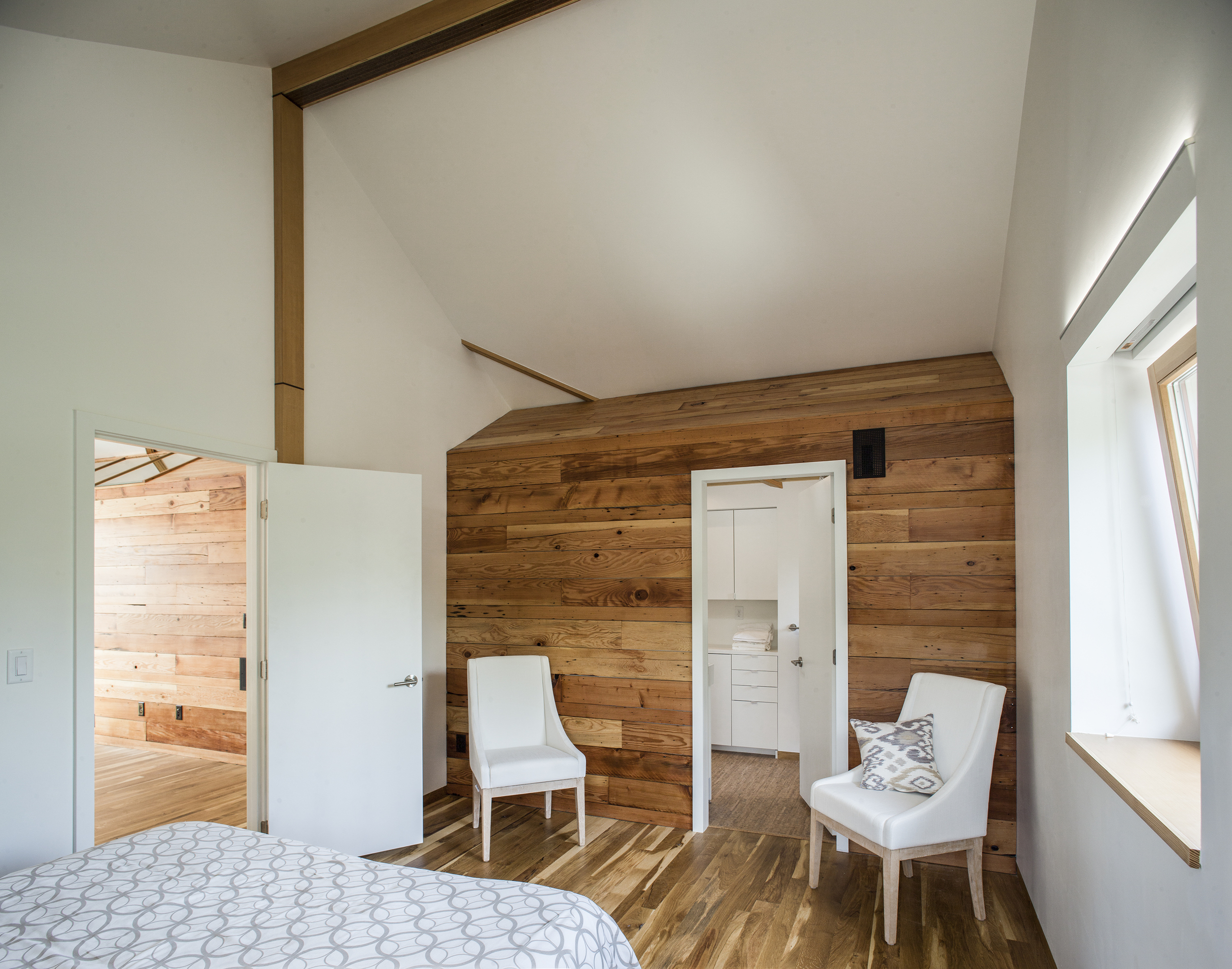

Images: Eckert & Eckert Photography
The Phoenix Passive House project has made it to market!
A big thanks to all those who worked on the project and helped to get us to this day! Especially the amazing Passive House community here in the Pacific Northwest. We really appreciate the open atmosphere of from some of the best builders, engineers and architects in the country that always made themselves open to looking at detailed drawings and answering questions along the way. Without the openness that this community shows to High performance building, I don't think we could have gotten such a grand project completed!
We will showcase some details of the project on other blog posts, but wanted to get Pete Eckert's amazing photos online right away! Thanks Pete!
We have been working hard to get as much press as we could for this very special project. Look for this Phoenix to be involved in Dwell, Realtor.com's newsletter, PHNW, and other great publications. If anyone is interested in knowing more about High-performance Building or Passive House in general, please contact us. We love to spread the word!
Thanks again for your interest!
Materials Matter
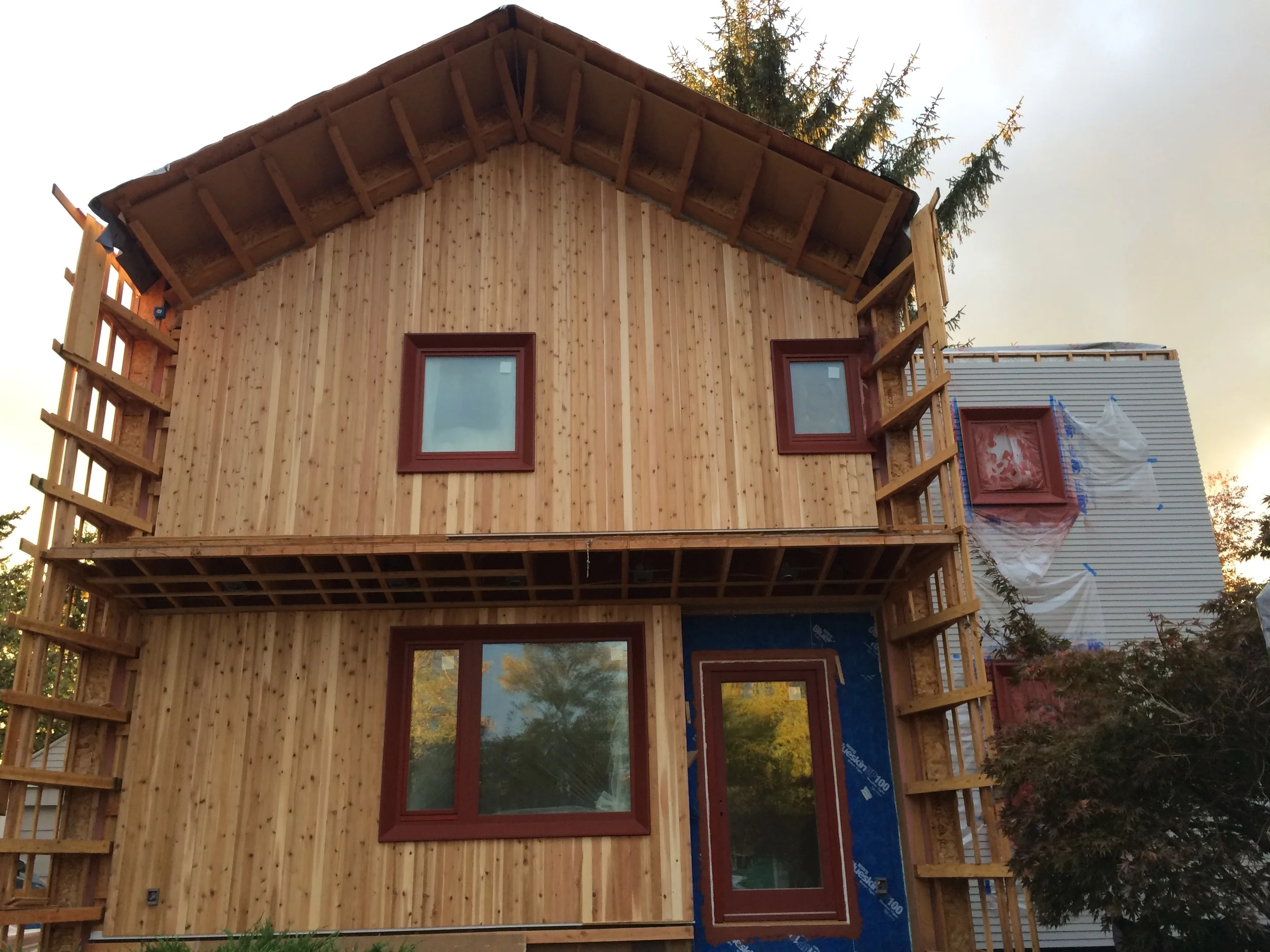

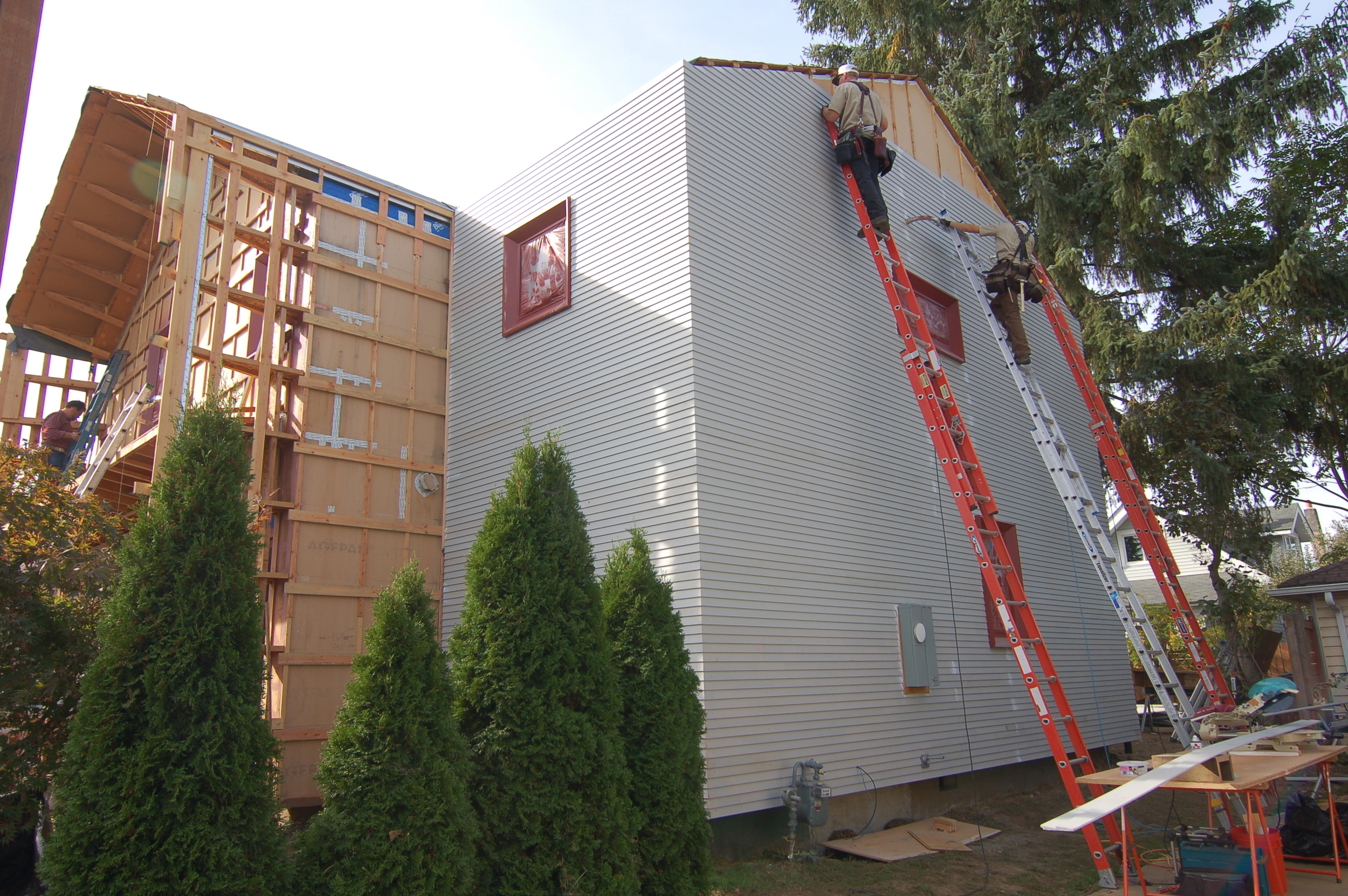
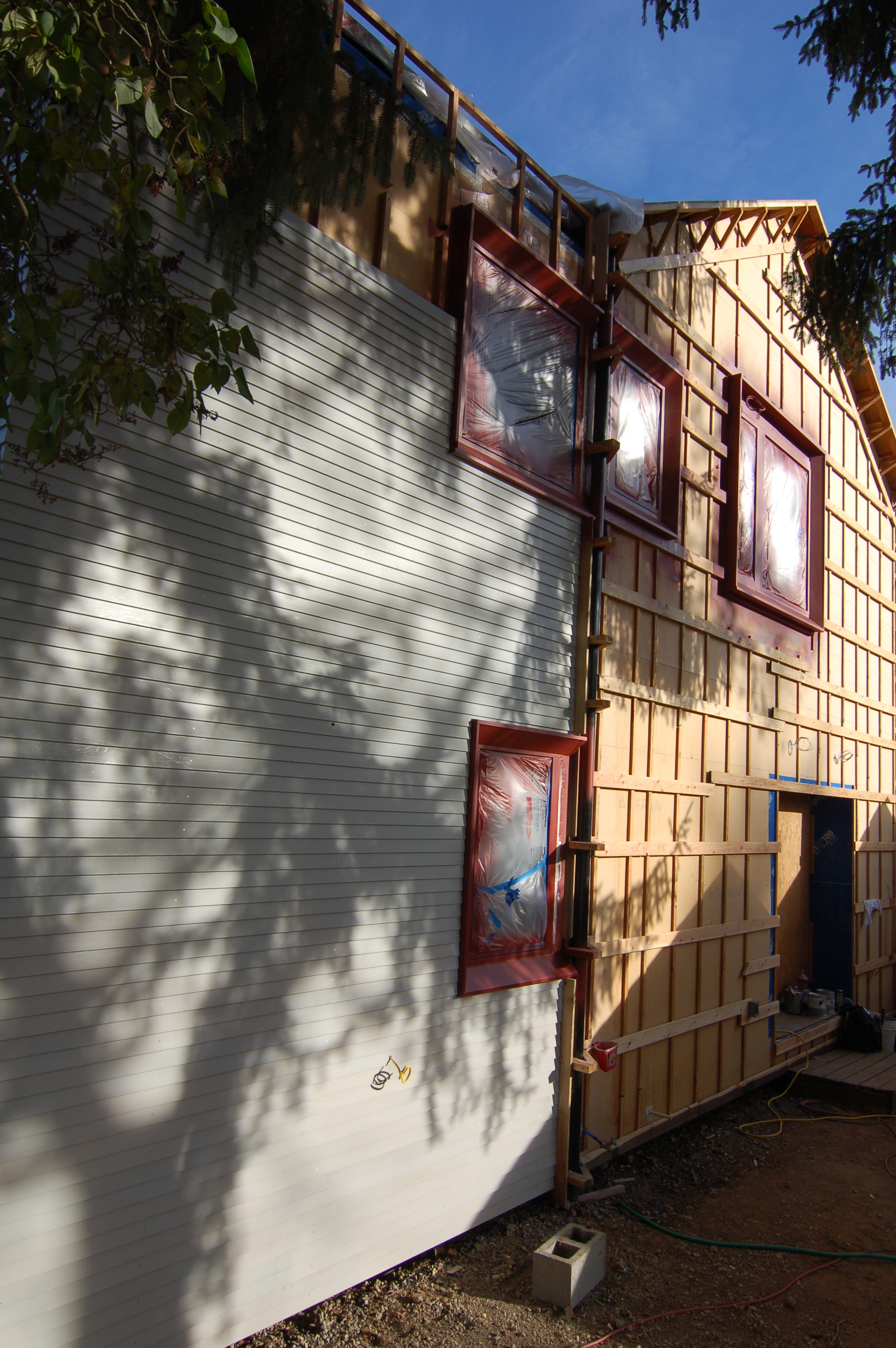
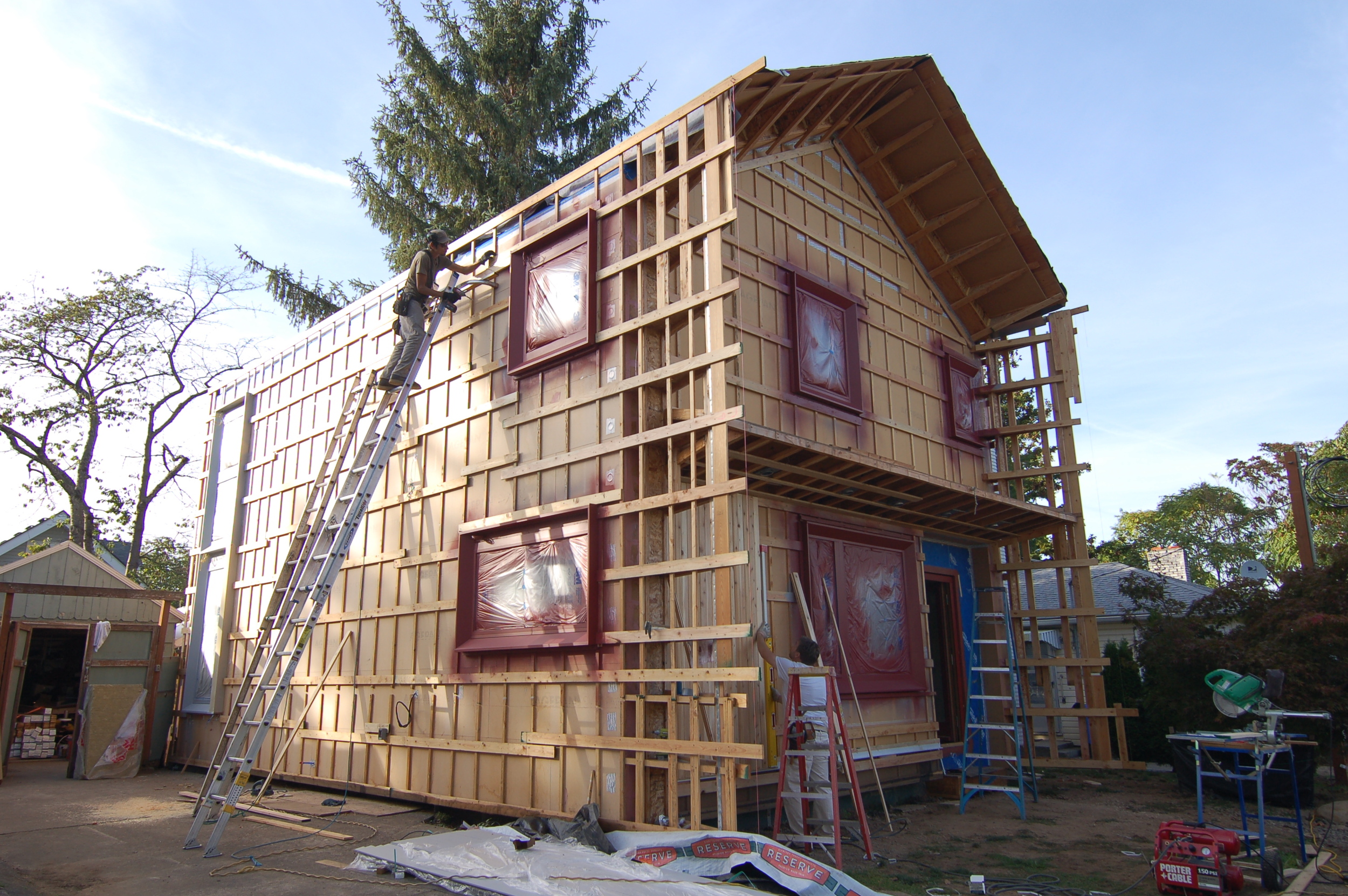
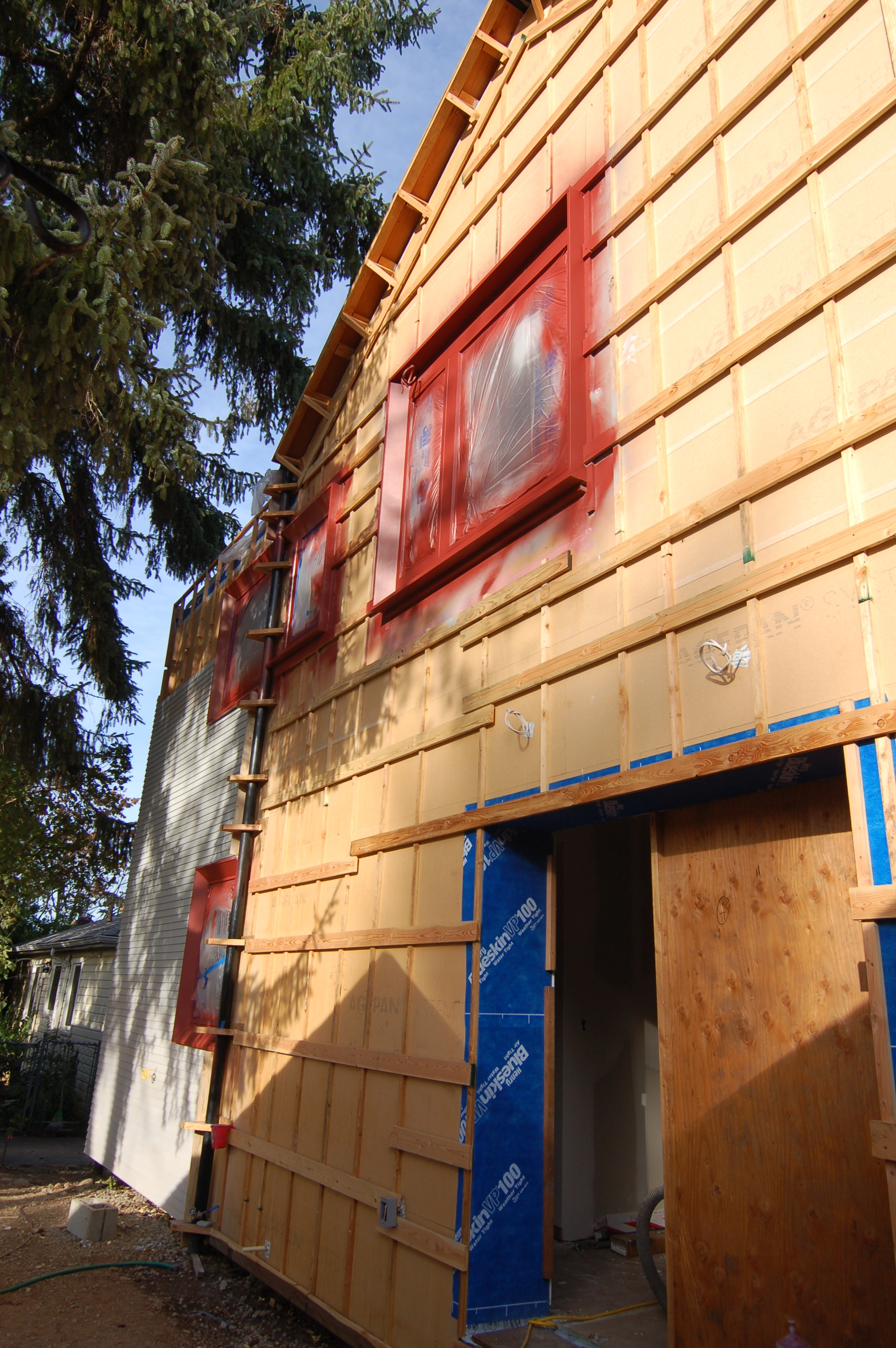
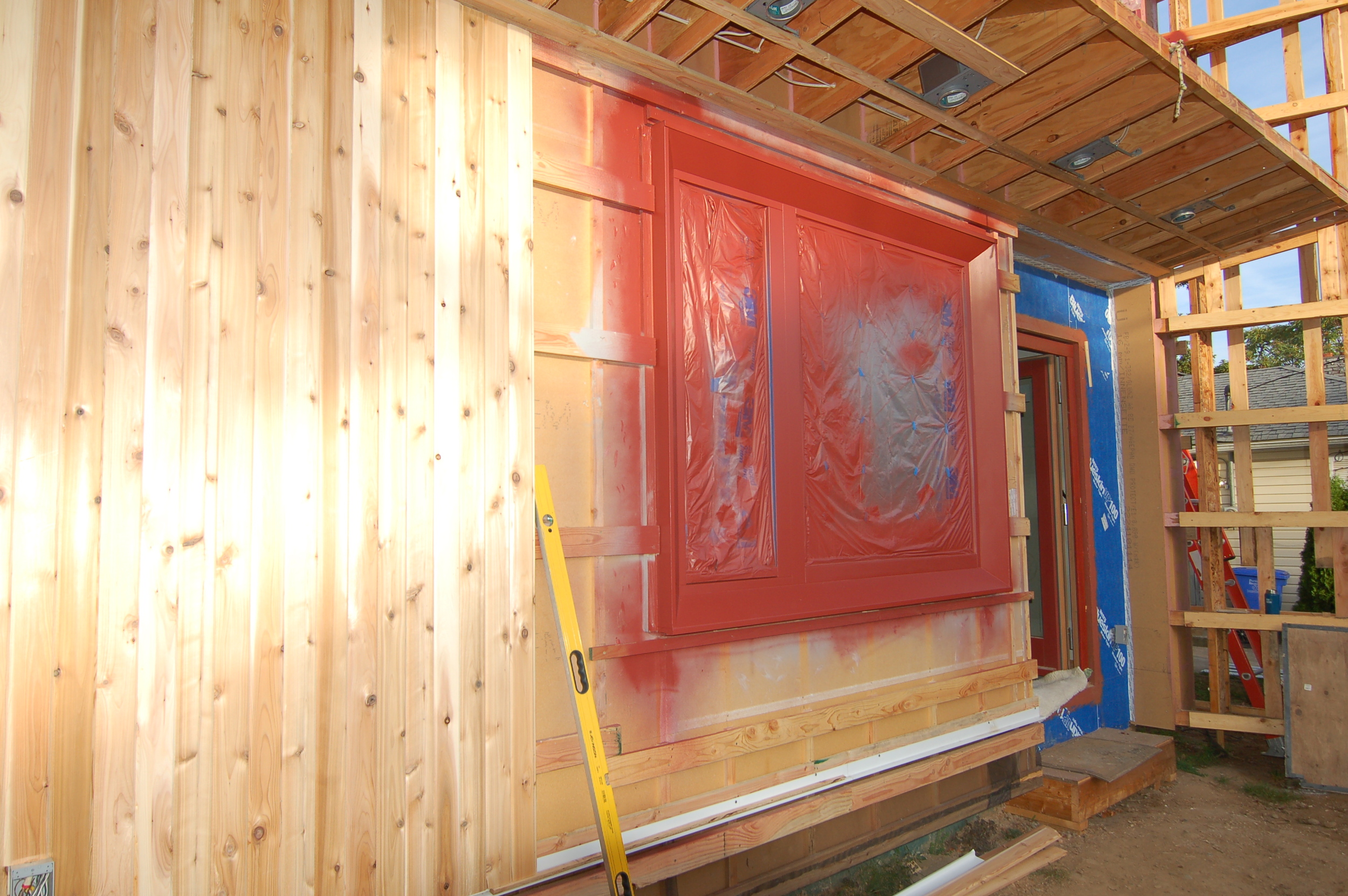
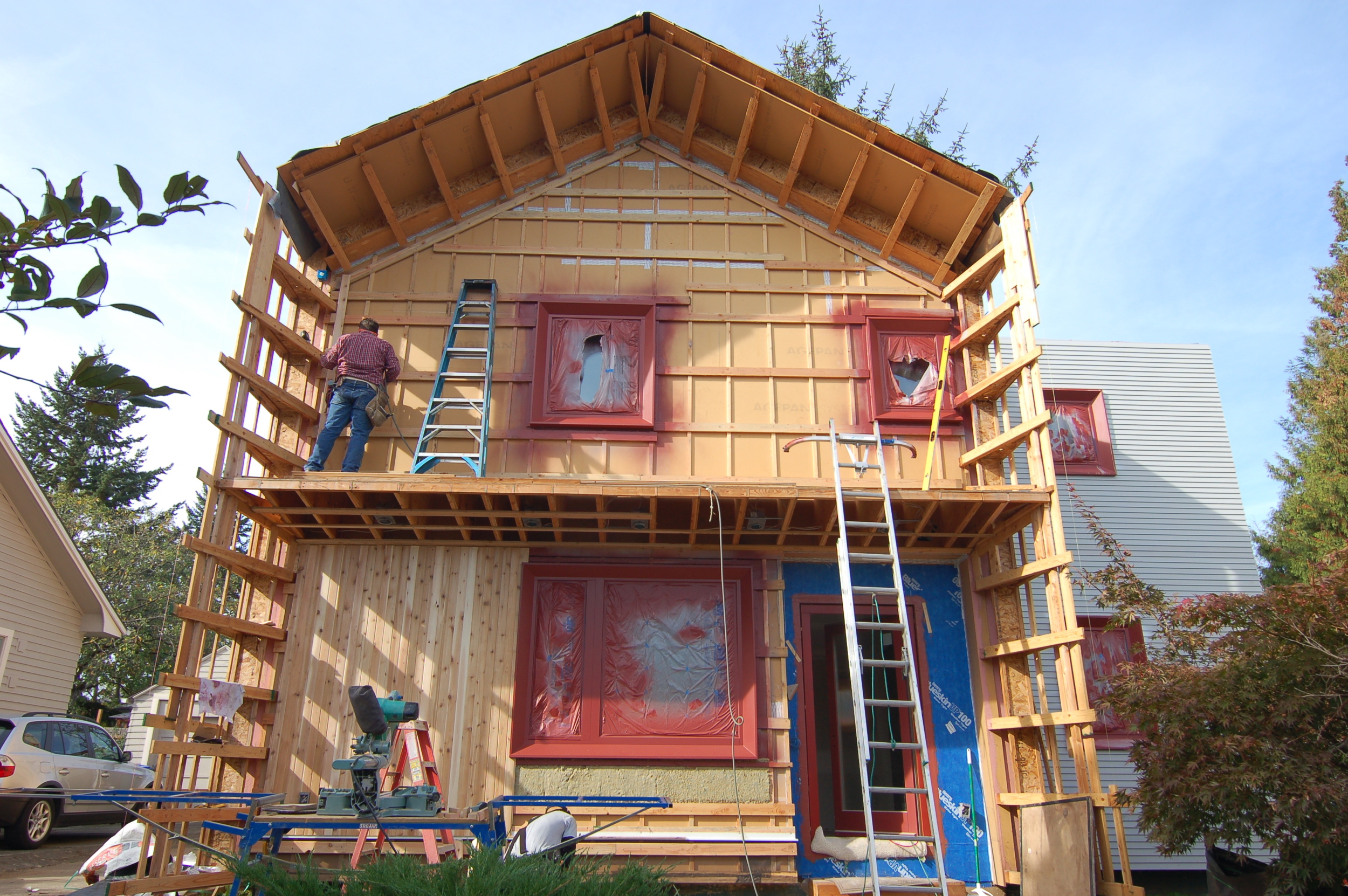
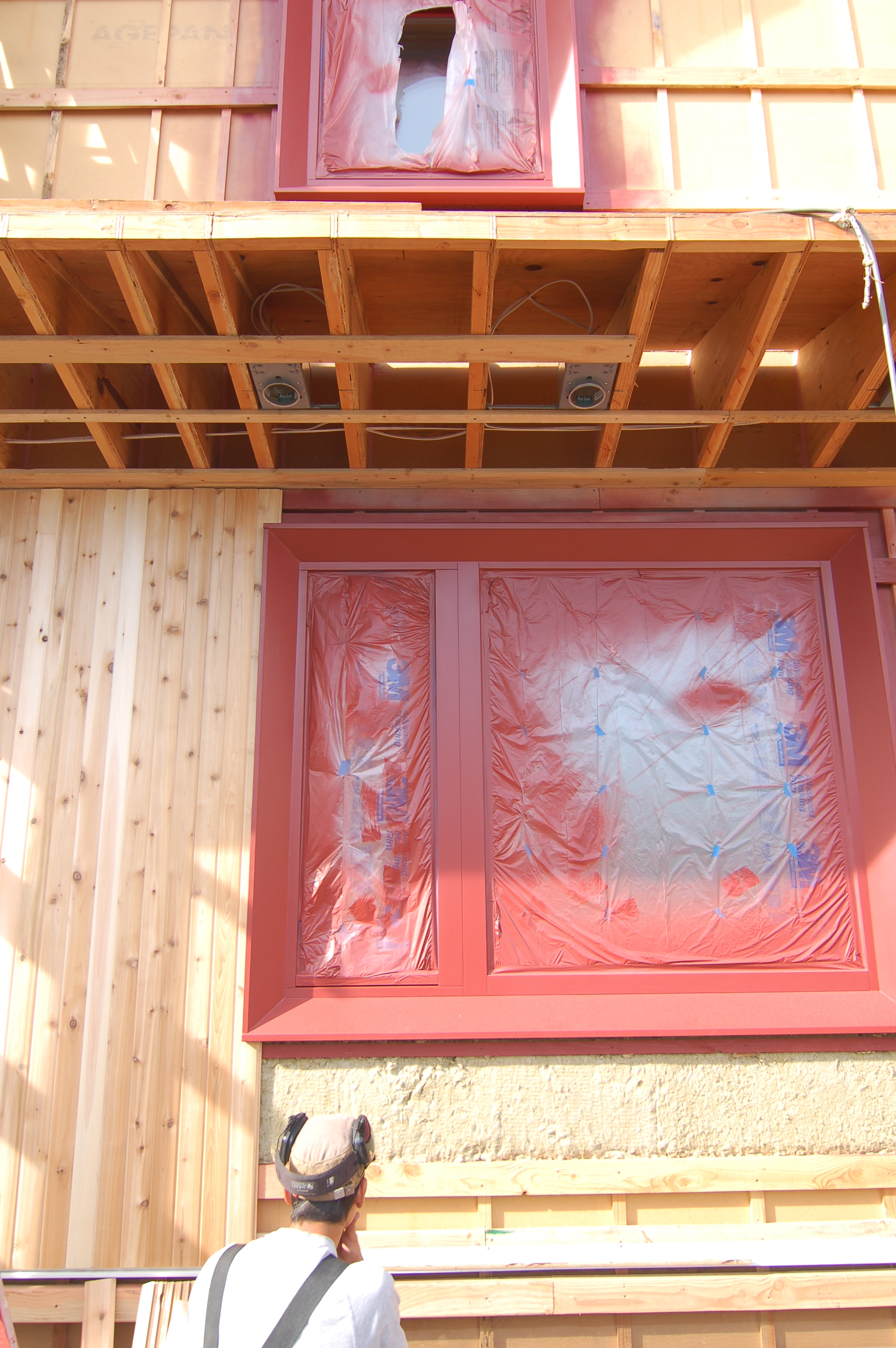
I have to say, sometimes I feel like I am living a Portlandia episode when I talk about the materials in our projects. The Phoenix Passive House is no exception!
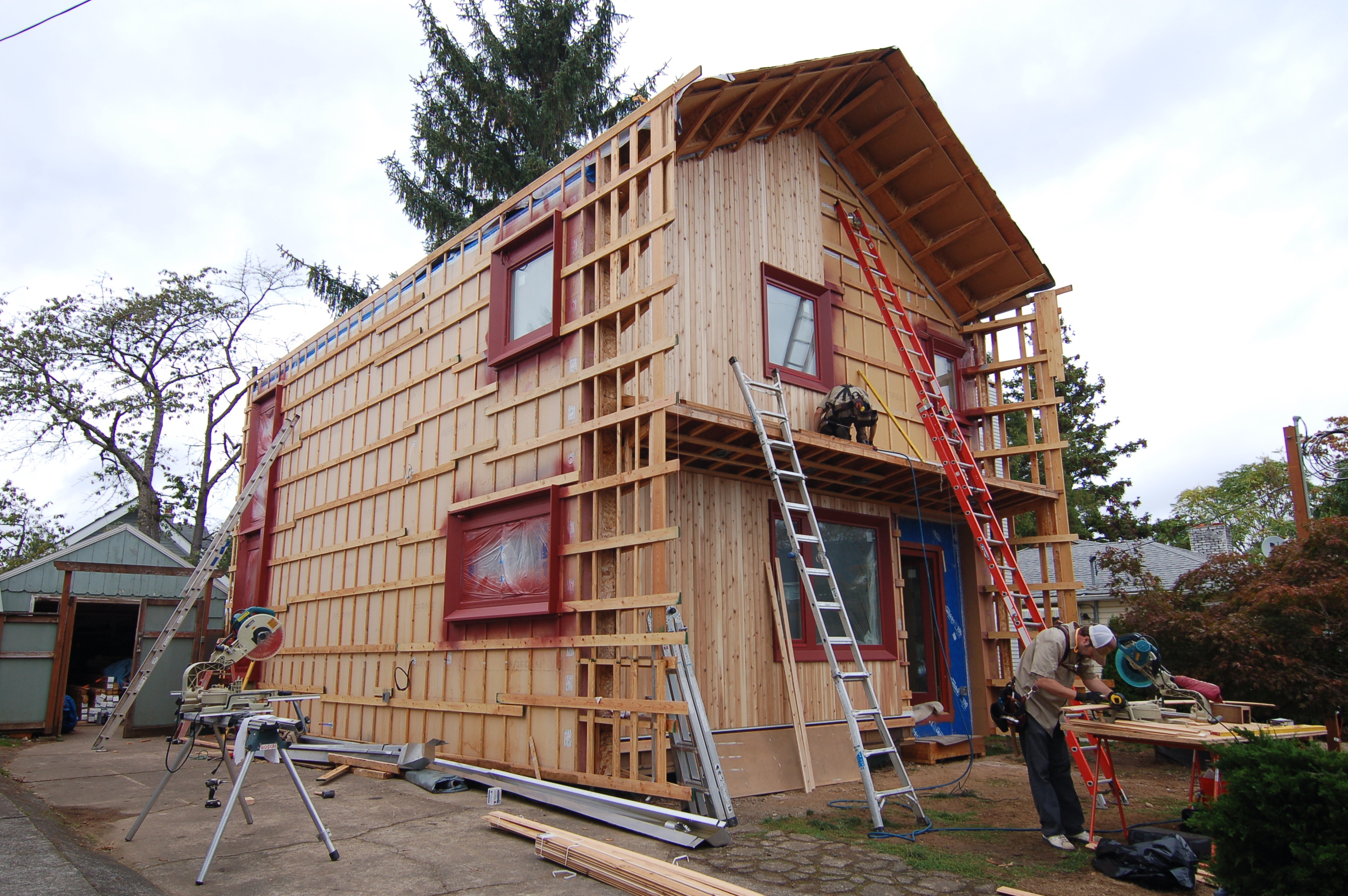
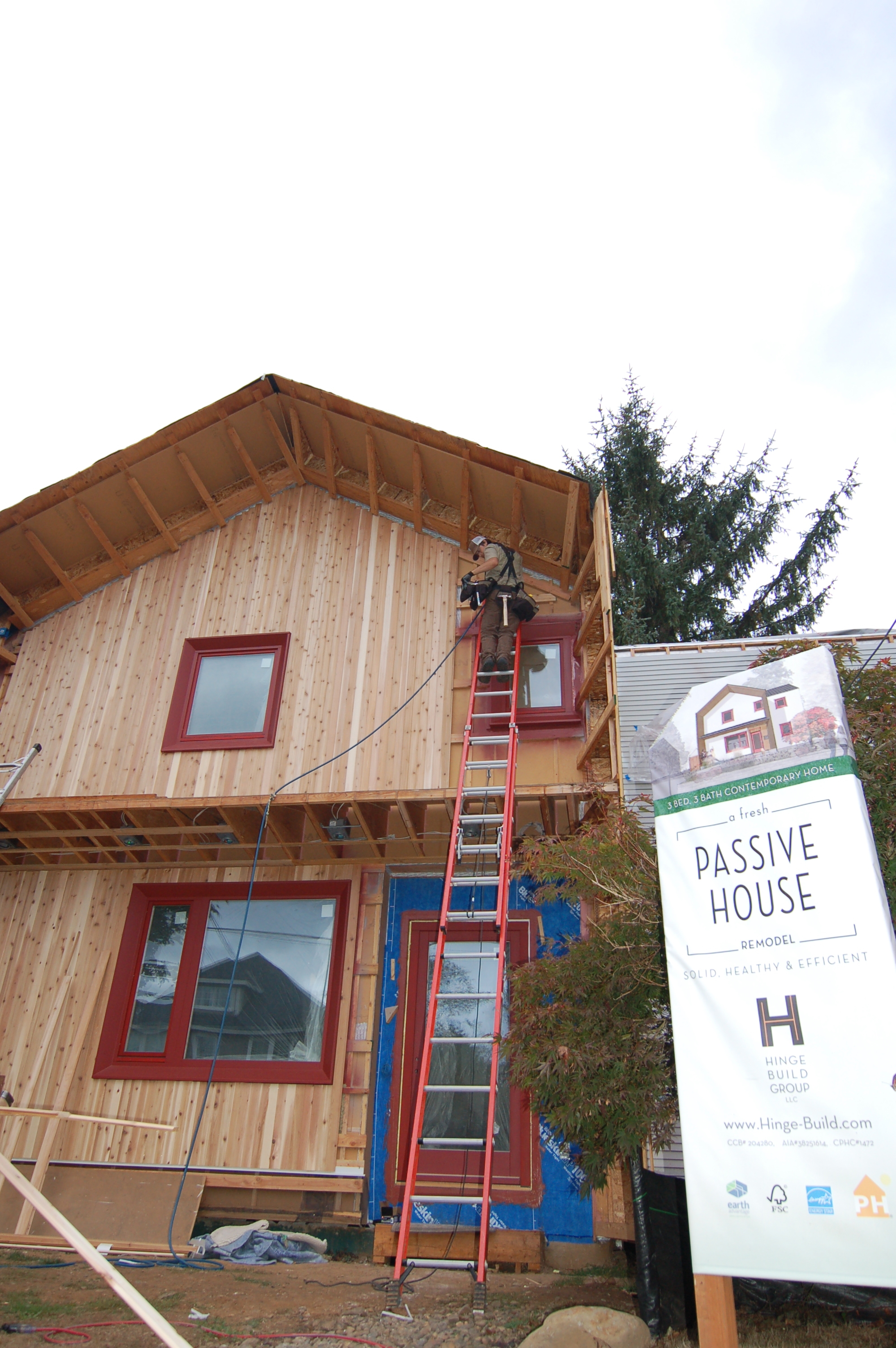
The horizontal lap siding we chose is style number WC-115, the same siding that you will see covering much of the older neighborhoods in Portland, especially on larger homes. It's popularity lasted a while in the city, but was replaced with wider siding for ease of installation and lower costs I assume. We installed it without corner boards to help it have a more contemporary look that makes the north side of the home feel more like a uniform object that contrasts with it's rough-sawn cedar half.
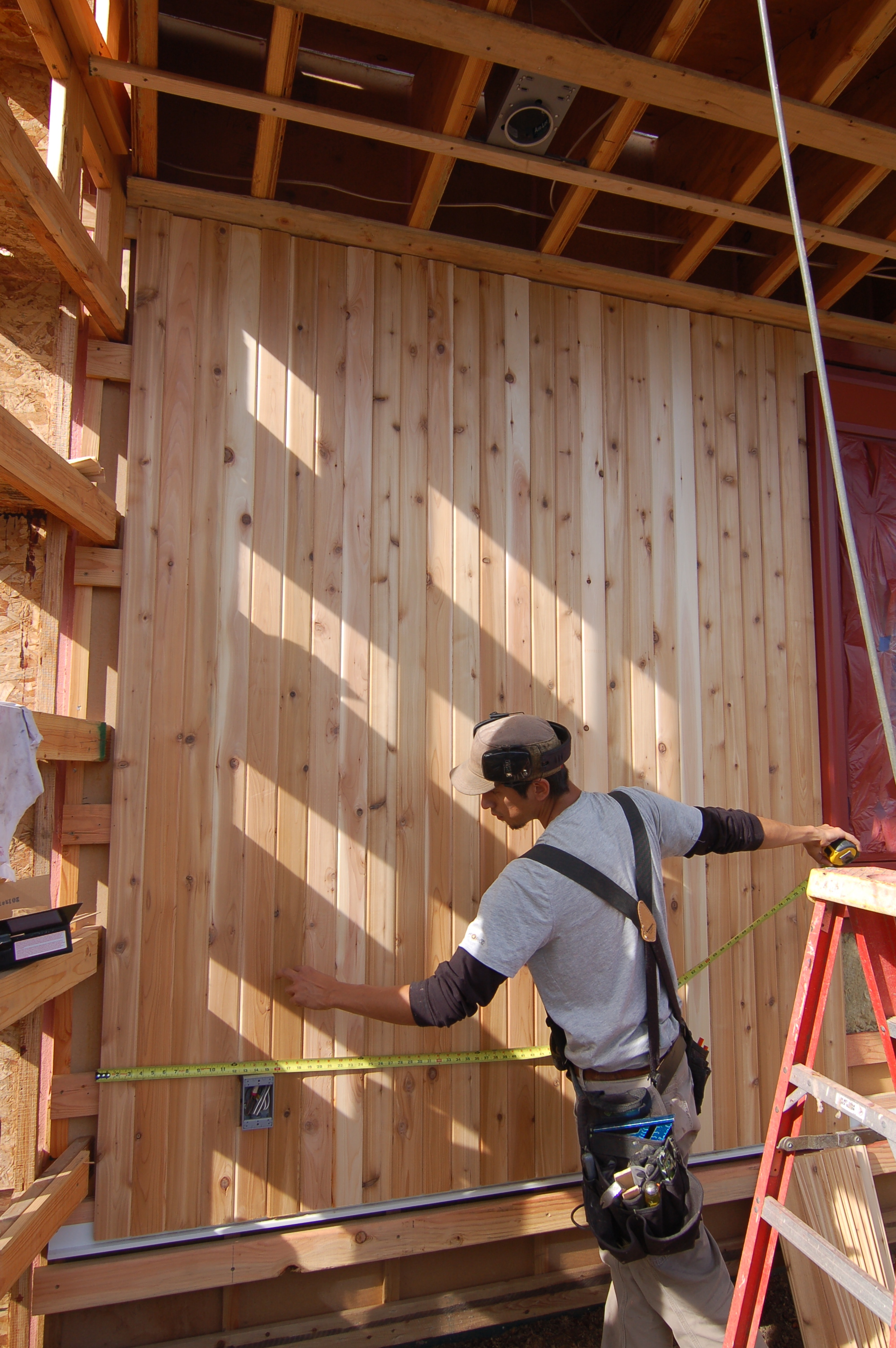
That cedar half by the way, is all FSC certified, Oregon grown cedar. It was milled by Kasters Kustom Cutting in Mulino, OR and molded by Trillium Pacific in Hubbard. Everyone was worried about the 20' long 1x2's but we had no problems with them at all. The wood is solid, and will naturally change color over time to a lovely silvery-grey.
You have two choices with wood; you can fight it or you can accept it. We think that whenever possible you should accept the beauty of wood for what it is. Some of the siding on the Phoenix is stained white (stains allow the wood to breath, where paints get in the way) because we loved the contrast of white on wood and it lets us really focus on the special qualities of the wood we left bare as well as the special architectural moves we planned.
Rockin' on the Inside...
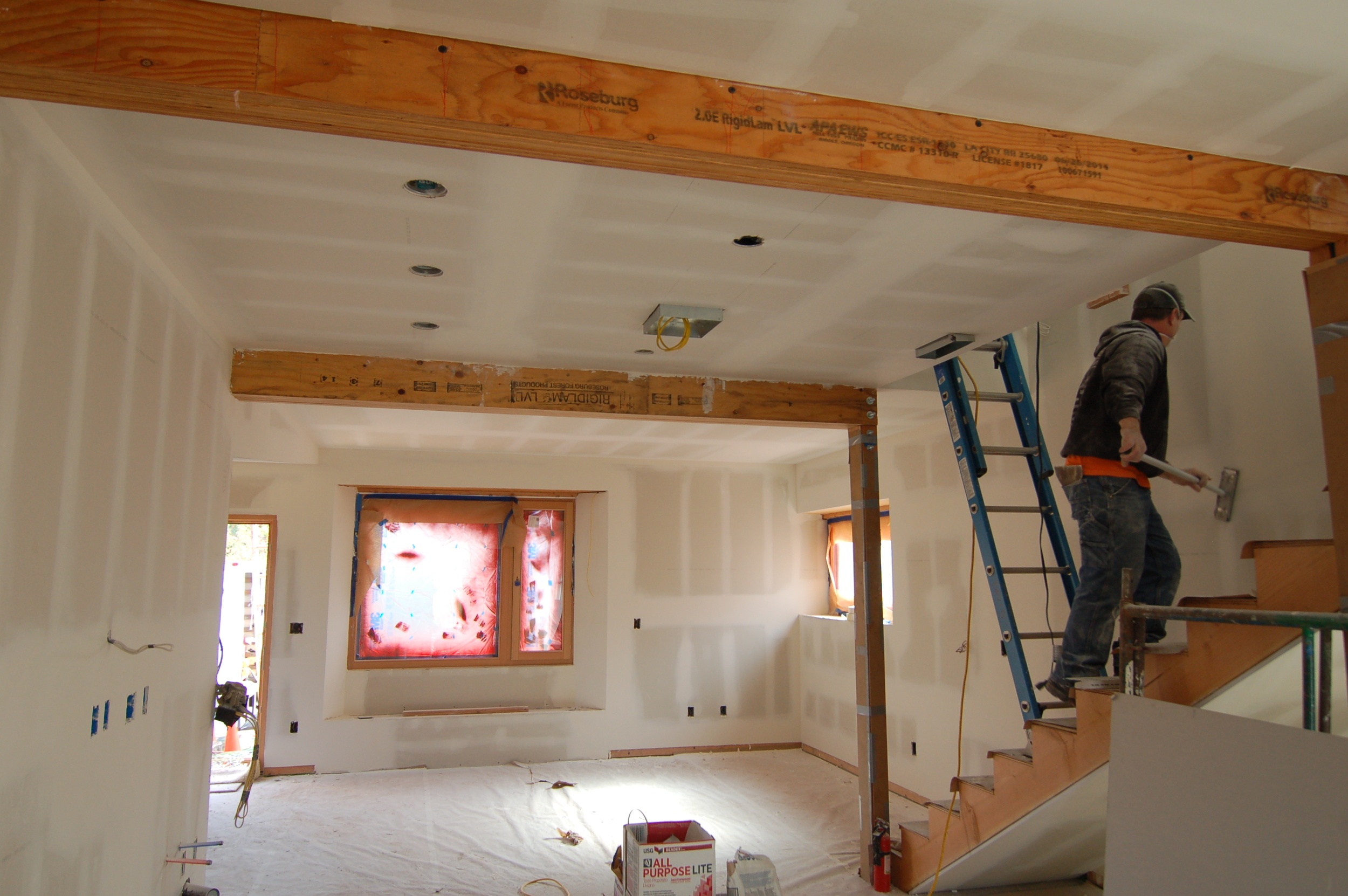
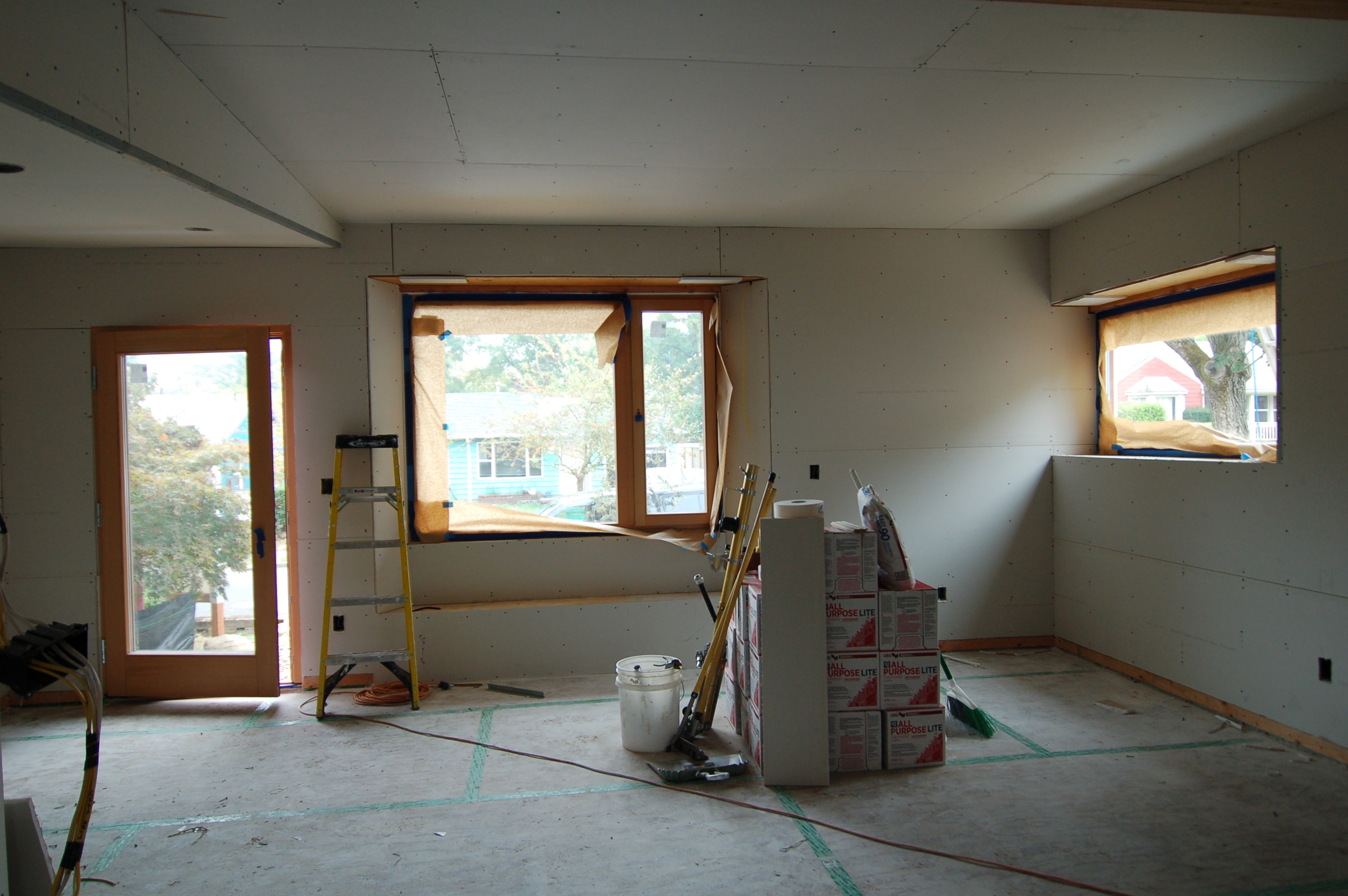
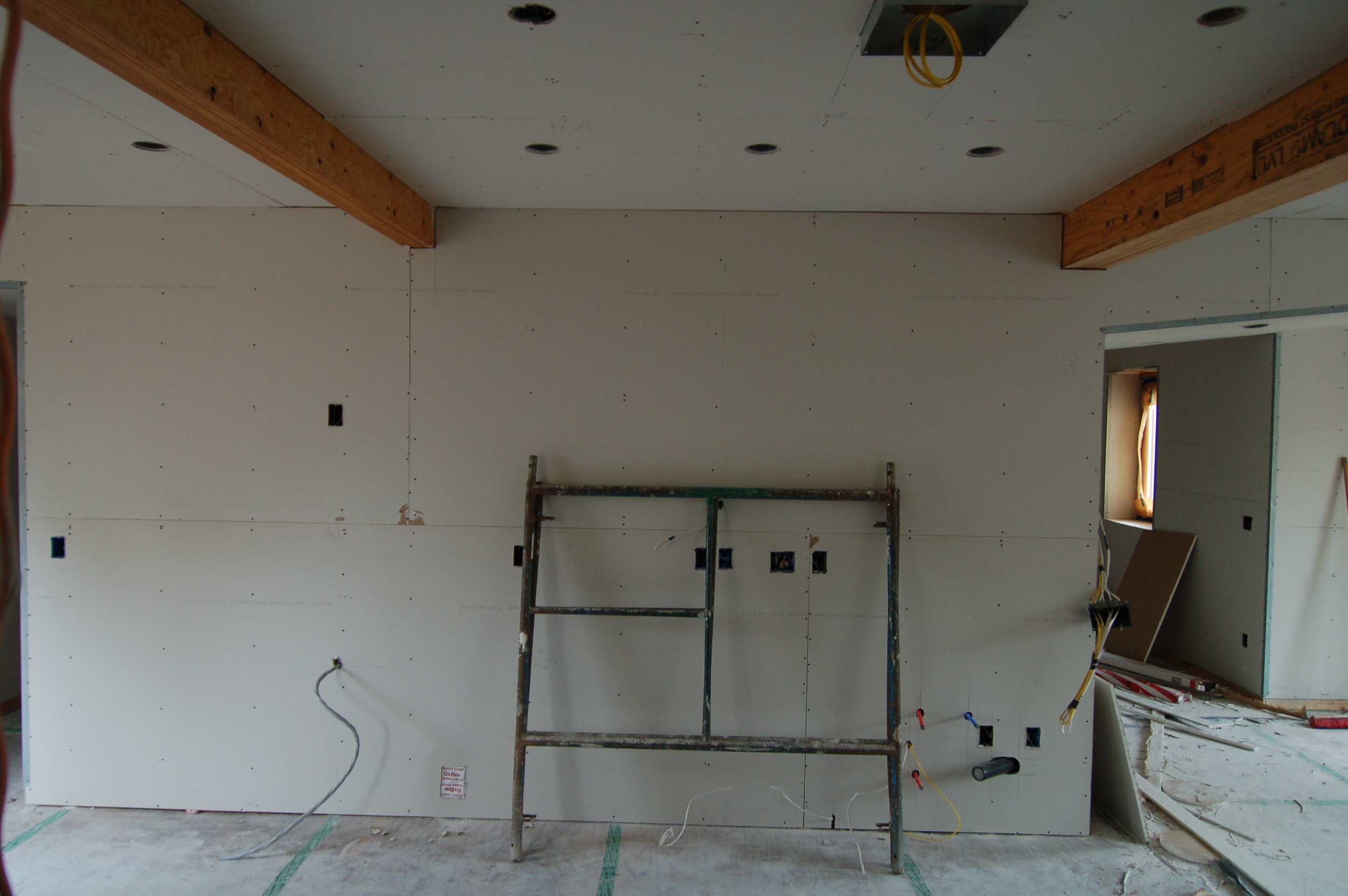
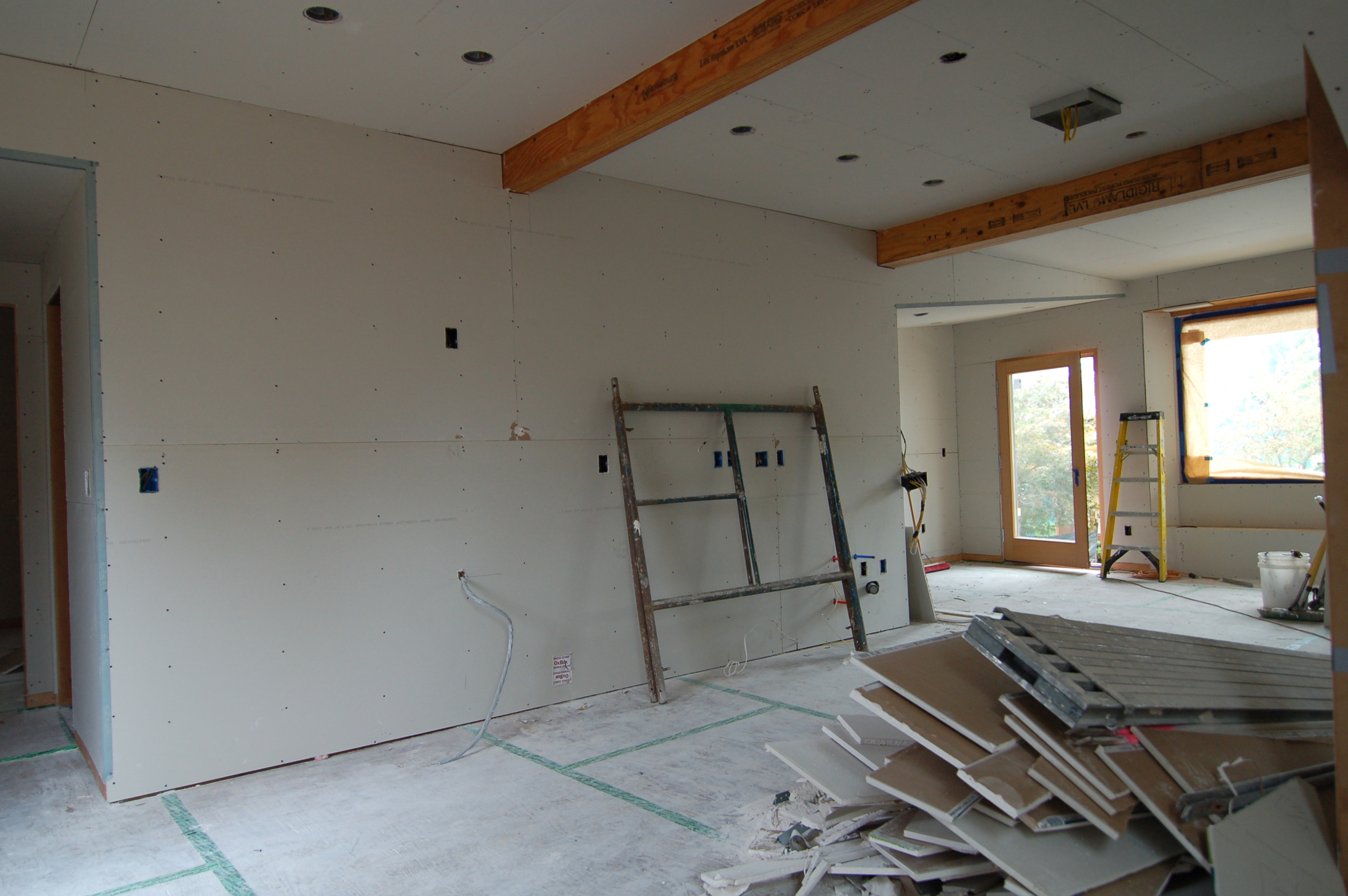
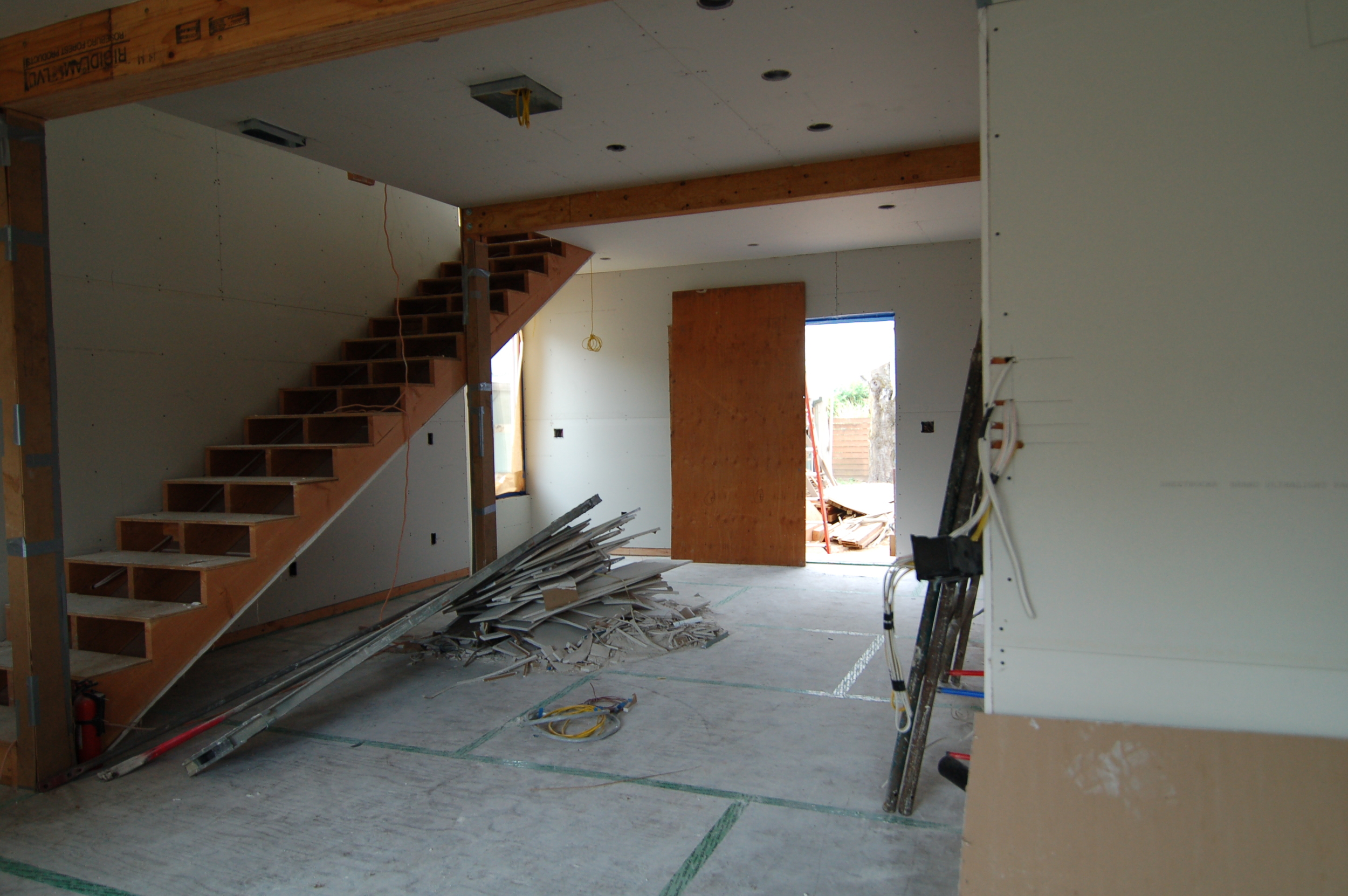
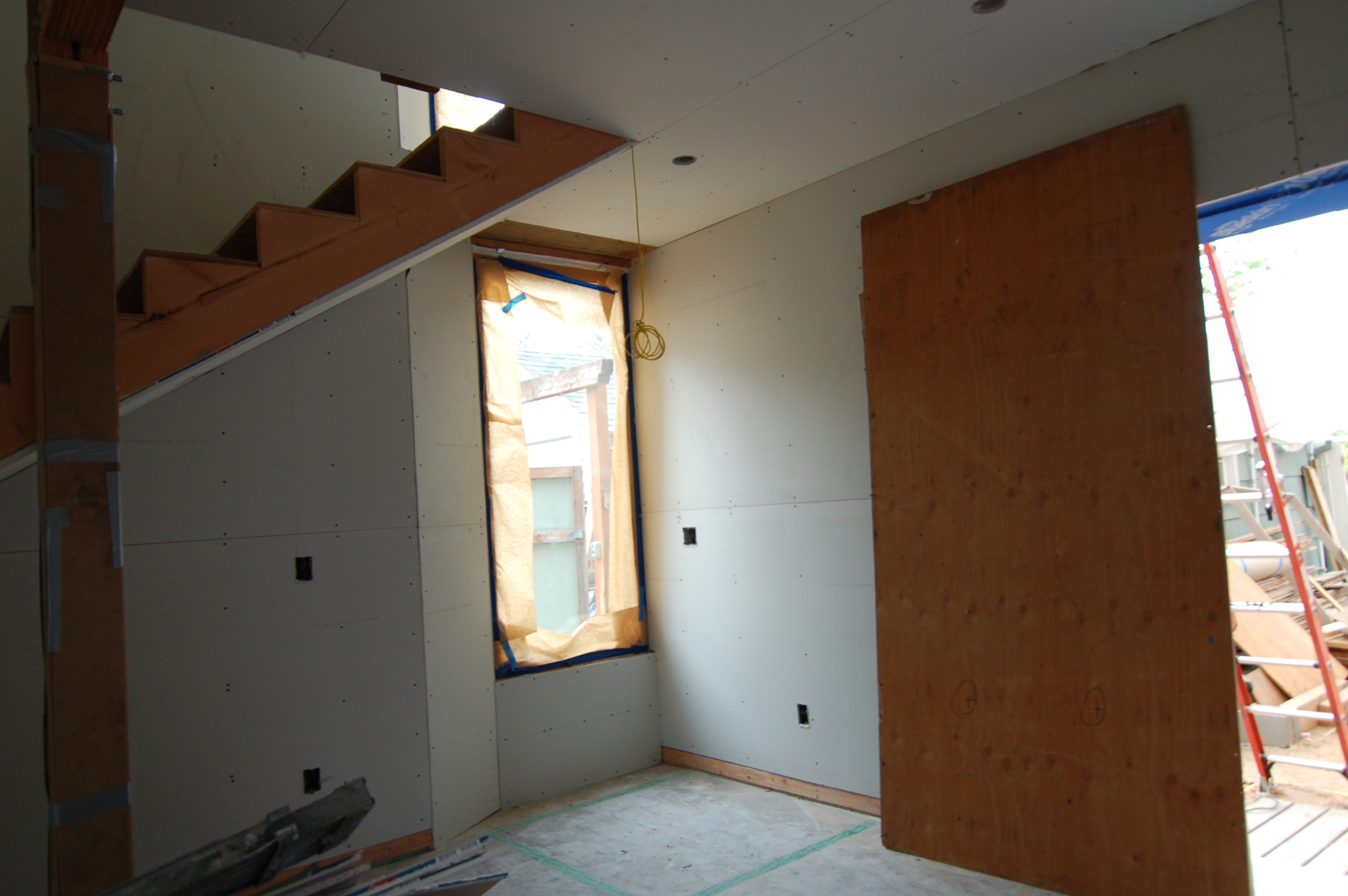

It always feels great when the drywall goes in and you finally get a sense for how the spaces will feel. Often people think that the drywall going in means the project is about over, in reality it is about at the half way point. There are so many details that go into the completion of a good project that it just takes as long to get the finishing completed properly as it does the framing. Still, it is nice to see the project moving along, and great to feel just how the spaces are measuring up!
If you look closely you can see that the drywall doesn't touch the floor in this home. Instead, we decided to set the base flush with the face of the drywall for an extra clean & contemporary look.
You can also see how our by pushing the windows to the edge of the walls provides extra daylight deep into the spaces by using the wall as a reflector for the sun. Very Nice!
It's not 8,000 lbs of Insulation...It's 8,000 lbs of "Thermal Battery"!
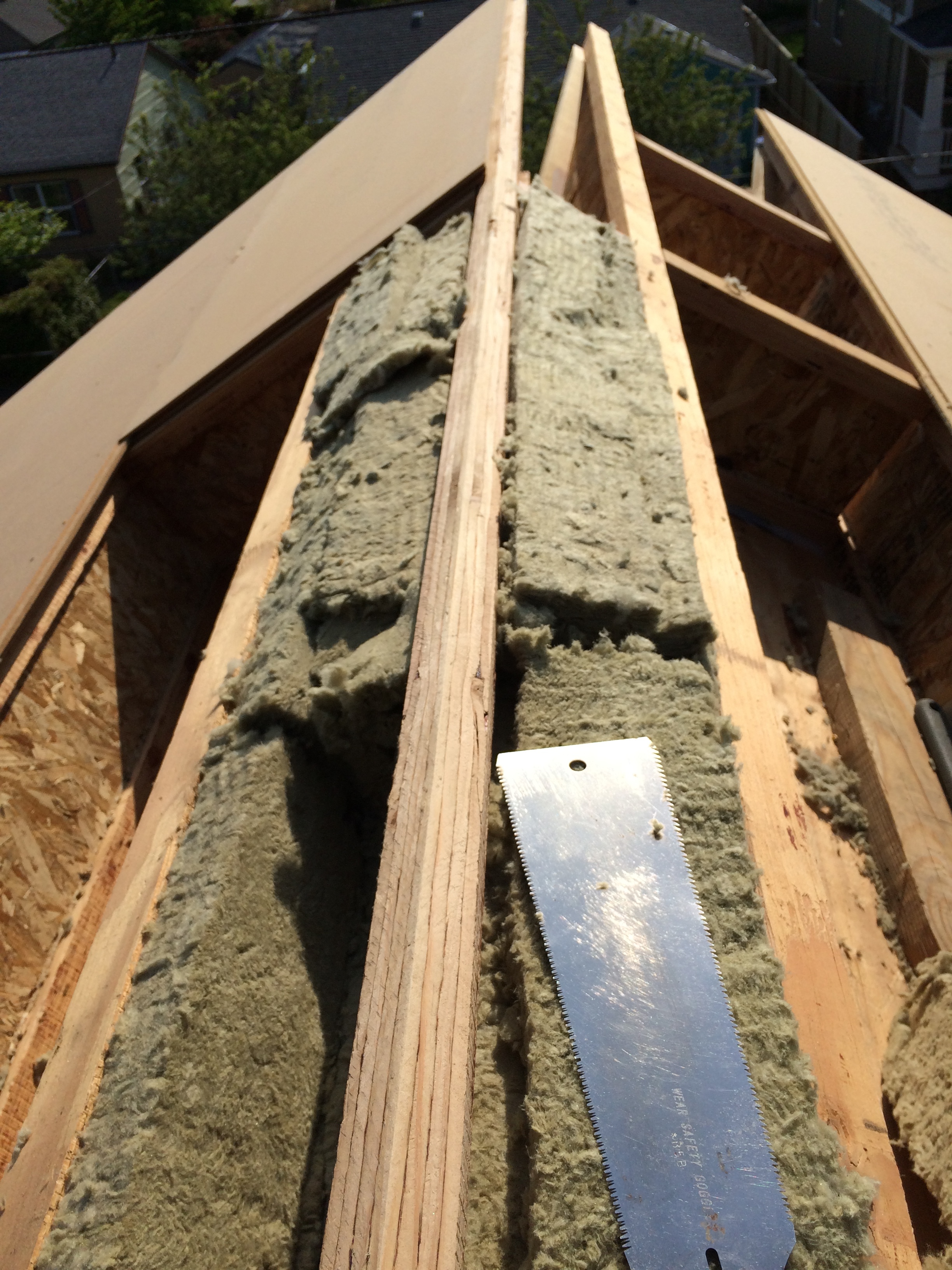
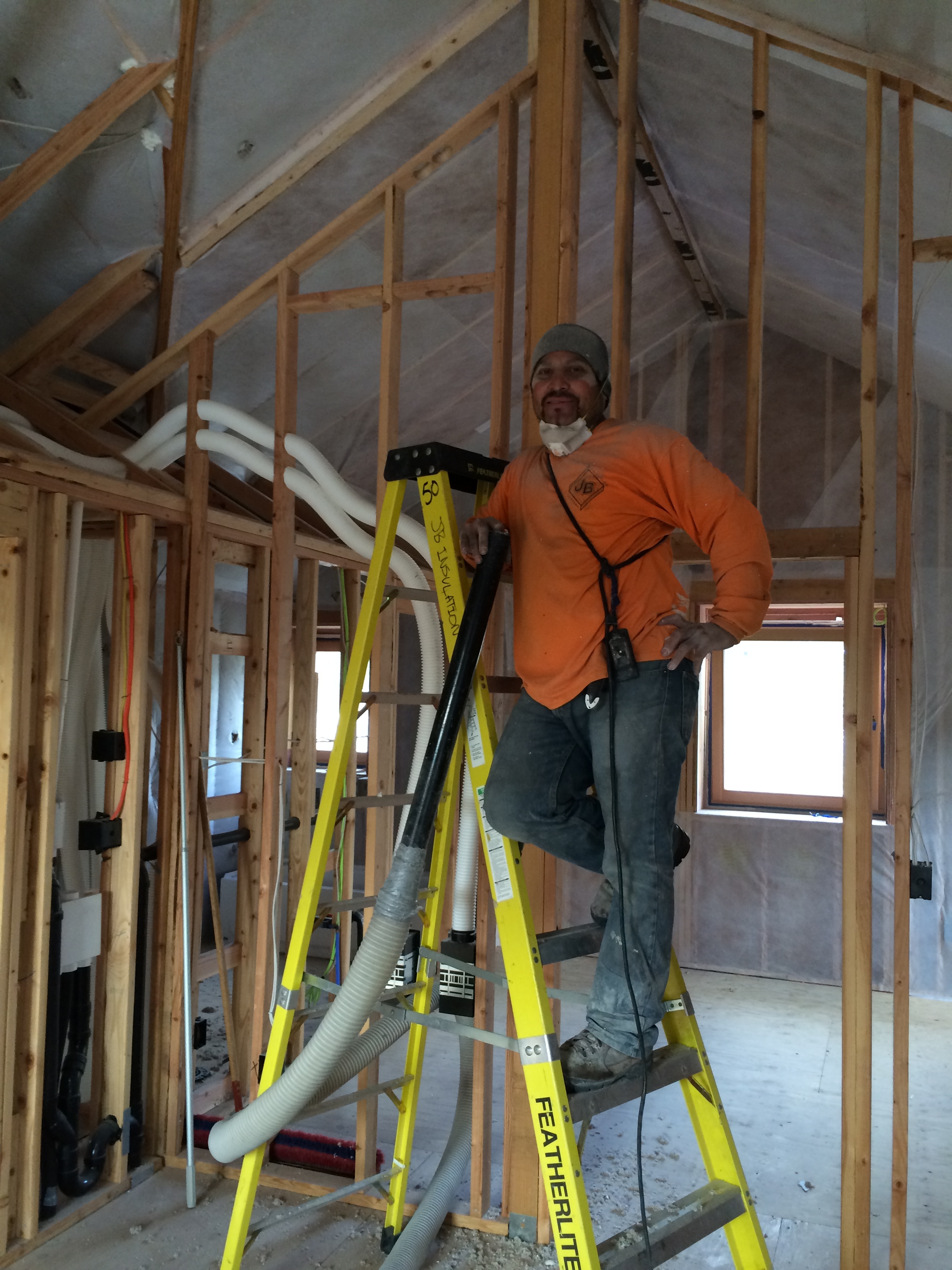
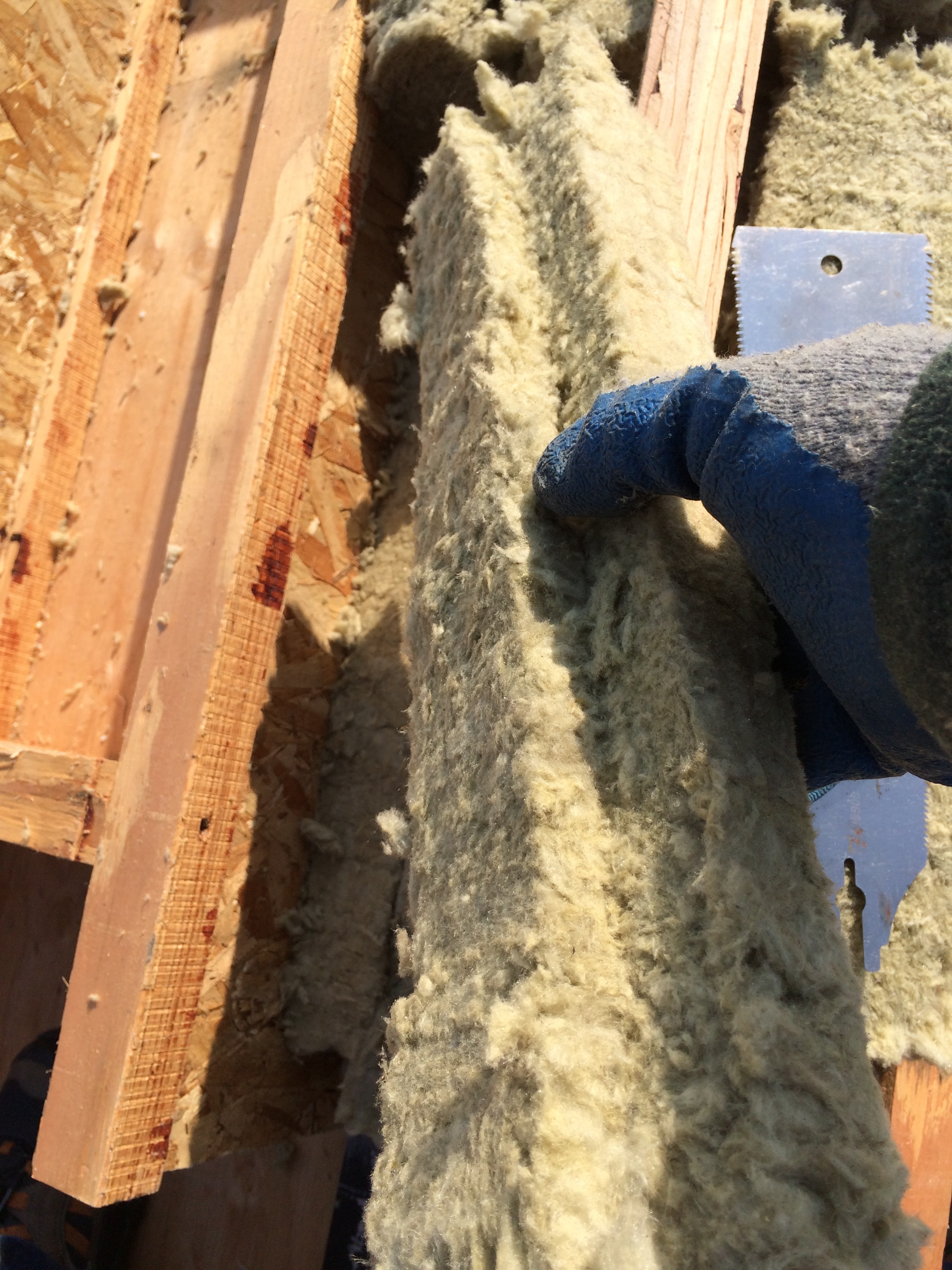
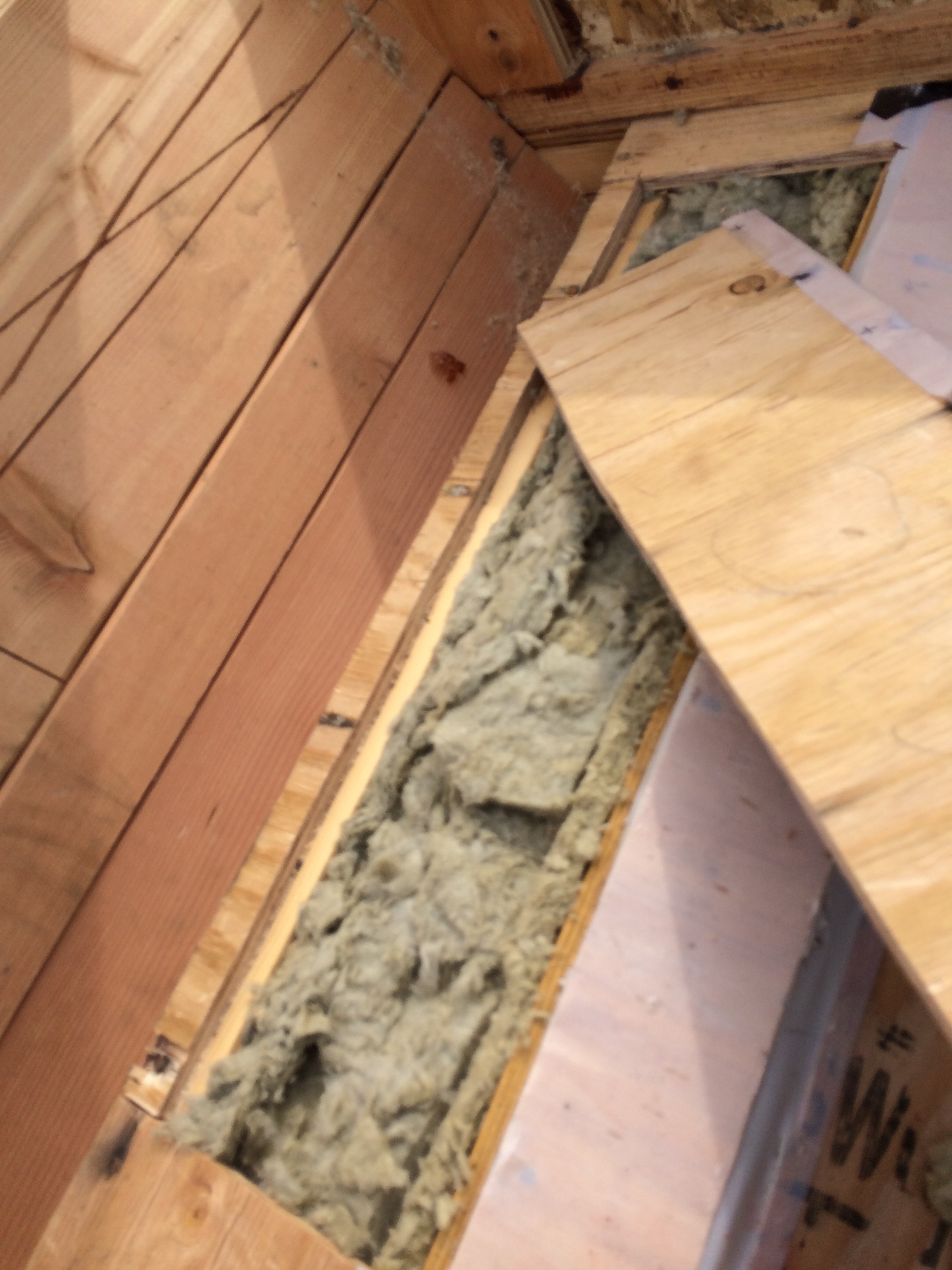
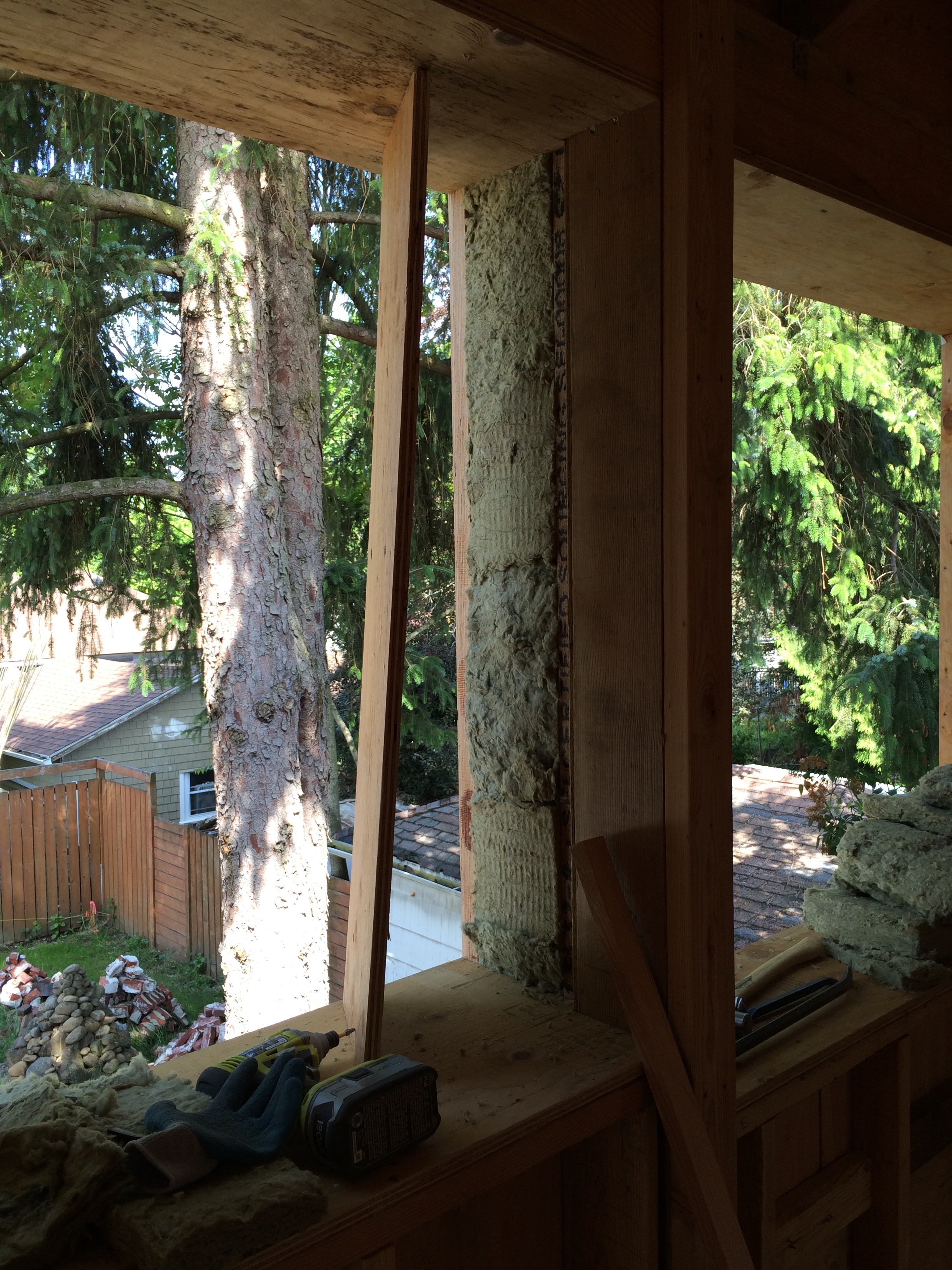
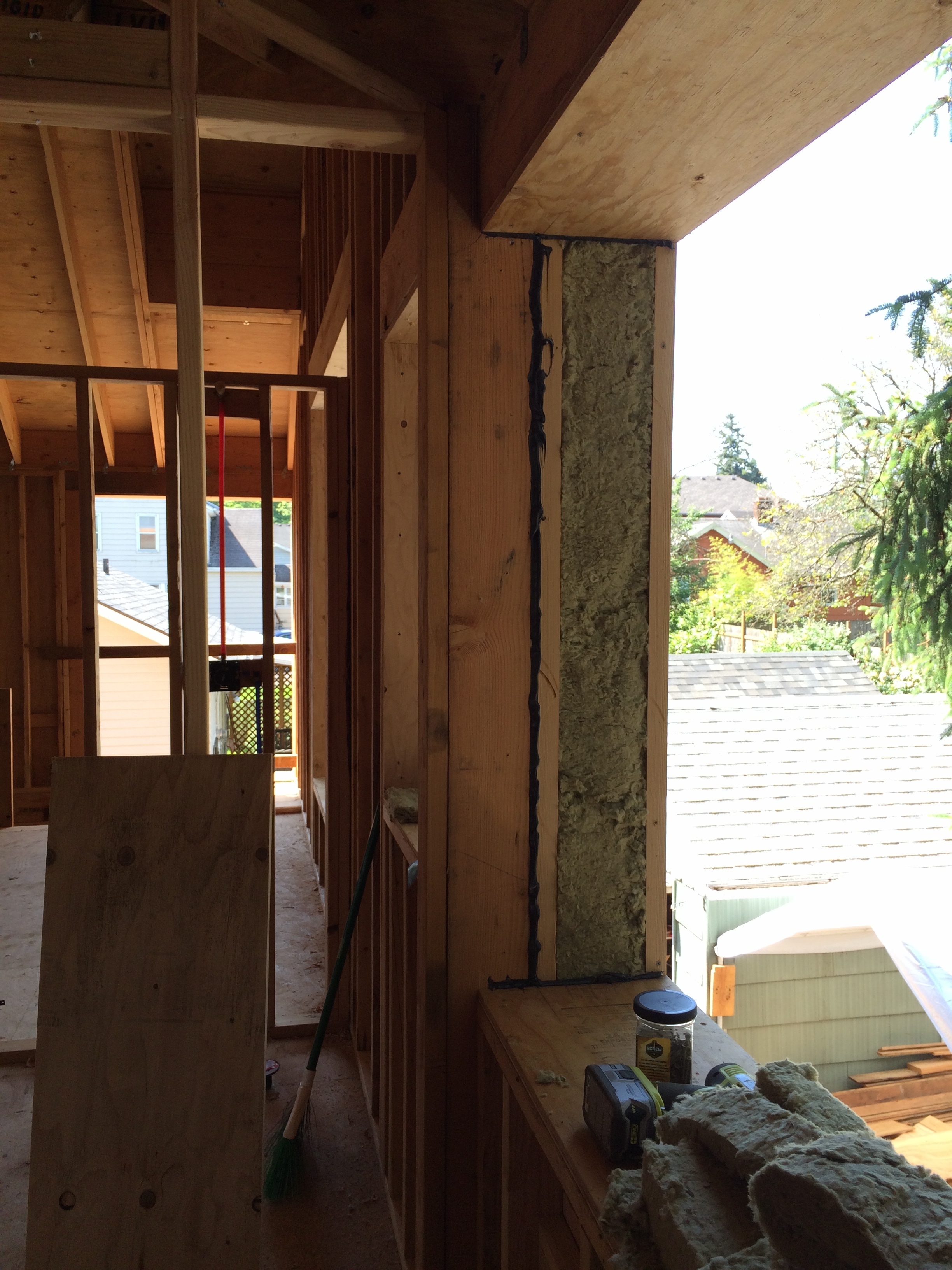
The first thing everyone asks us when we mention our passive house business is "how much insulation do you need?" Well...a lot!
Insulation not only keeps the energy in the house on cool days, it also keep the energy out of the house on hot ones (solar gain is not just for windows — the sun shines on your walls and roof too). Insulation works not just by stoping heat (energy) from moving through an assembly but by absorbing the energy and thereby slowing its movement to the other side.
This energy is then released slowly helping to temper spaces in the building and stop big swings in temperature between day and night. This ability to store energy when it is hot and release it when it gets cool basically turns your building into a "Thermal Battery". Just like a battery, you store energy (heat) and then release it later.
We spend a lot of time making sure that every cavity in the envelope is fully insulated. Even one missed cavity can cause problematic condensation by allowing a section of the building to get colder than the rest. This condensation could potentially lead to mold growth if it doesn't get dried out.
Every cavity that is filled in our projects is checked for proper density, ensuring a well insulated and high performing building!
Air Sealing is not for Sissies!
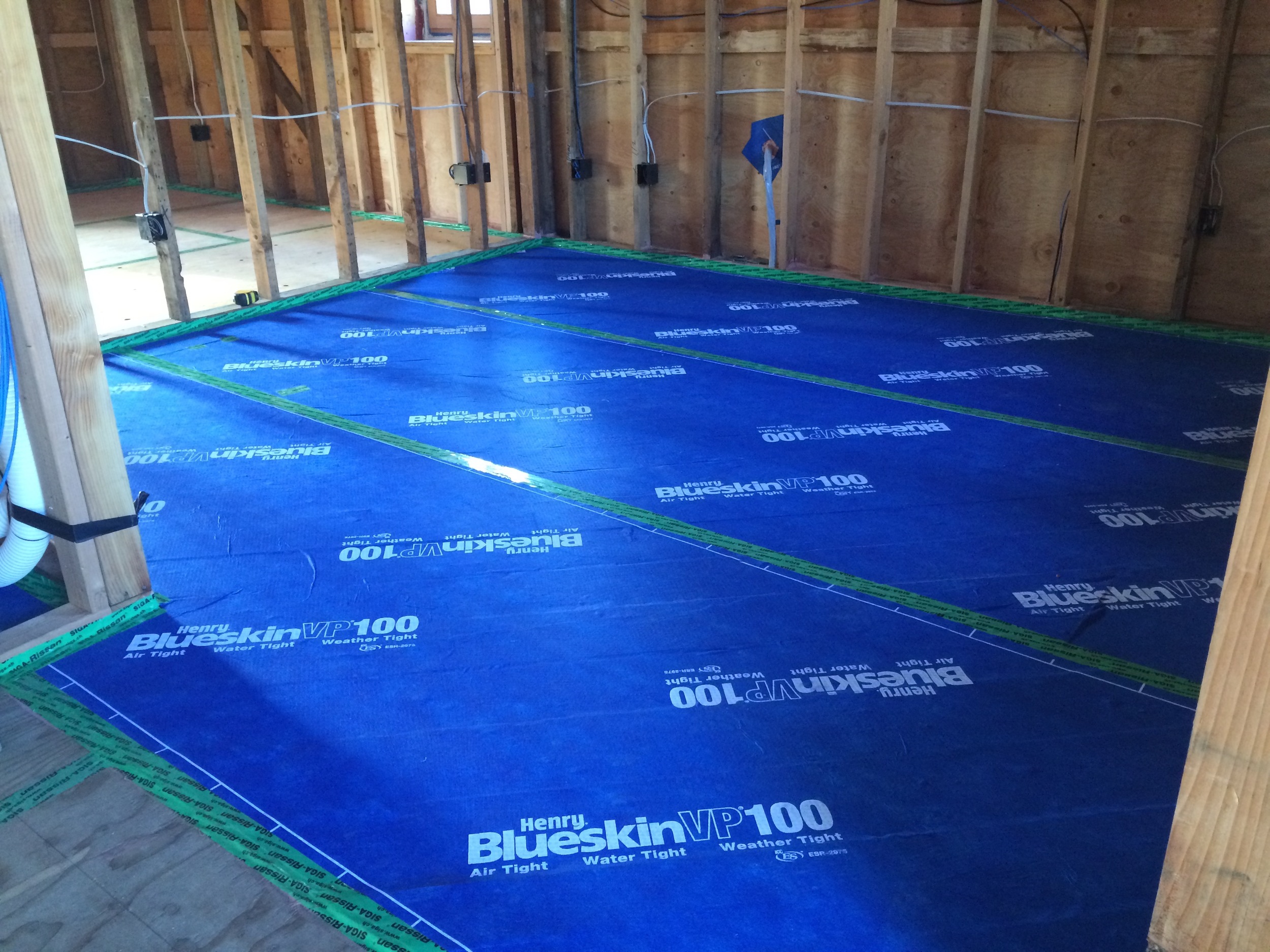
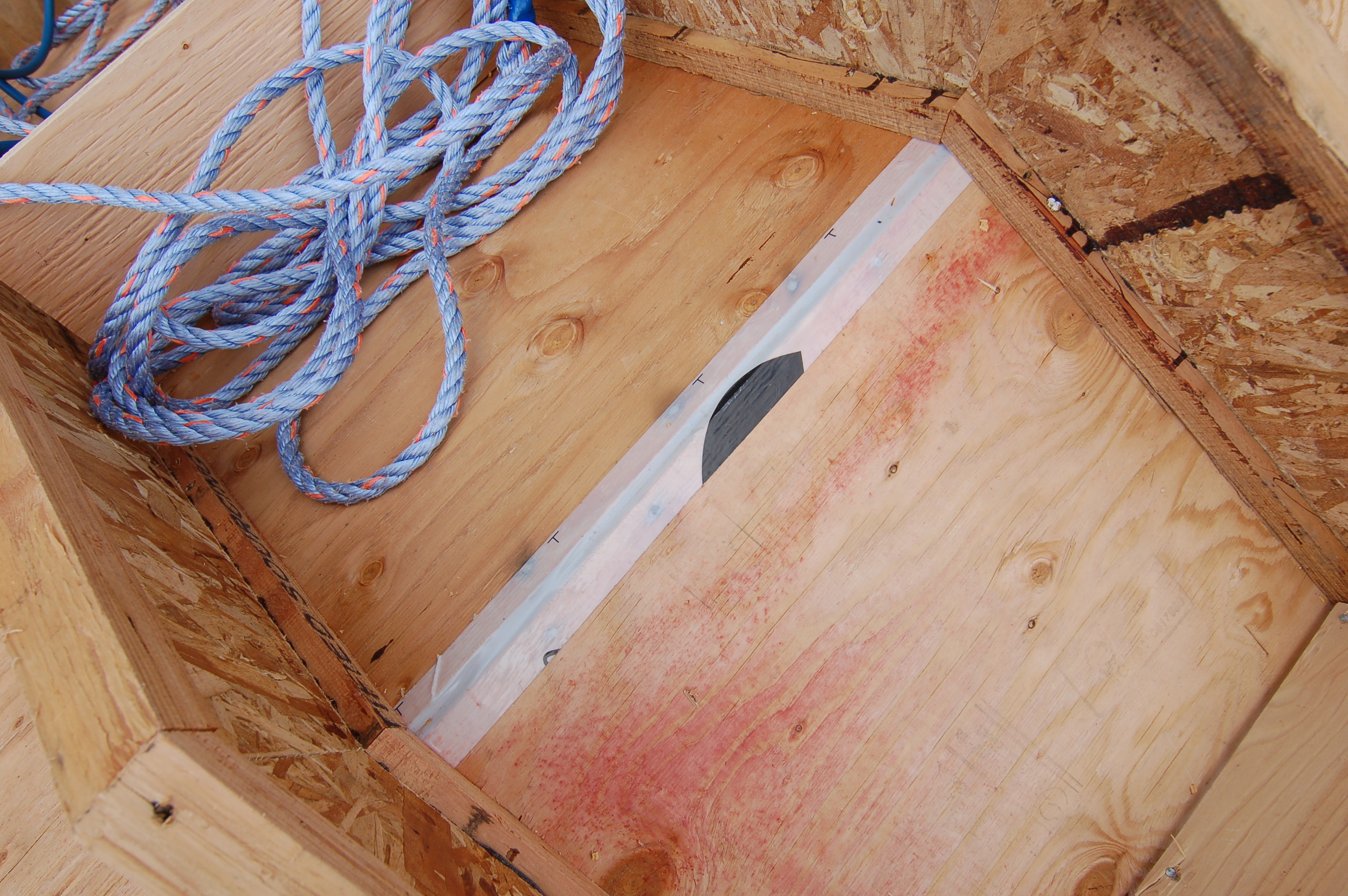
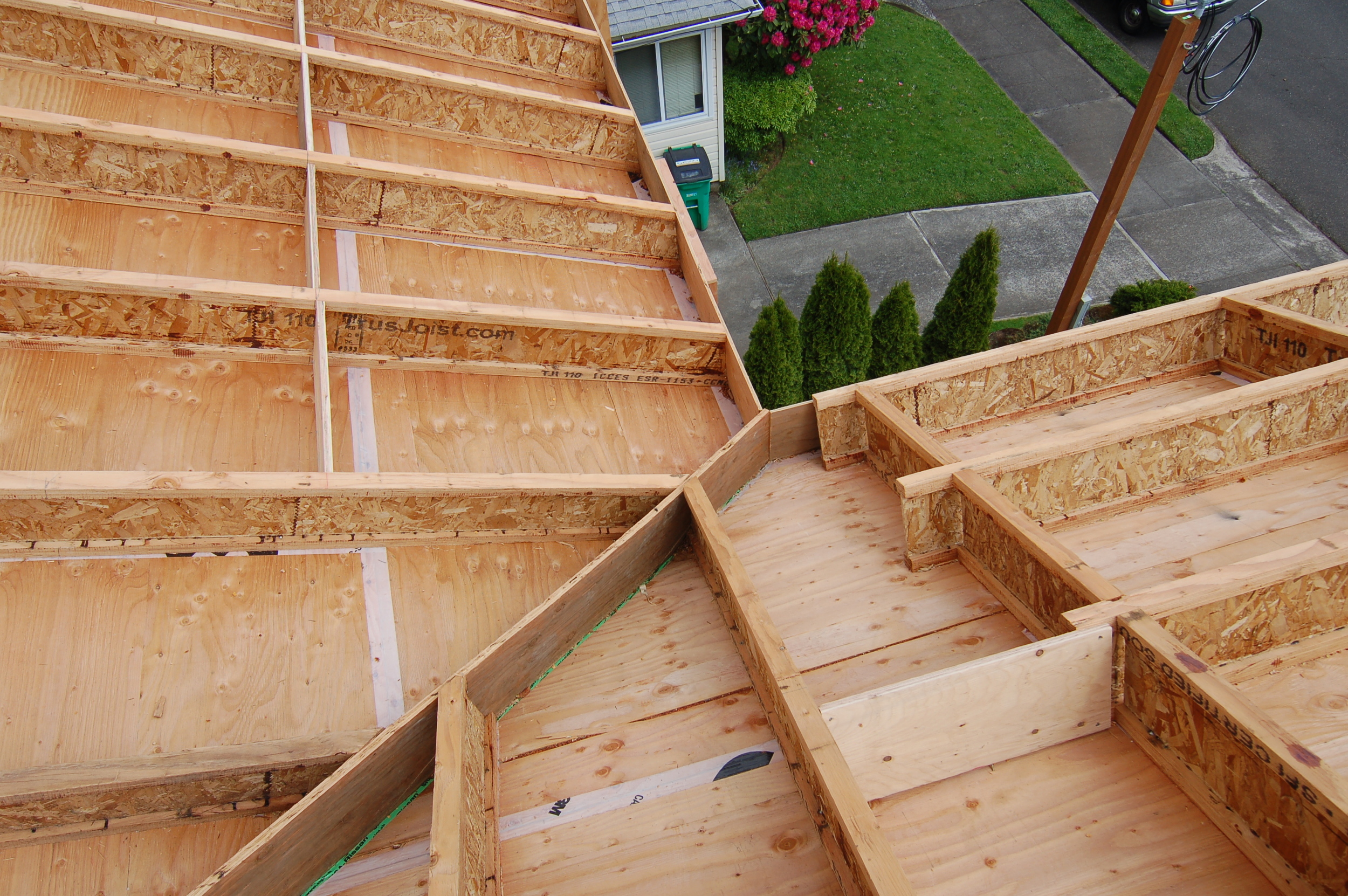
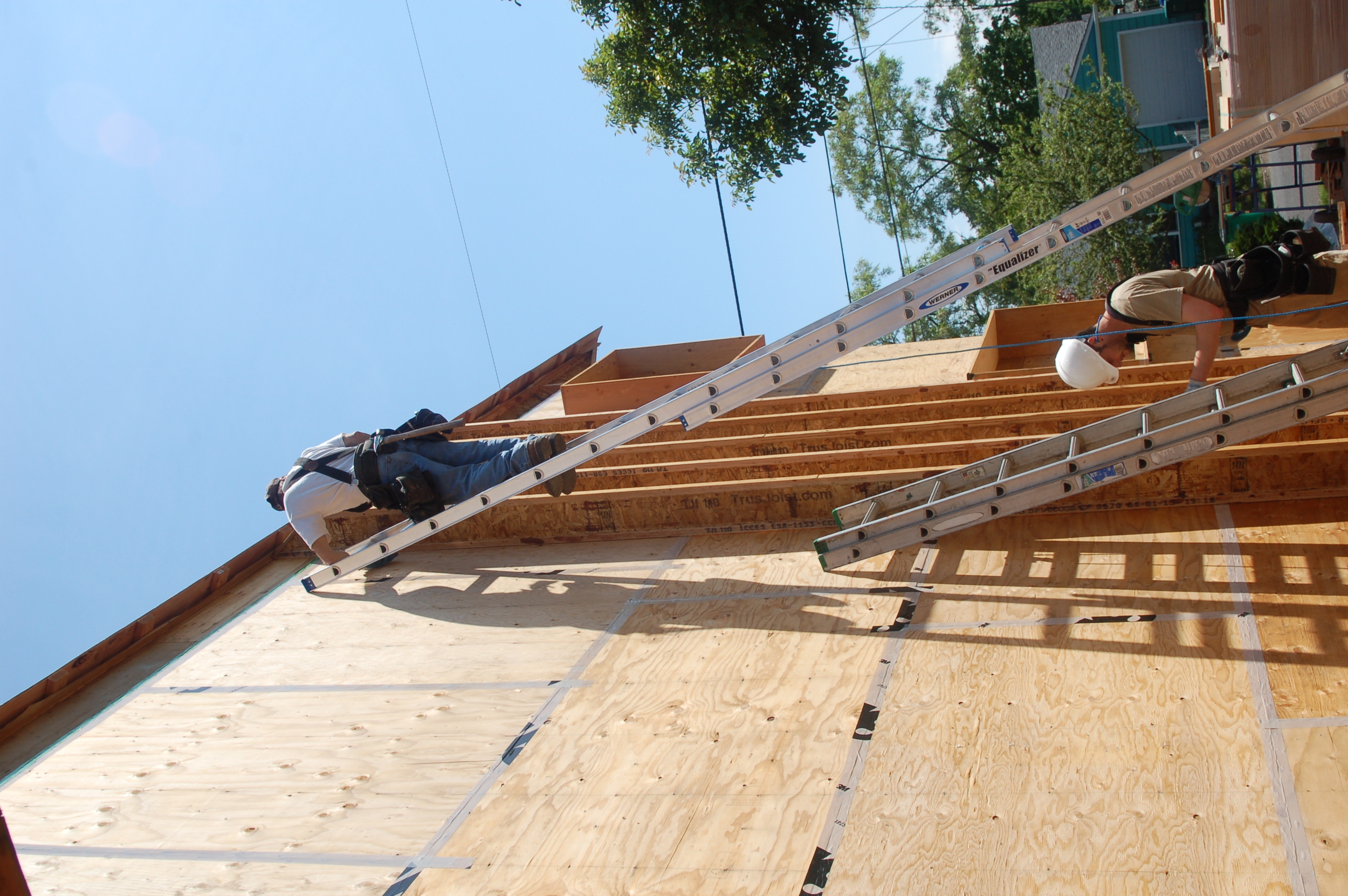
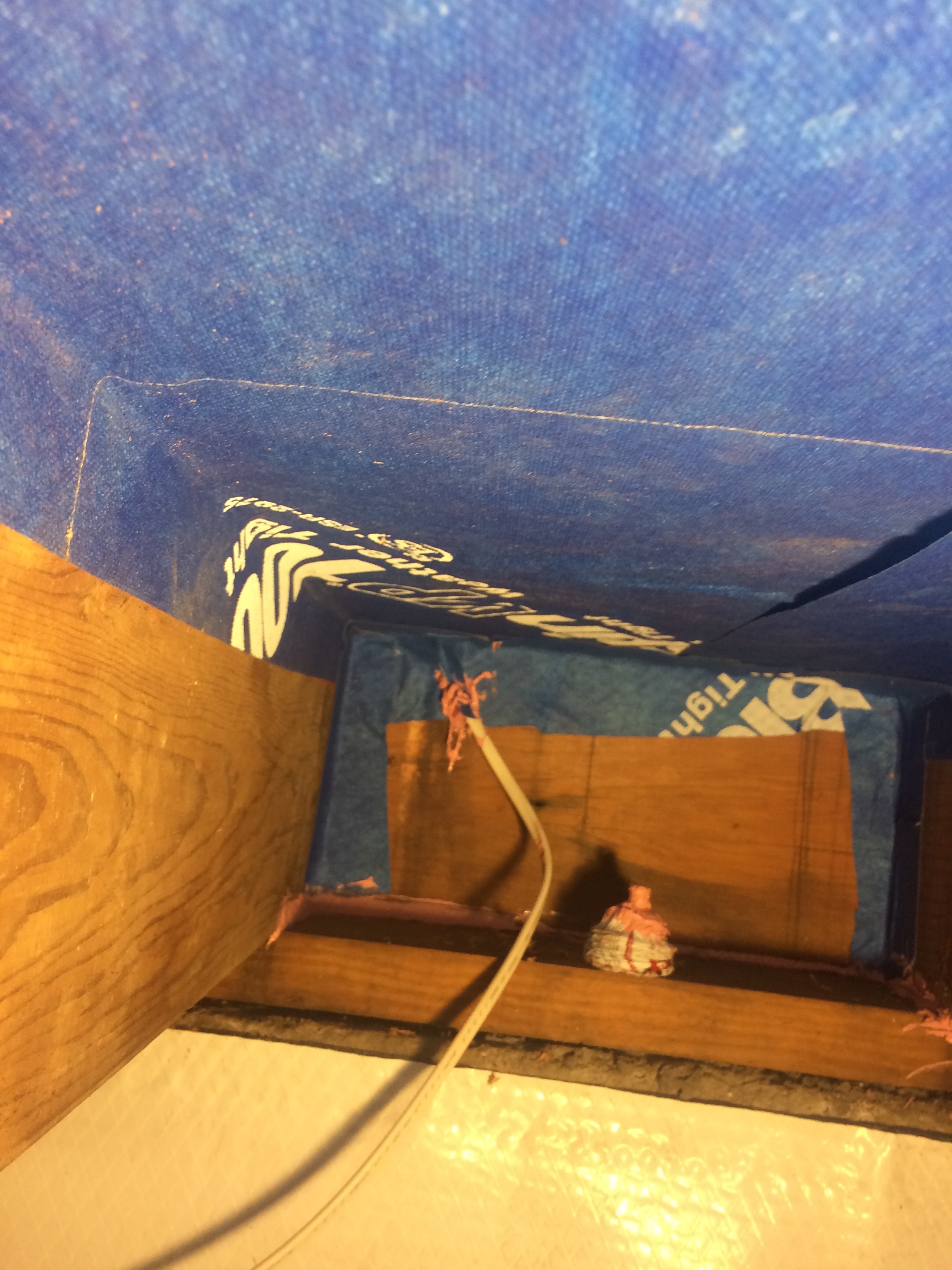
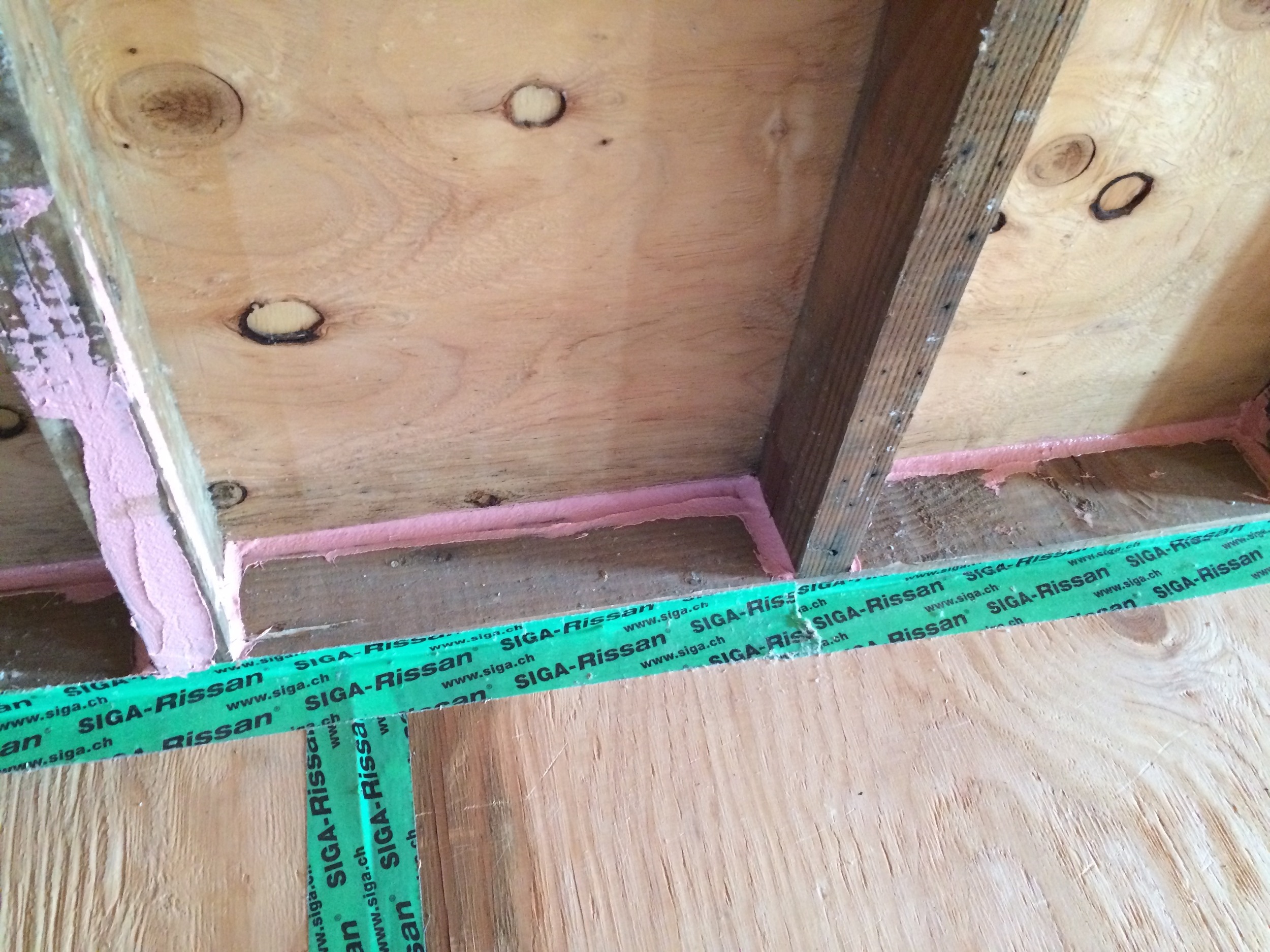
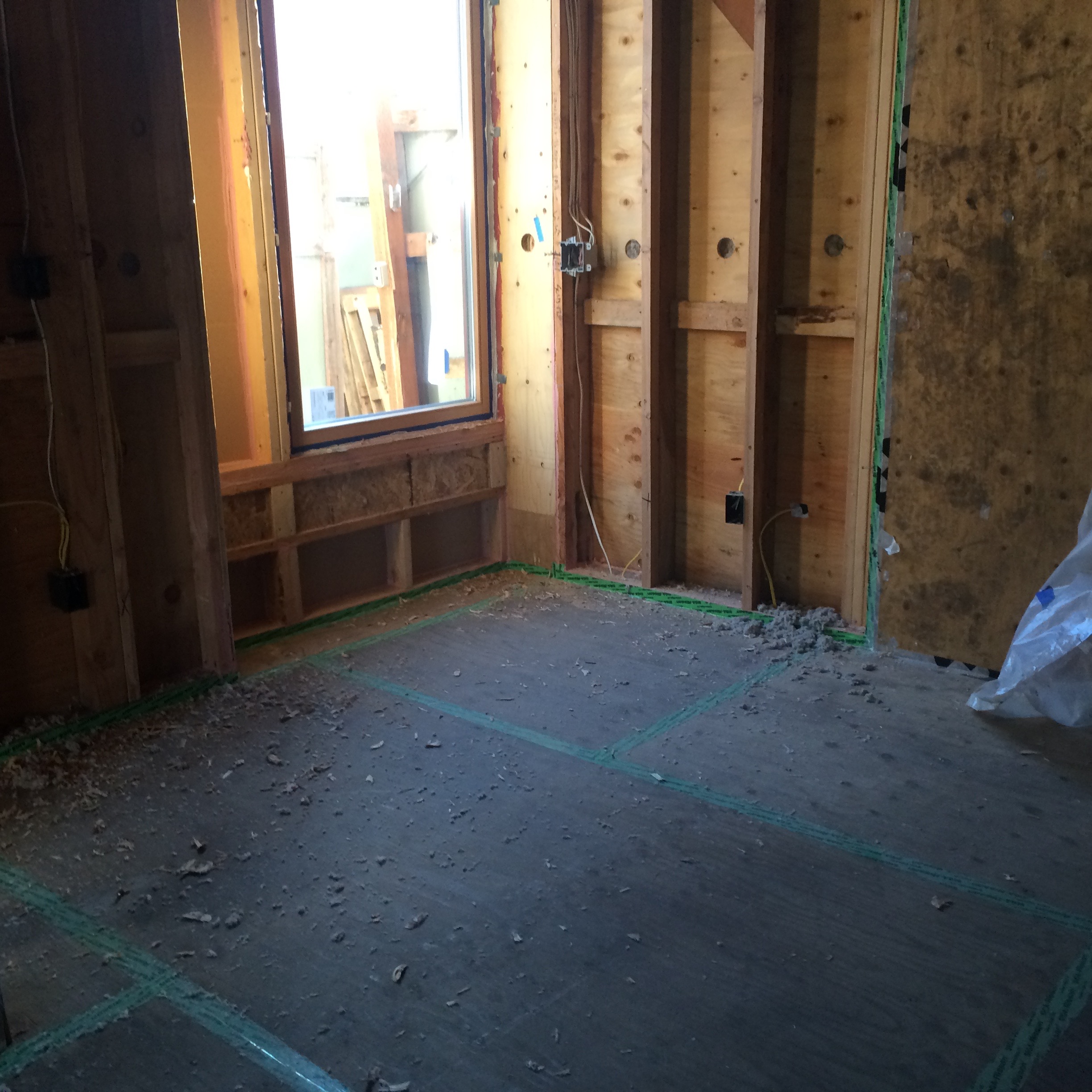
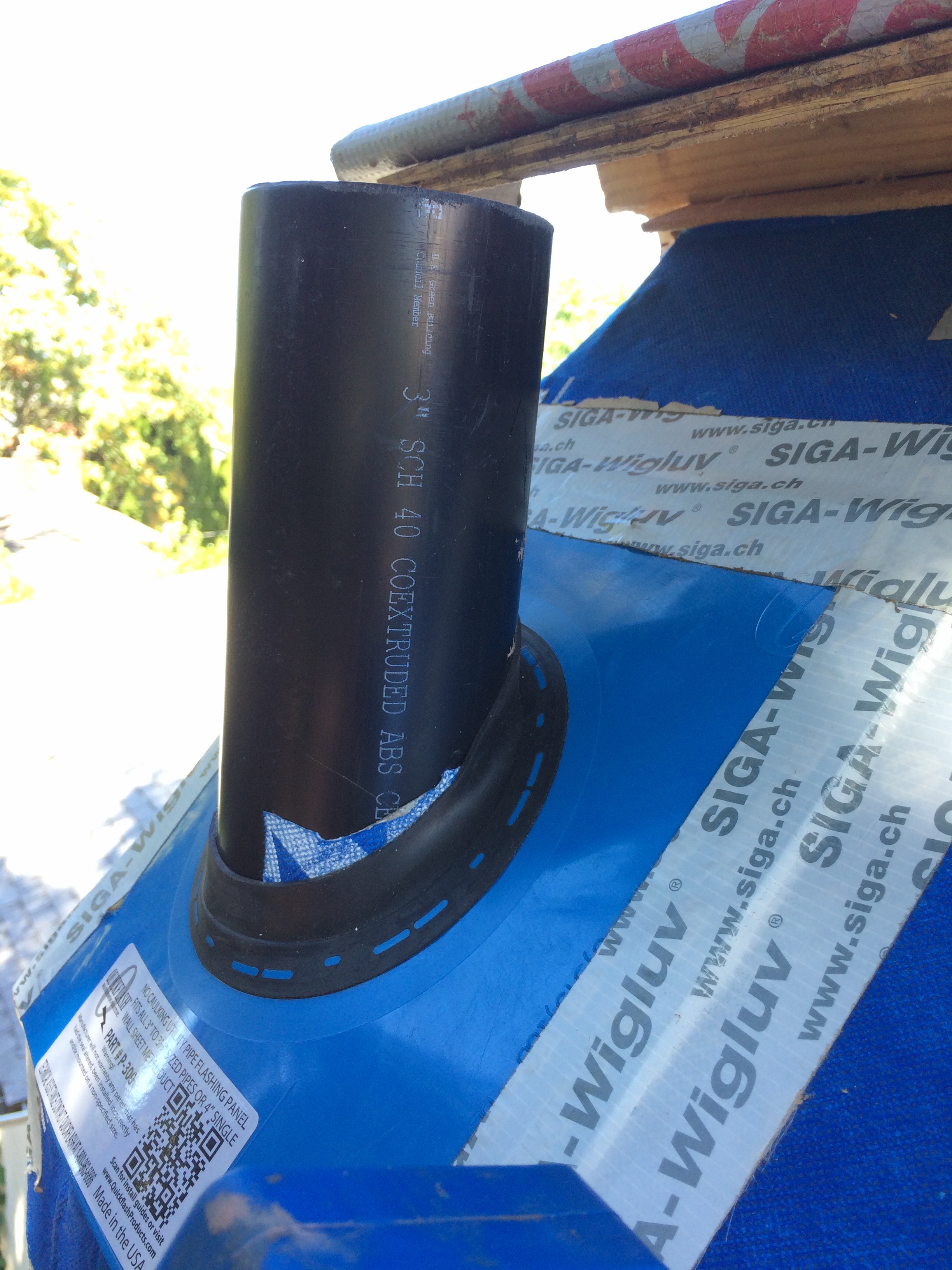

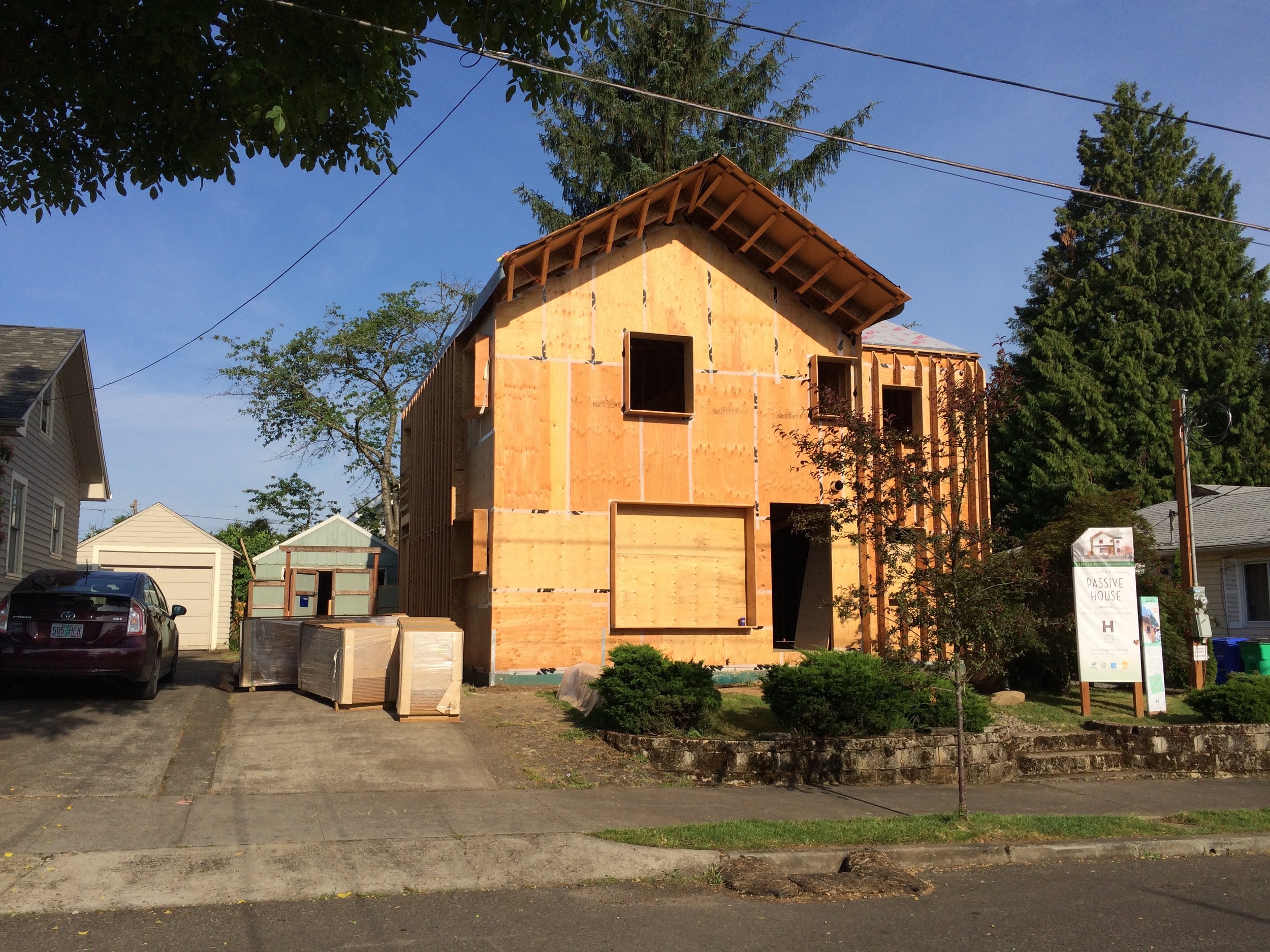
Any high performance Builder will tell you that if there is any magic in building to super high standards it is in the Air Sealing! The Passive House Institute sets a benchmark for buildings to approximately 0.6 ACH50 for minimum certification. What does this mean? It means that when measured with pressurized testing equipment, the building being tested needs to have almost no holes in the exterior walls, floor or roof. These holes, even if they are small ones, let through energy & water making the interior space less comfortable, and less healthy. Even super small cracks and openings let in dust that is itself super small. These particulates build up over time since they can't get back out through the same holes they came in though (think about how you could get salt back into a shaker through the same holes it comes out of).
There is quite a bit of literature on the many gallons (yes GALLONS) of water that can accumulate through even the smallest holes in an assembly. This is the main way that assemblies can have issues with decay and mold or mildew growth, and eventually cause failures.
ACH50 means Air Changes per Hour at 50 pascals. Just like you can blow up a balloon with air pressure, a building can be pressurized with a computerized fan. The computer can record the volume of air that is being moved through the fan, and this volume of air has to come from someplace, right? So that volume is relative to the openings in the assembly. The more openings, cracks, or holes in the assembly, the more air goes through the fan at a set amount of pressure. The less air that goes through the fan, the fewer the openings....pretty simple really.
The 0.6 part of the requirement is the minimum that the old system would allow, but the issue was that if you had a large building the amount of allowed openings (no structure built in the real world can have no cracks, of any kind) is large and the smaller the building is the small the amount of openings allowed. The obvious issue with this was that it then becomes easier to build bigger and harder to build small. The exact opposite of building to an environmental ideal!
The solution to this is that the requirement needs to be linked to the square footage of the house in a more direct way. So the new standard is a bit more complicated, but more fair too. <0.05 cubic feet per minute/sqft. of shell area @ 50 Pa
What the Heck is Agepan!?
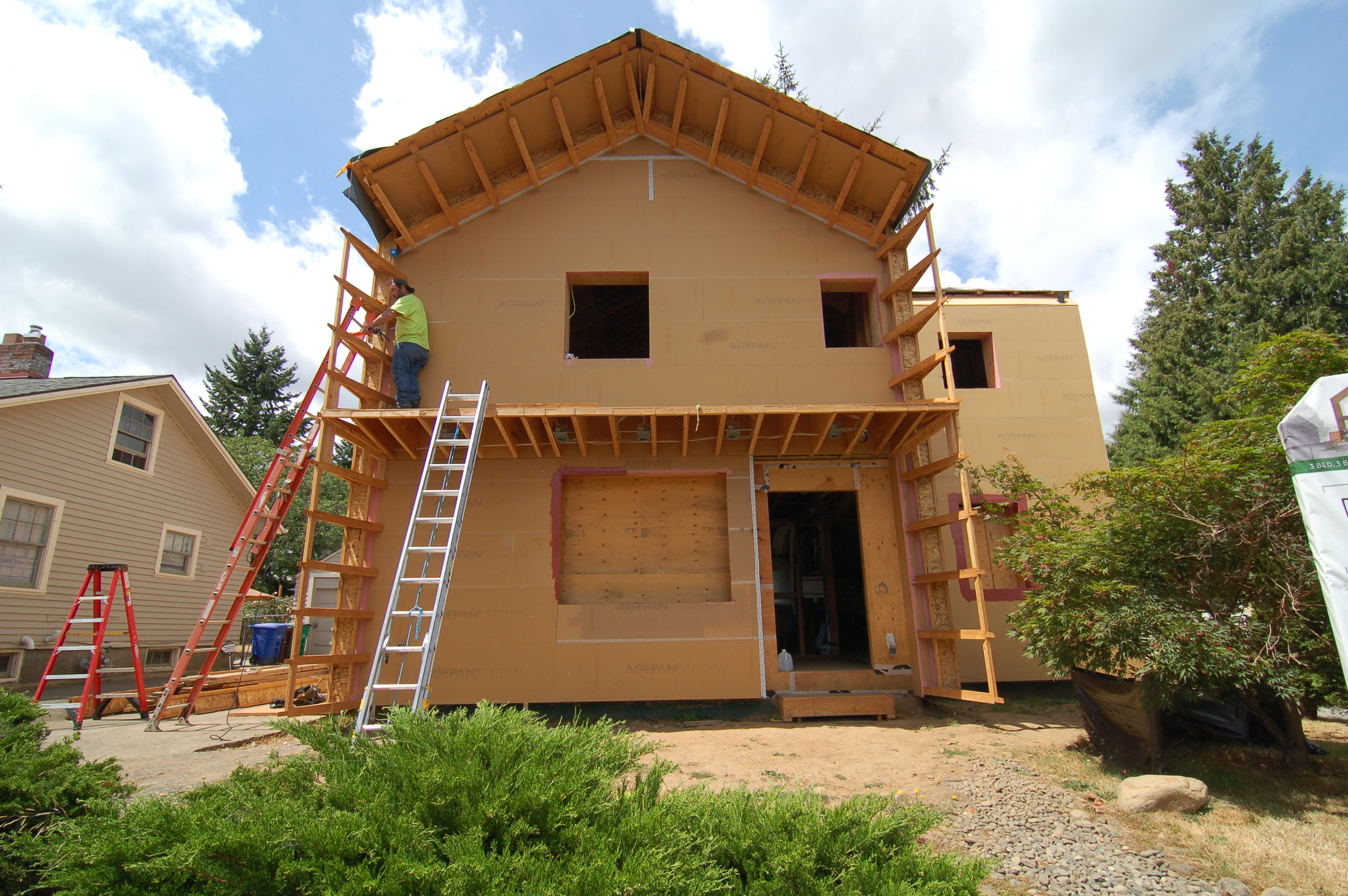
Once we had the air barrier and the TJIs in place, we needed to have a weather barrier over the TJIs to protect the house and to hold in the cellulose insulation. We spent a lot of time going back and forth over this and with some help from Albert at Small Planet Supply and some testing on our part, we decided that a material called Agepan was the best product for our weather resistant barrier (WRB).
Agepan is a wax-impregnated wood fiberboard material that has a perm rating of 18 (Must Keep Assembly Vapor-Open!). It gives us a small bump in our R-value for the assembly, but it's real value is in its water management abilities. Even though it looks a bit like simple particle board (which you never want to get wet) it functions in a very different way. We did a test (not particularly scientific) whereby we turned a glass of water over on a sample of the material and waited to see how long it would take for the water to seep into the product and wet the other side. After 3 weeks of watching the test in our office, it still didn't show any signs at all of the water leaching into the material, let alone to the other side. Talking to other contractors who have used this product, they had similar experiences as to how well this material performs as a weather barrier.
Agepan installs relatively easily due to its Tongue & Groove edges on all four sides. This T&G lets it be installed without having to have its edges land on the center of each stud in order to be strong enough. The T&G can hold itself together, basically. This is good because this is a product made in Europe (one of the few we used) and the size of the sheets are odd for U.S. construction standards.
I have to say that even with the T&G, the install was not quite as easy as we had hoped it would be. Large walls were easy enough until we got to the gables, where we were having to make angled cuts. Since the sheets are so short (25" tall x 90" wide) we had twice as many cuts as we would have with a typical 4x8 sheet good. Also, once we got to areas that were shorter in width, it turned in to a lot more cutting there too. Once it is cut, there is no T&G there obviously, so that butt joint needs to be addressed with sealant and tape just like any other sheet good would have to be.
“Slippery as Snot!”
Another negative for the product is that its waxy factory-delivered surface that is designed to shed water also sheds people quite well too!
The framers who installed the material on the roof for us found out quick that great care needs to be taken in where you put your feet on this stuff. Our 5:12 & 6:12 pitched roofs created a tough situation for them, and the dust remaining on the board from cutting made the install treacherous & slow-going.
All in all, I like the material a lot and I am glad we used it over a membrane material, but the added cost of time, material & labor will make me consider a Siga Majvest, or other membrane material on future jobs.
Build Local Alliance Tour!...
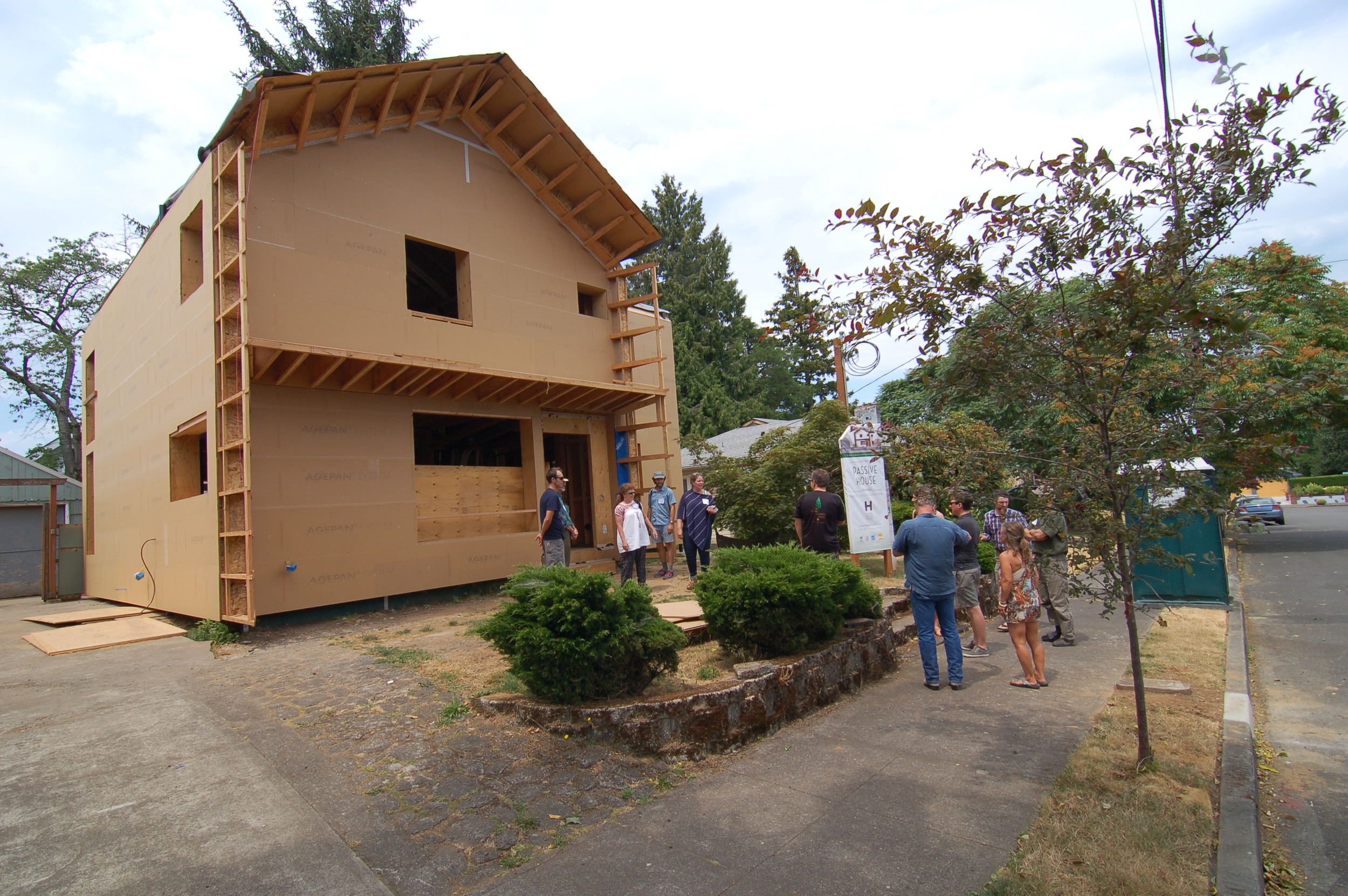
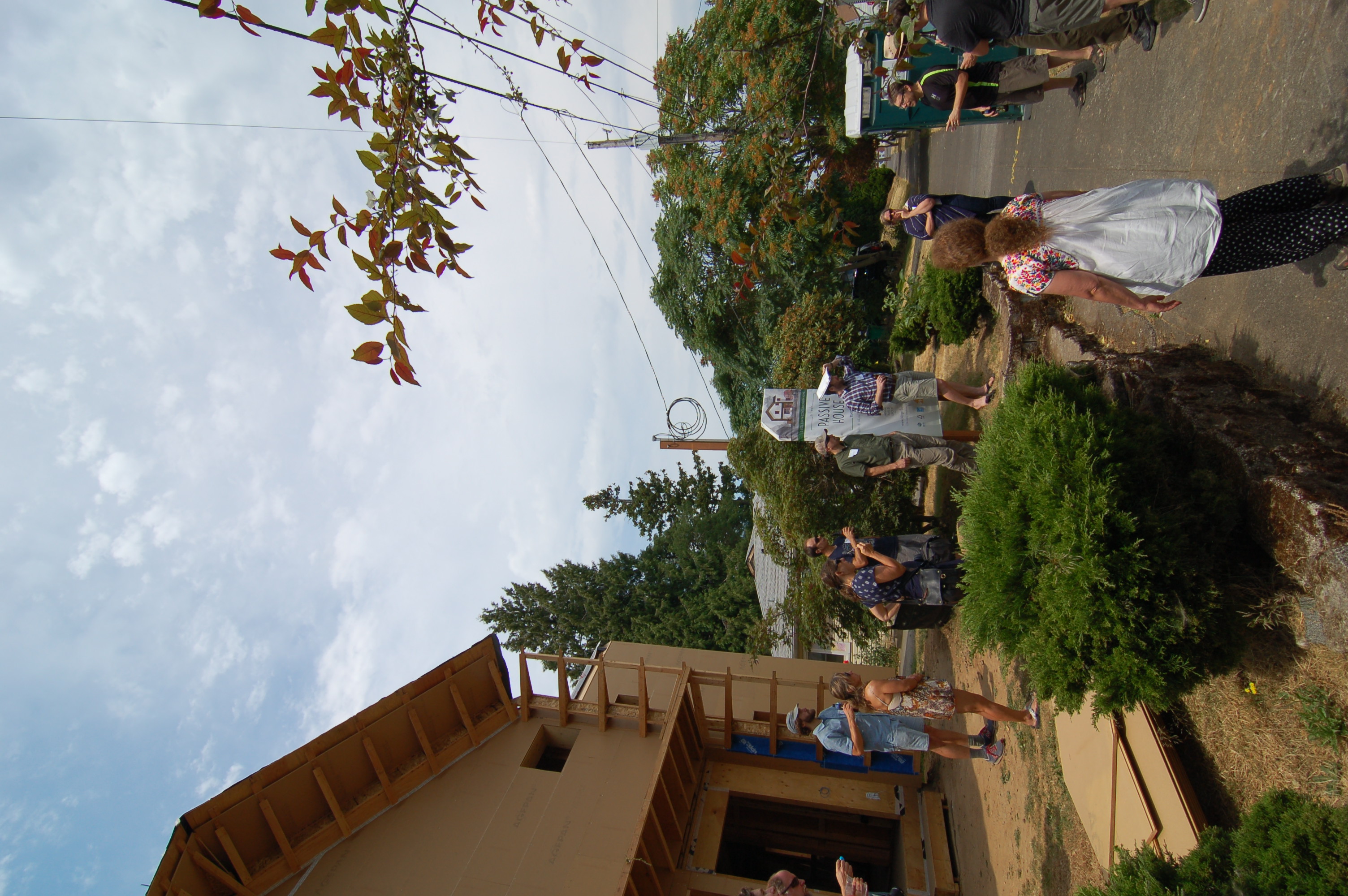
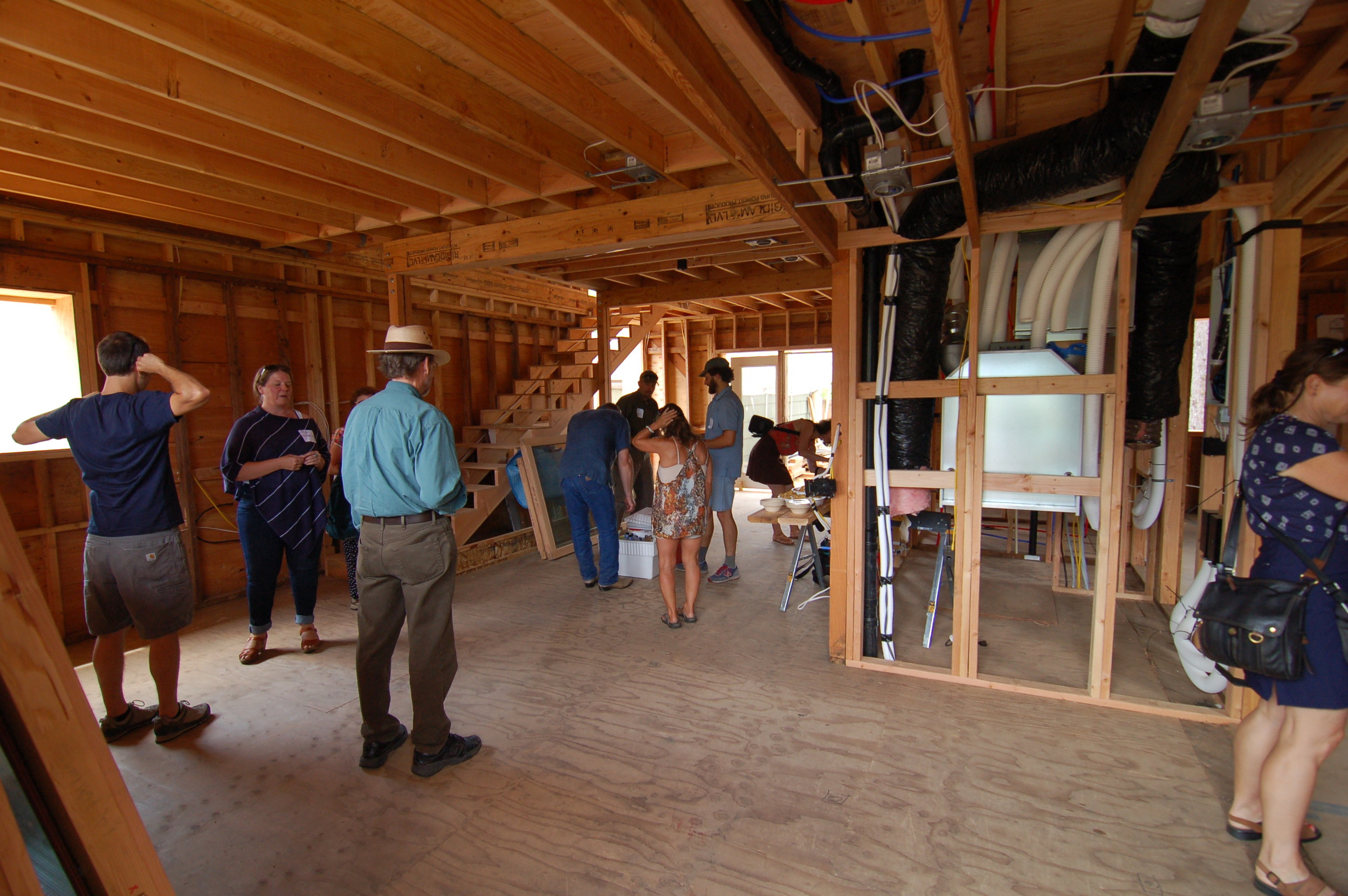
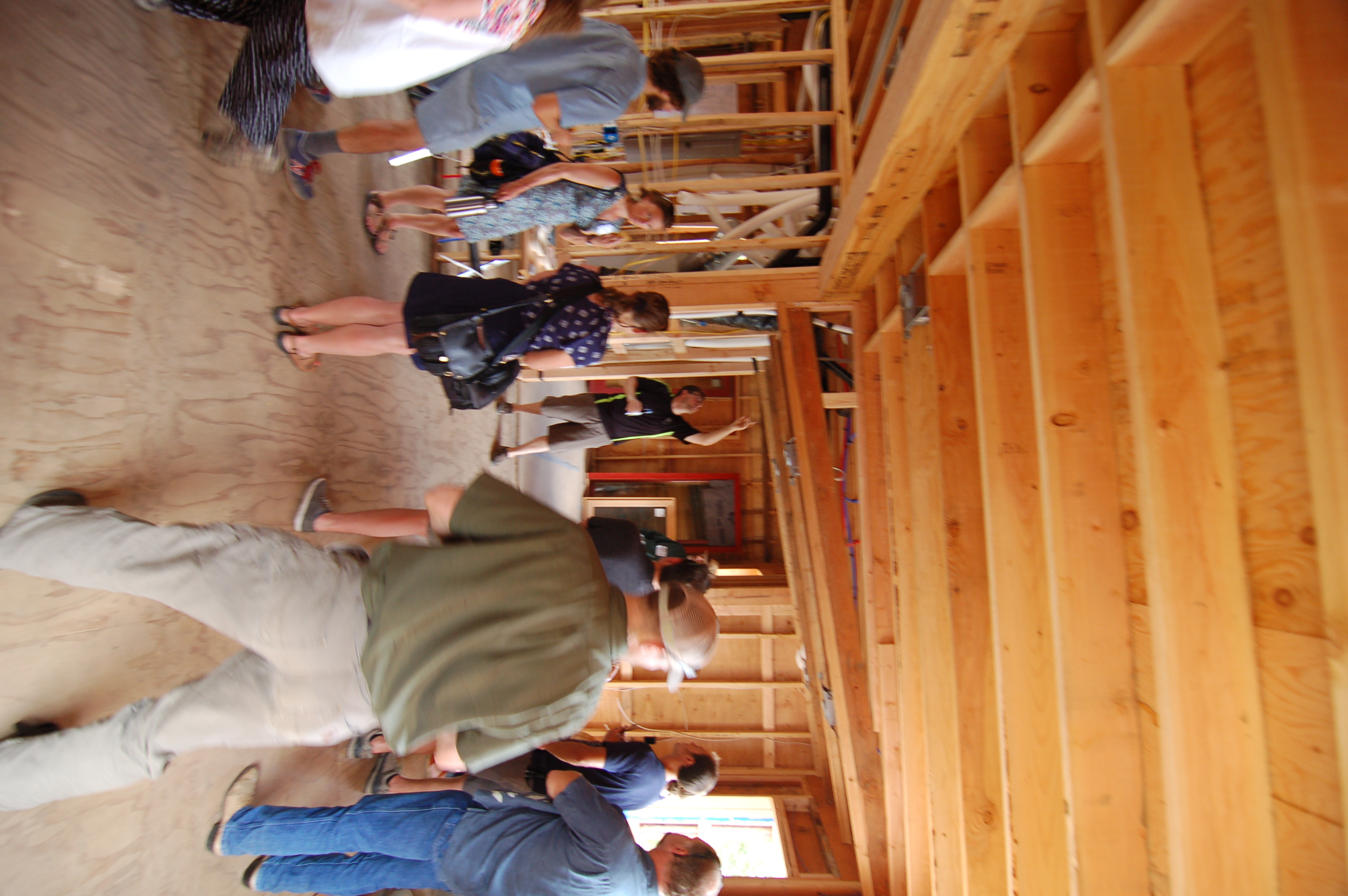
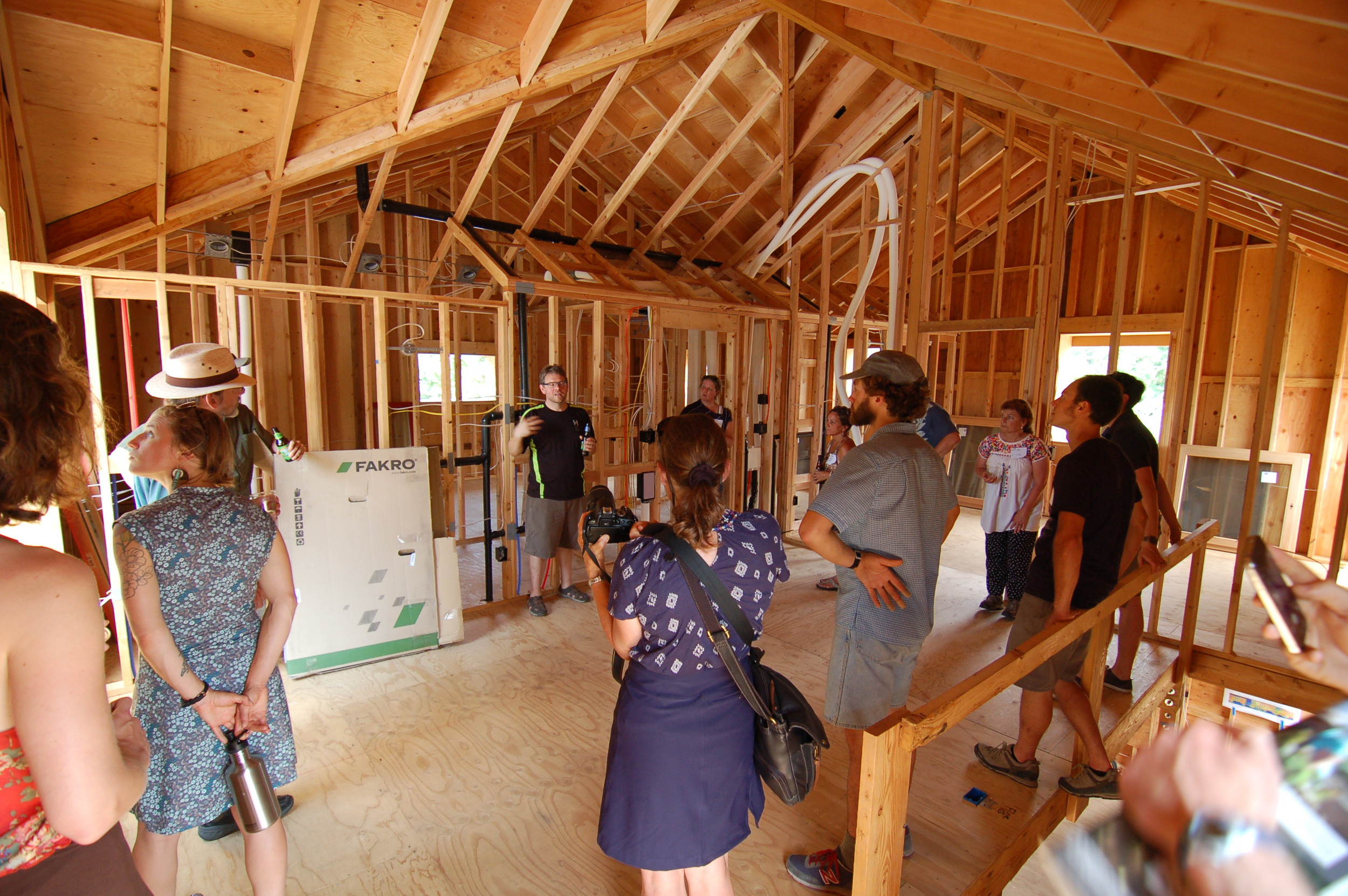
A HUGE Thank You to the Build Local Alliance, Sustainable Northwest, Michelle Jeresek, Alden Boetsch, and everyone who came out to tour our Passive House this Saturday!
It was a scorcher, but everyone was in a great mood and we had some really excellent questions. It is always fun for us to talk to people about Passive House, and to show off our work.
We look forward to the next walk-through!
How to hold 9.5" of Soft & Fluffy Insulation on the Outside of your House...
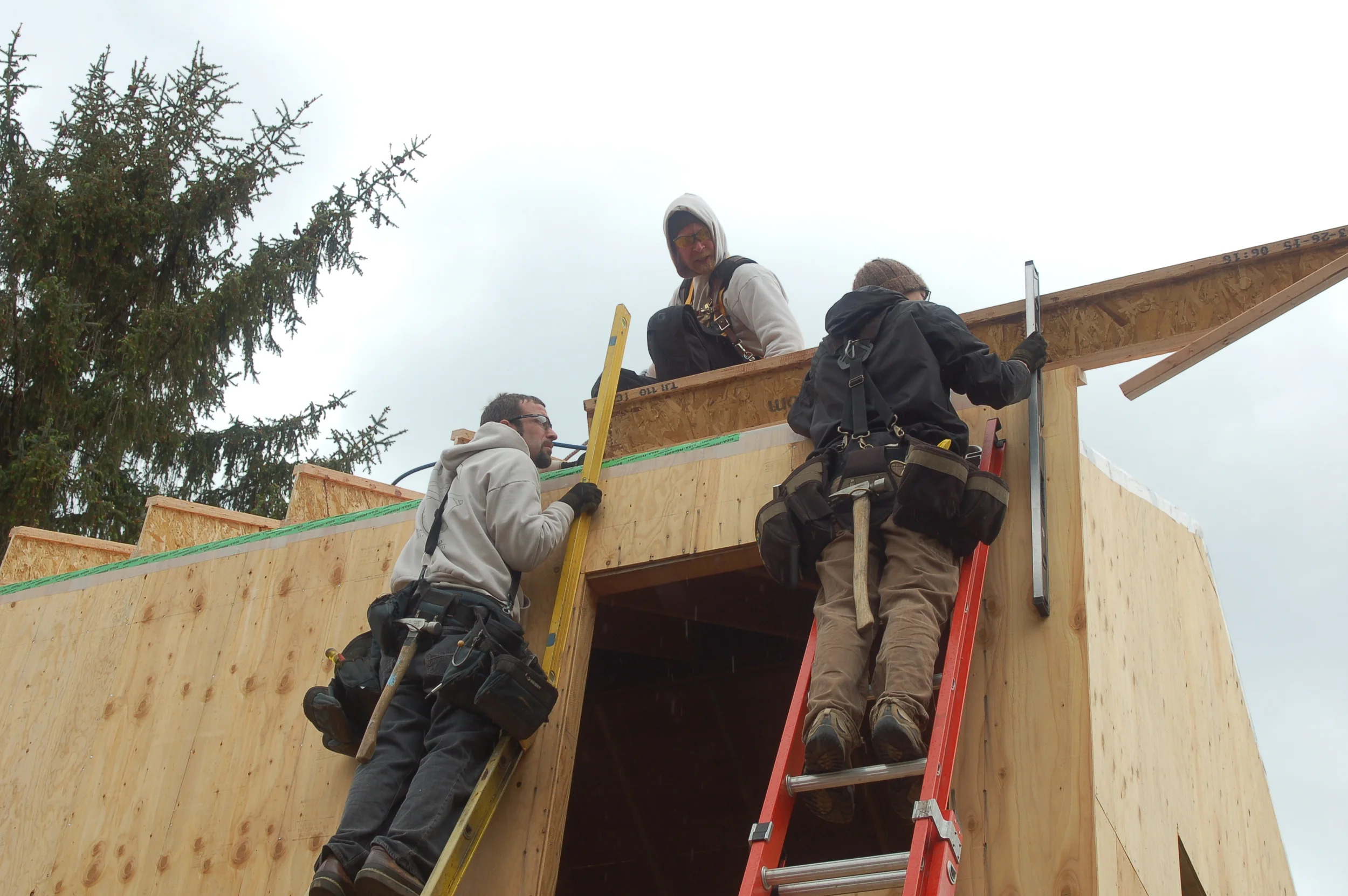
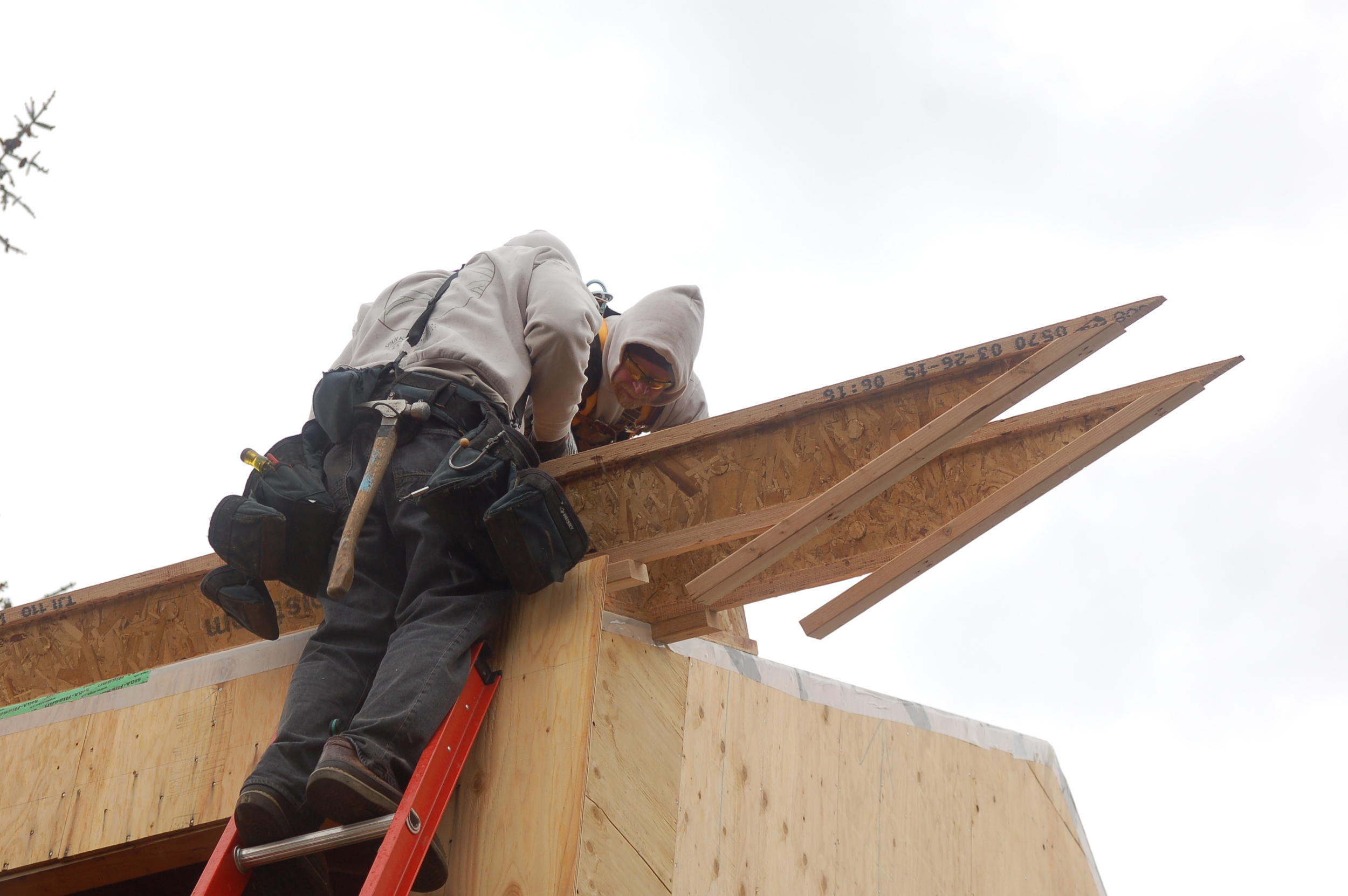
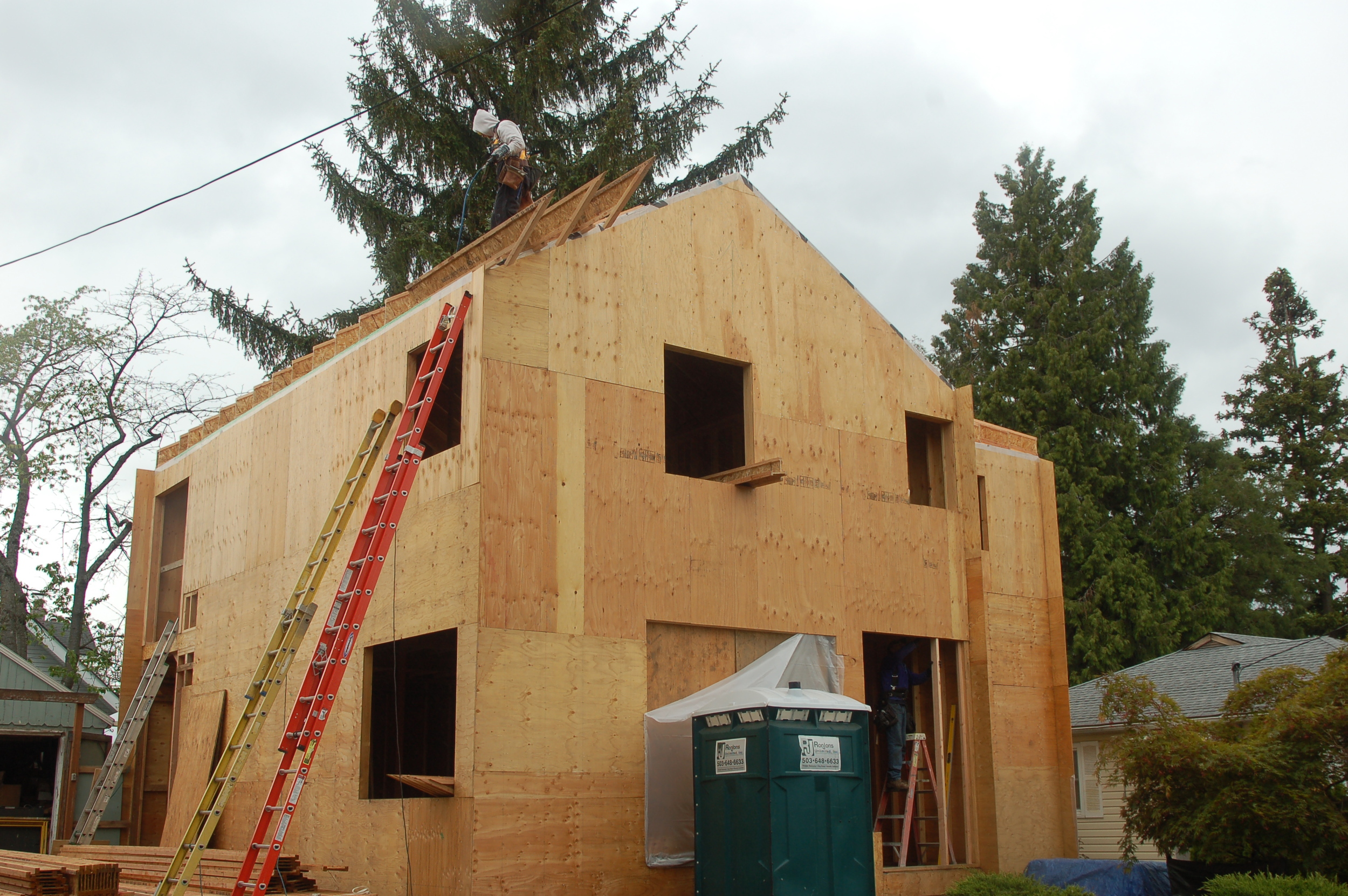
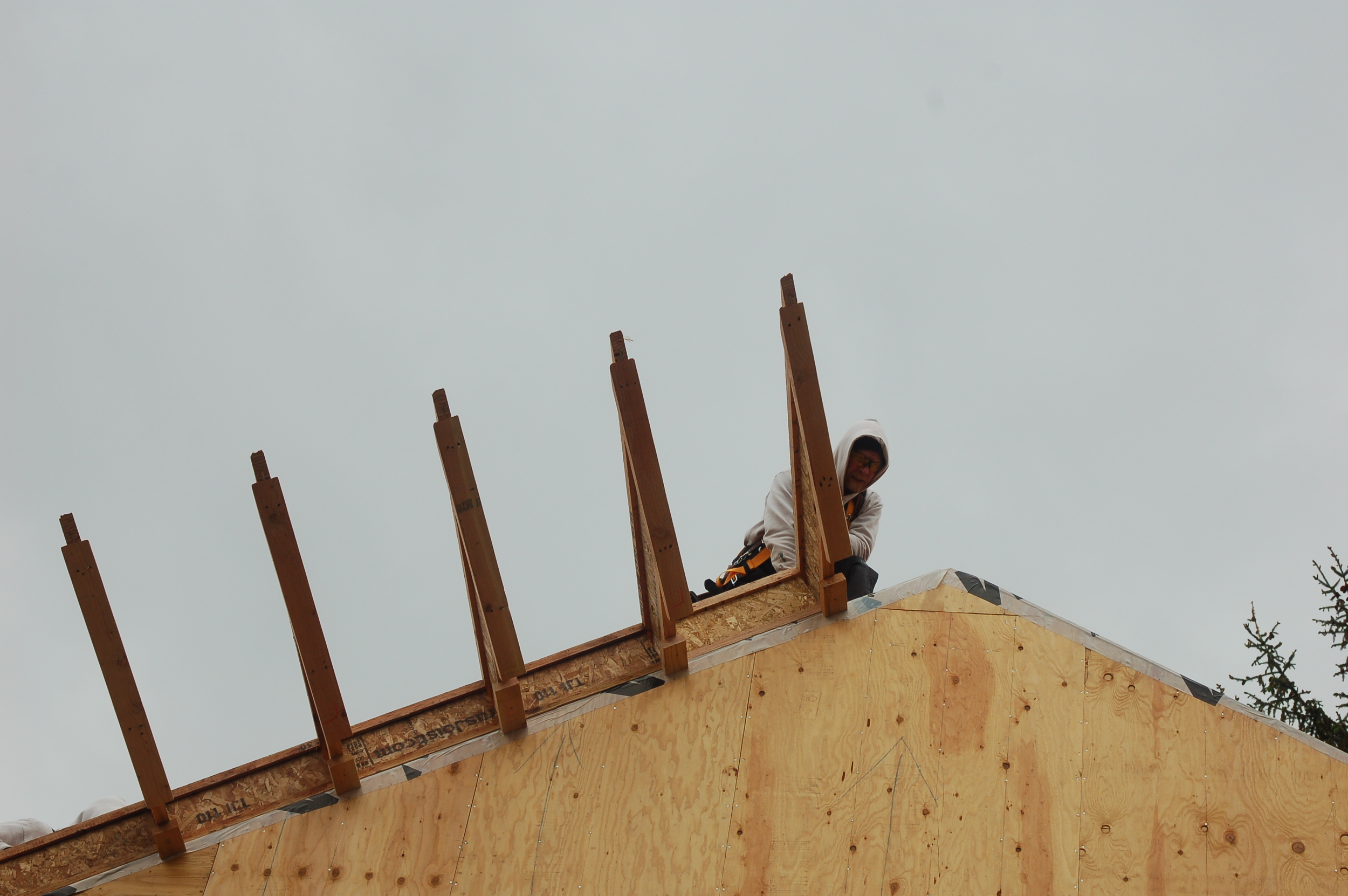
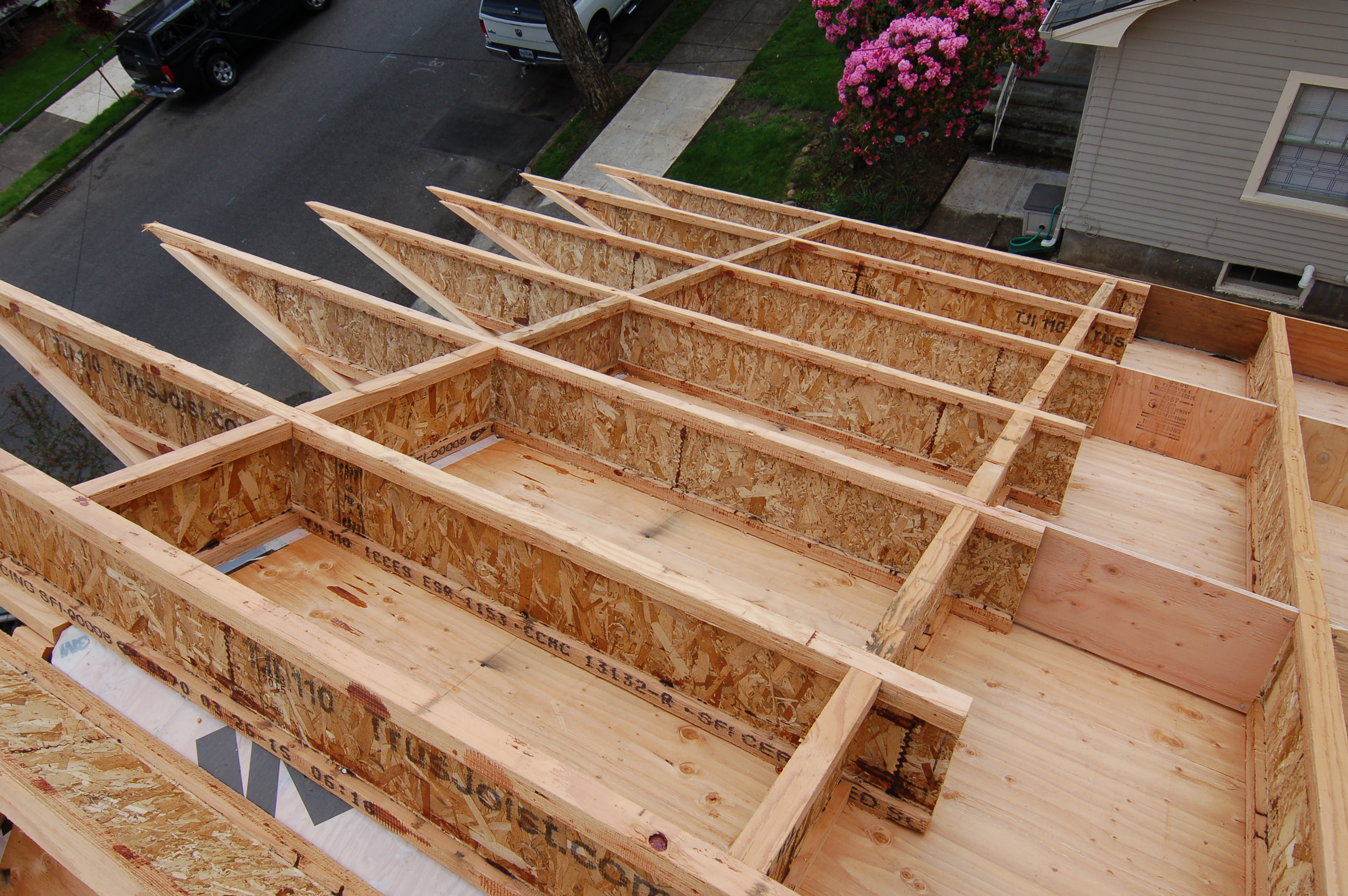
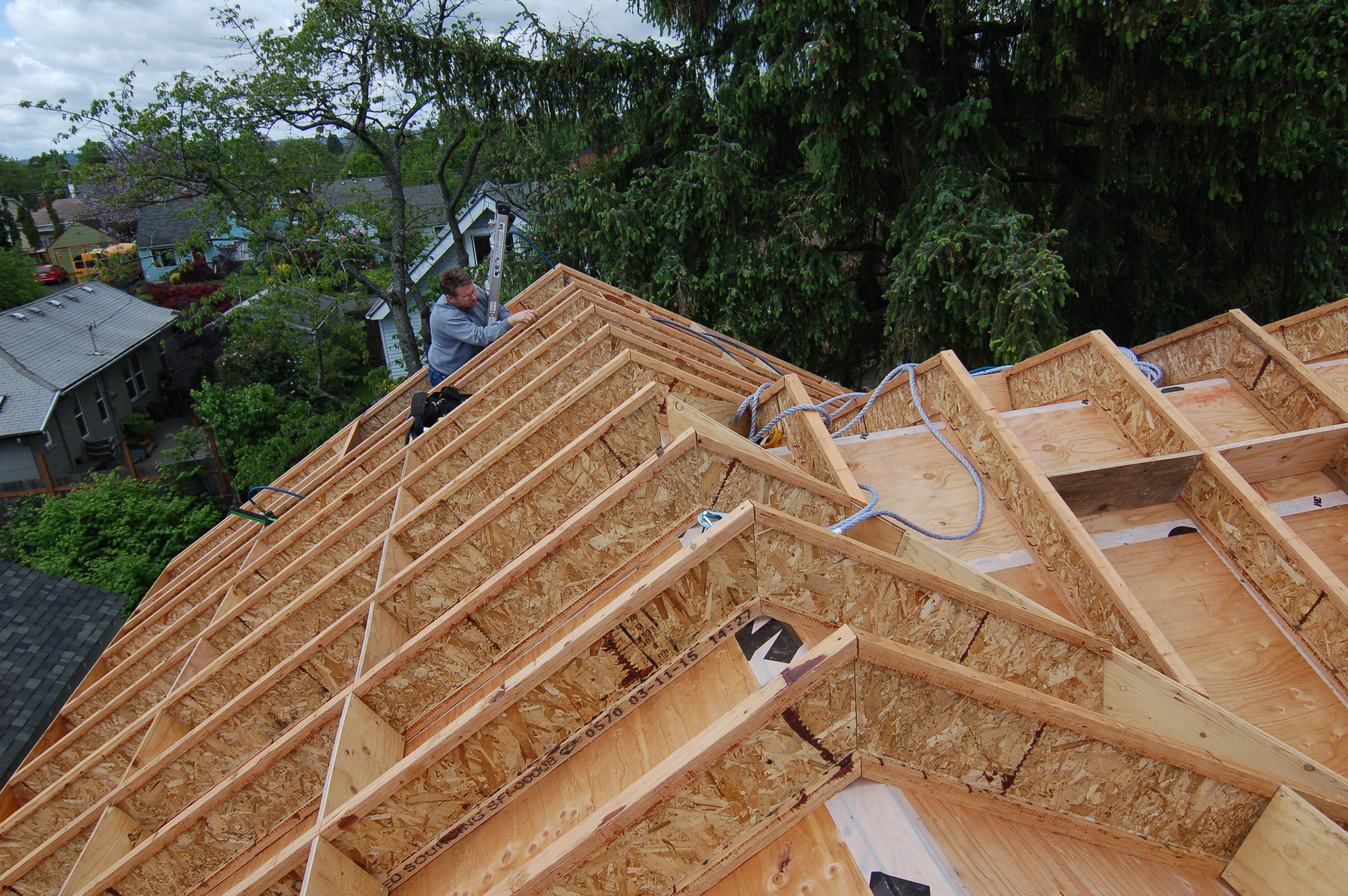

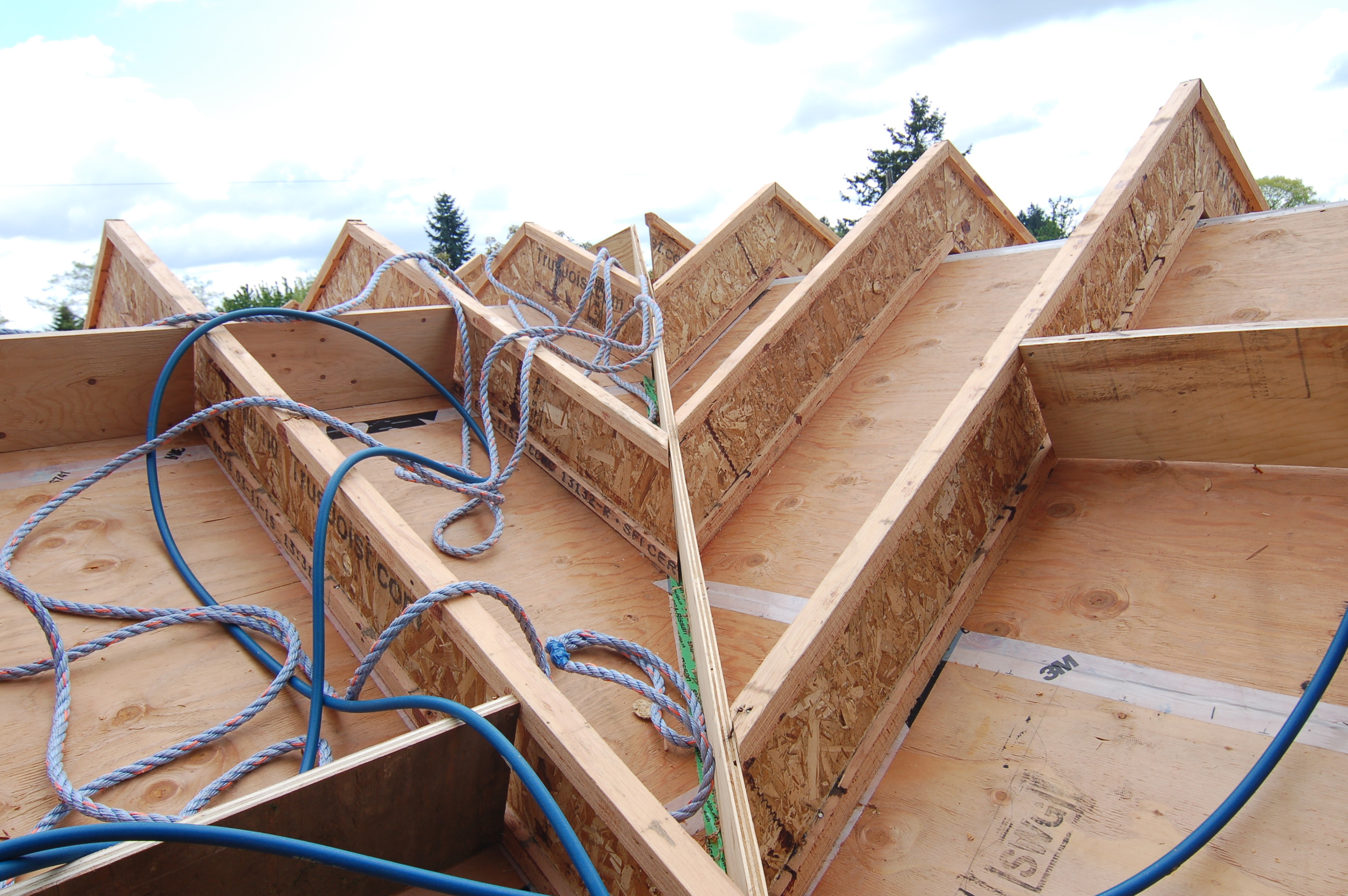

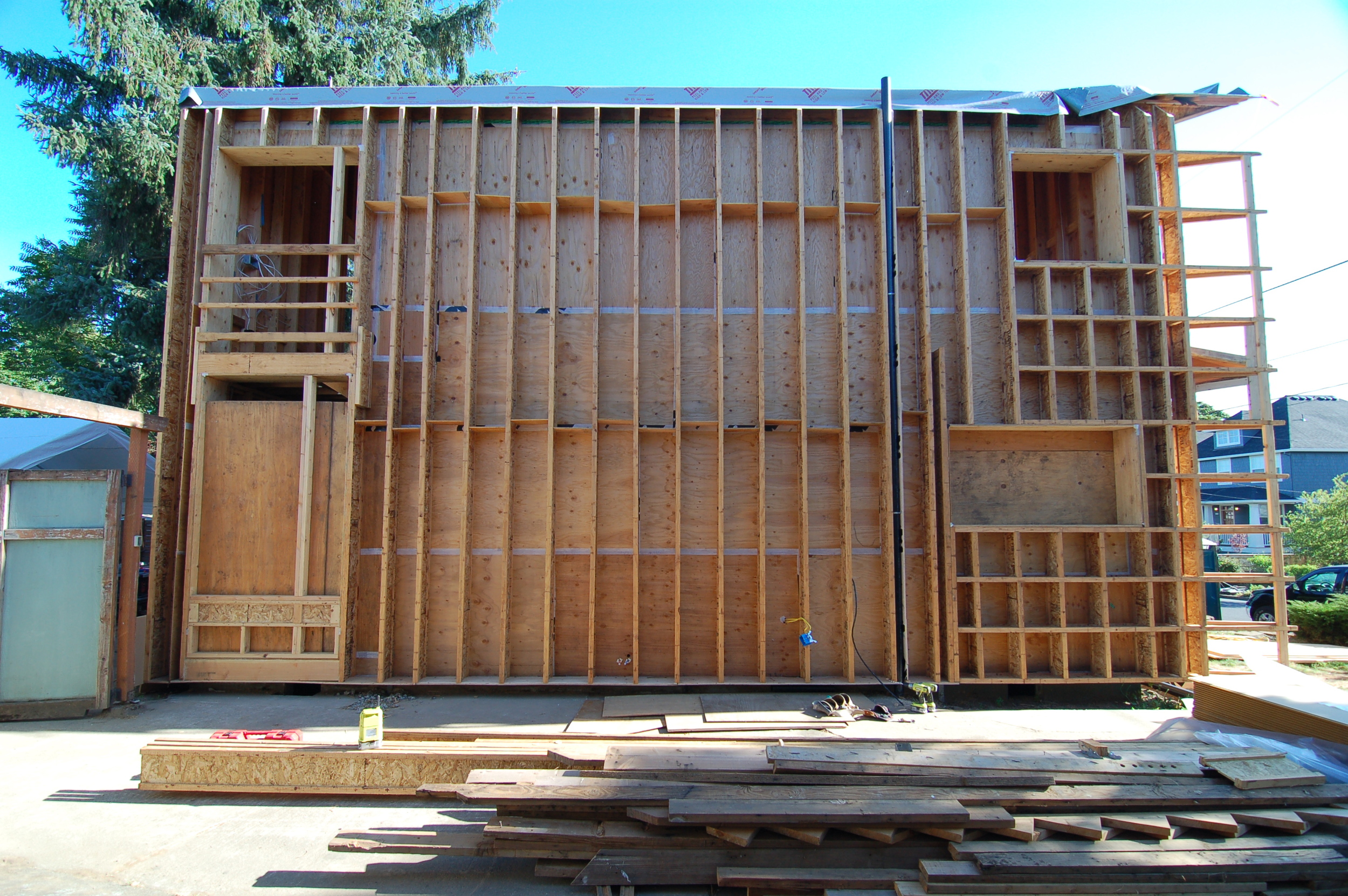

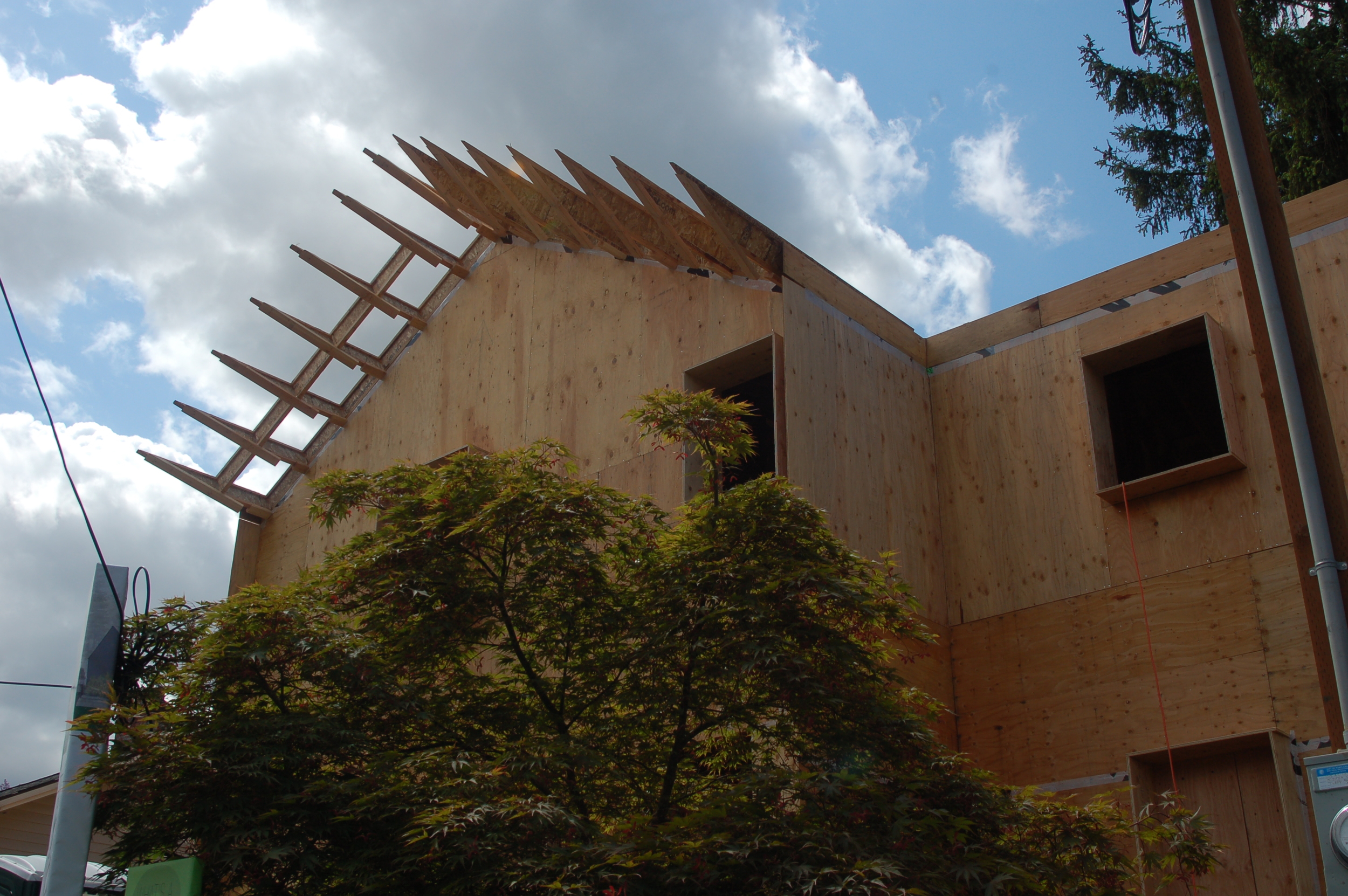
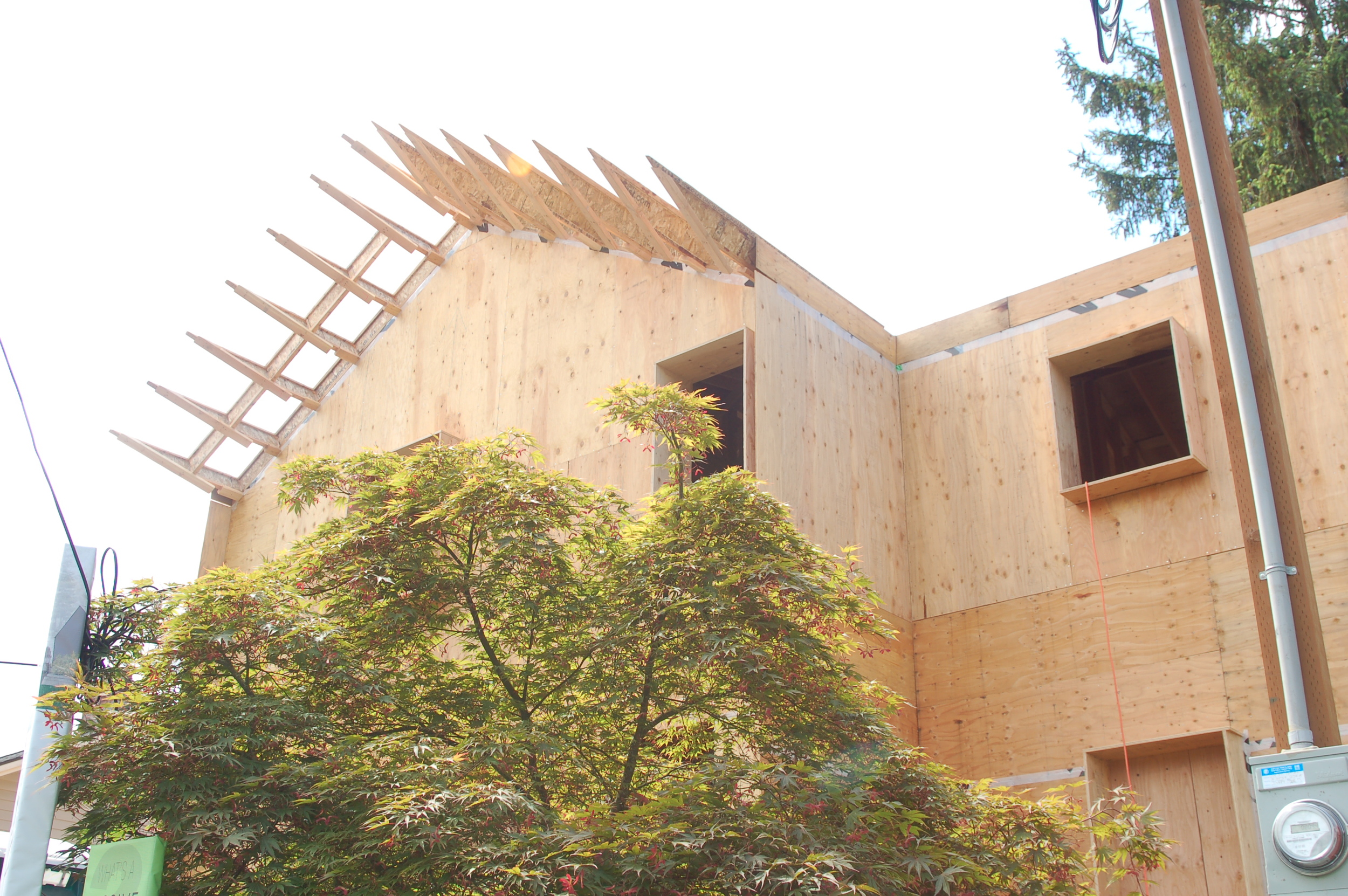
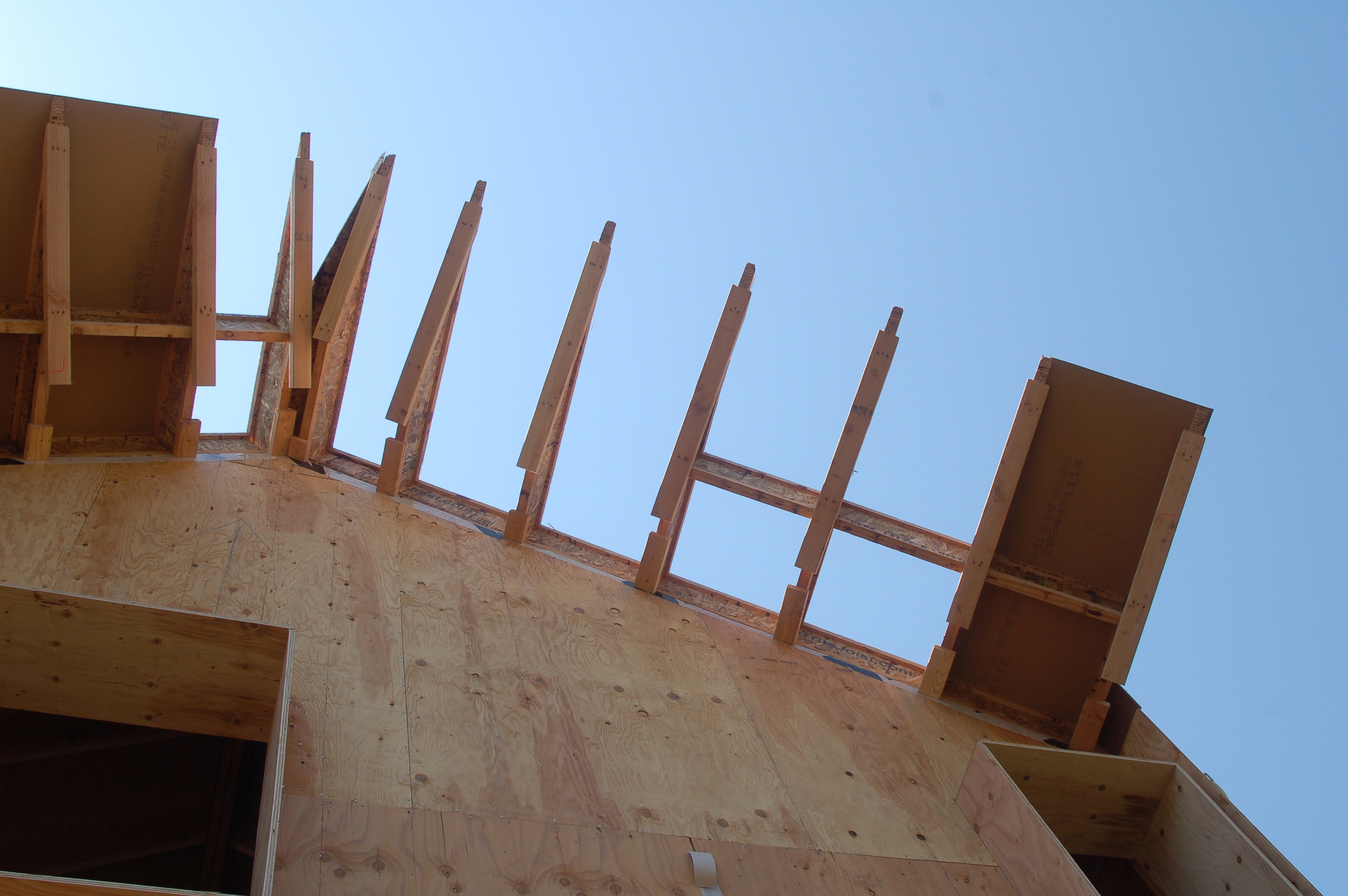
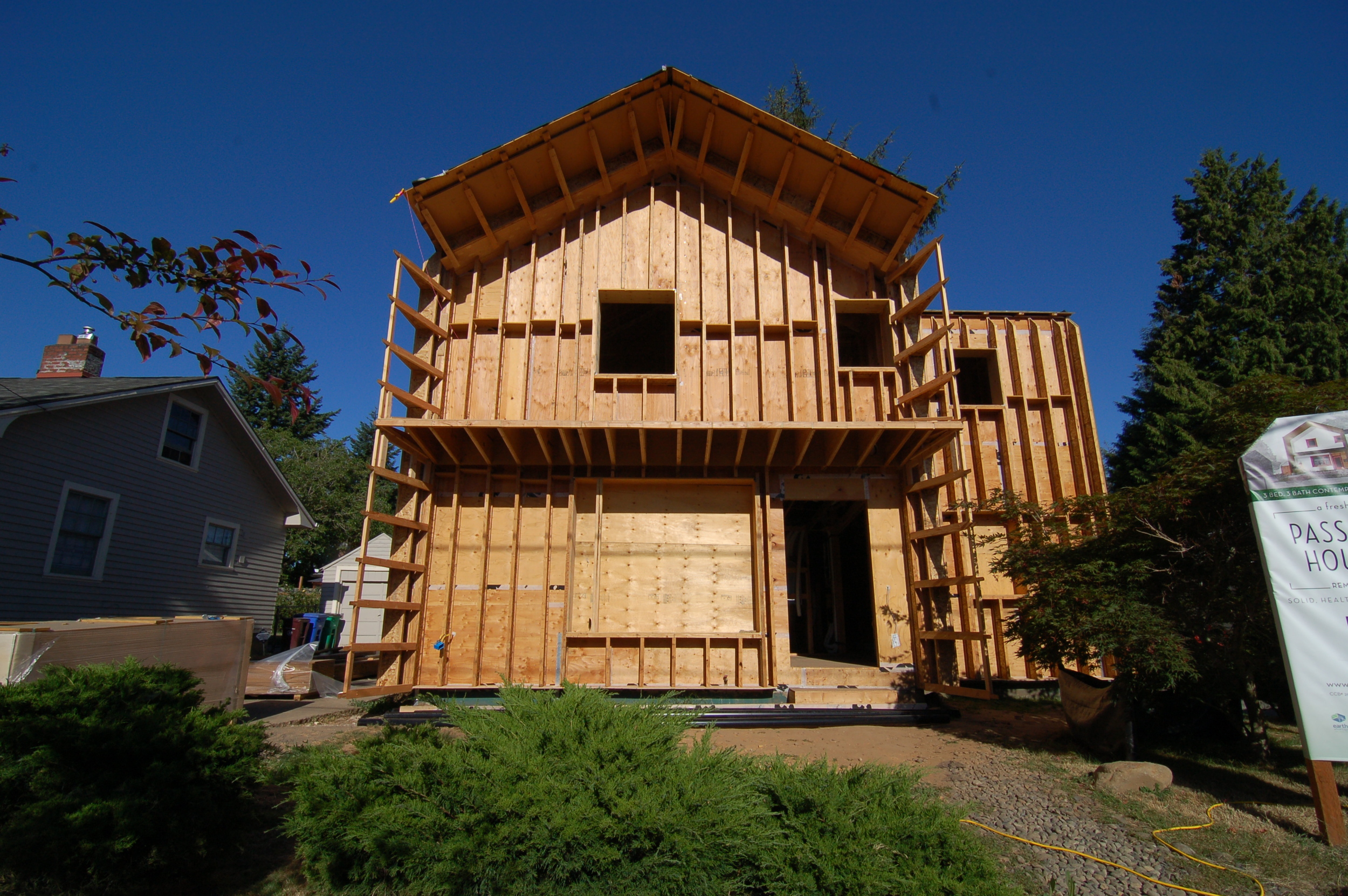
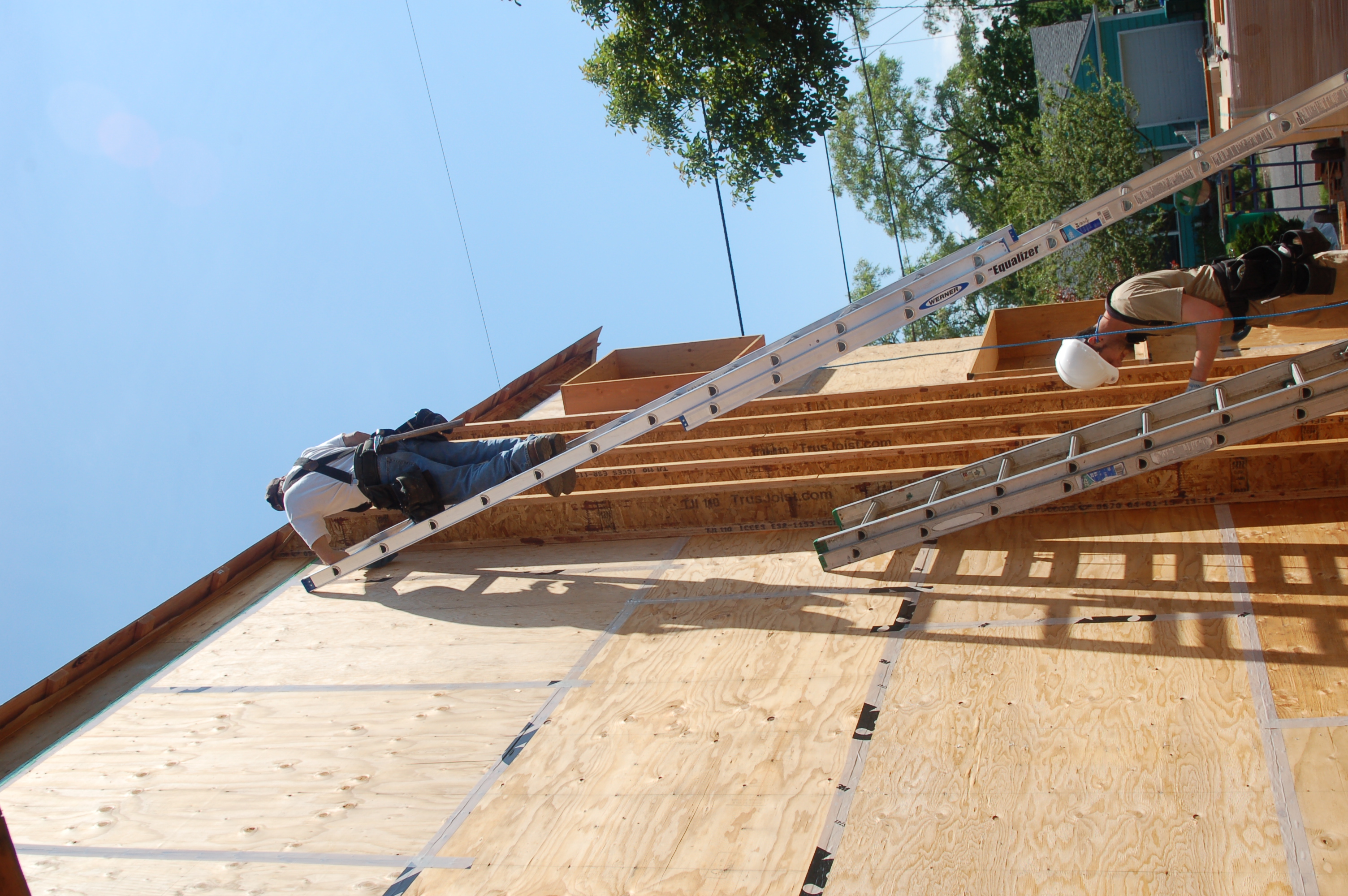

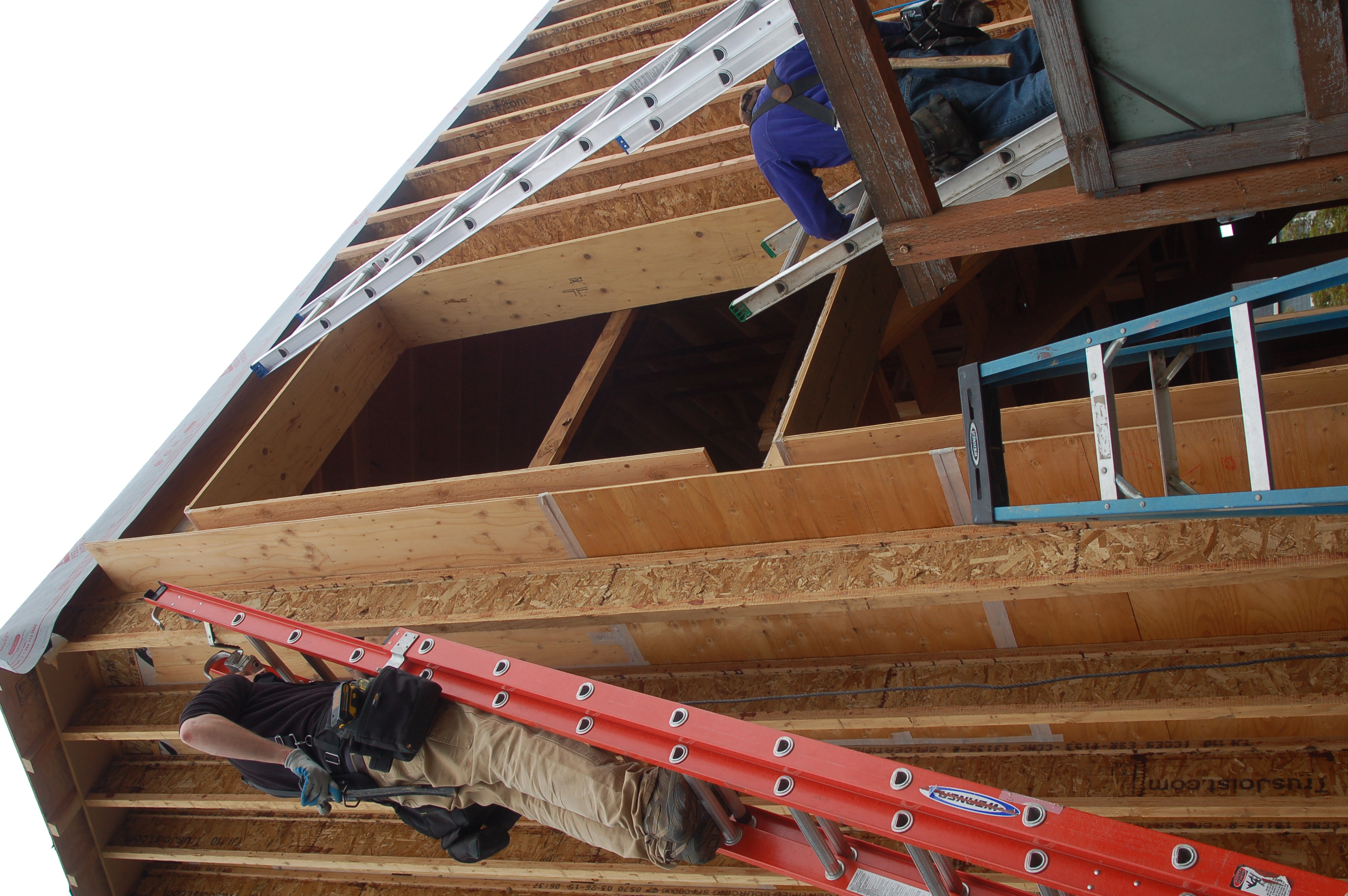
We are trying to build a 'no-foam' home, so we need to use the most environmentally friendly insulation we can find. For us that is cellulose, a product made from simply shredding old newspapers (pretty darn eco-friendly we think!).
The issue is how do you you get enough cellulose into your wall assembly to get the high R-Values we need? Since cellulose is so light and fluffy, you need to add something structural to the envelope to hold the it in, and to attach all your siding too as well.
We chose a tried and true system of attaching vertical wooden I-Joists to the structure of the home on the outside of the plywood sheathing.
This works GREAT!
This is also a giant pain in the butt!
First, you have to make sure you have built the house so that the 2nd and 1st story studs line up with each other, so the I-Joists can span from the very bottom of the house to the very top plate.
Second, you have to install them everywhere! Basically we are re-framing our project. A huge time consuming effort as well as a hit to the pocketbook, and a big increase in the embodied energy of the home. We dodged the energy part by using local wood, and we were hoping to use FSC certified I-Joists. Sadly we couldn't get the FSC product in time, so had to use 'normal' ones. Still, adding wood product, grown in at least marginally managed, local forests is far better than framing the project even once in steel or concrete, so we feel OK about that.
Finally, it took about 3.5 weeks for us to install all the roof & wall I-joists. Since we had never done this before, we estimated it would take about half that time. This is likely the reason that some other companies have opted to try their hand at attaching insulation like Rockwool to the exterior instead. Talking with them about this, that technique seems to have it's own difficulties as well!
In the end we have a really strong, bullet-proof system, but in the future we may also be looking at other ways to bump our R-value.
If this was a 'from-the-ground-up' project we would have gone with a double stud wall cavity. But, even this has the issue of where to put the air barrier, so I guess there is no magic bullet yet, but we are working on it!
I have to say though...we got LOTS of people stopping by when we had the I-joists exposed on this project. Builders from all over the country and the world have somehow just happened on our site and stopped to ask us what is going on! One guy was biking by on a trip from Santa Cruz to Virginia! Another was here visiting his daughter from DC. Everyone wants to check out the details and all had really lovely comments on the quality of work we were doing.
Funny how so many people LOVE to see a well-built house, but how few of them are being built these days. We are really happy to have the opportunity to do this level of work, and proud to be involved in the Passive House revolution!
The Roof...or should we say ROOFS?...

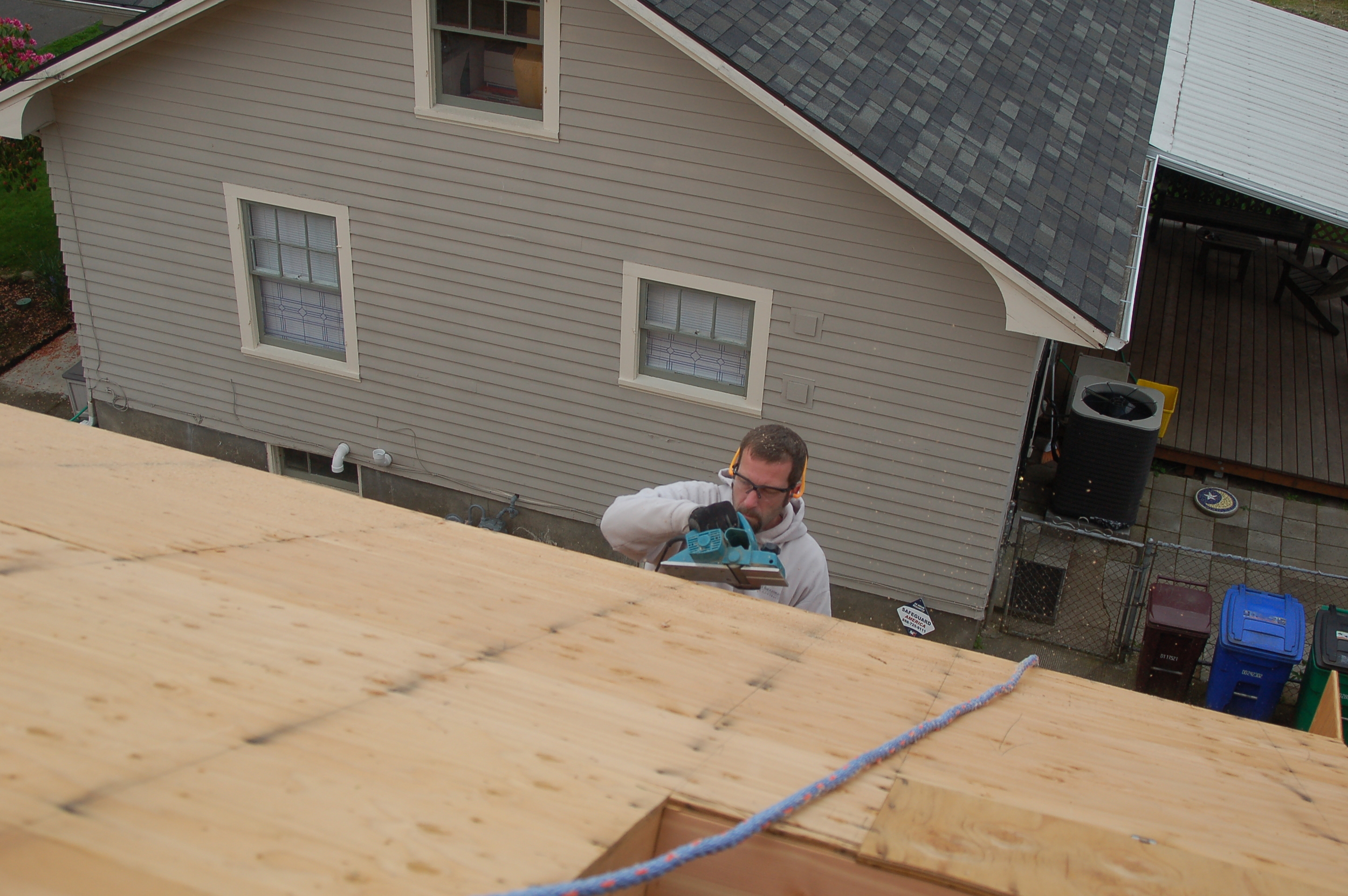

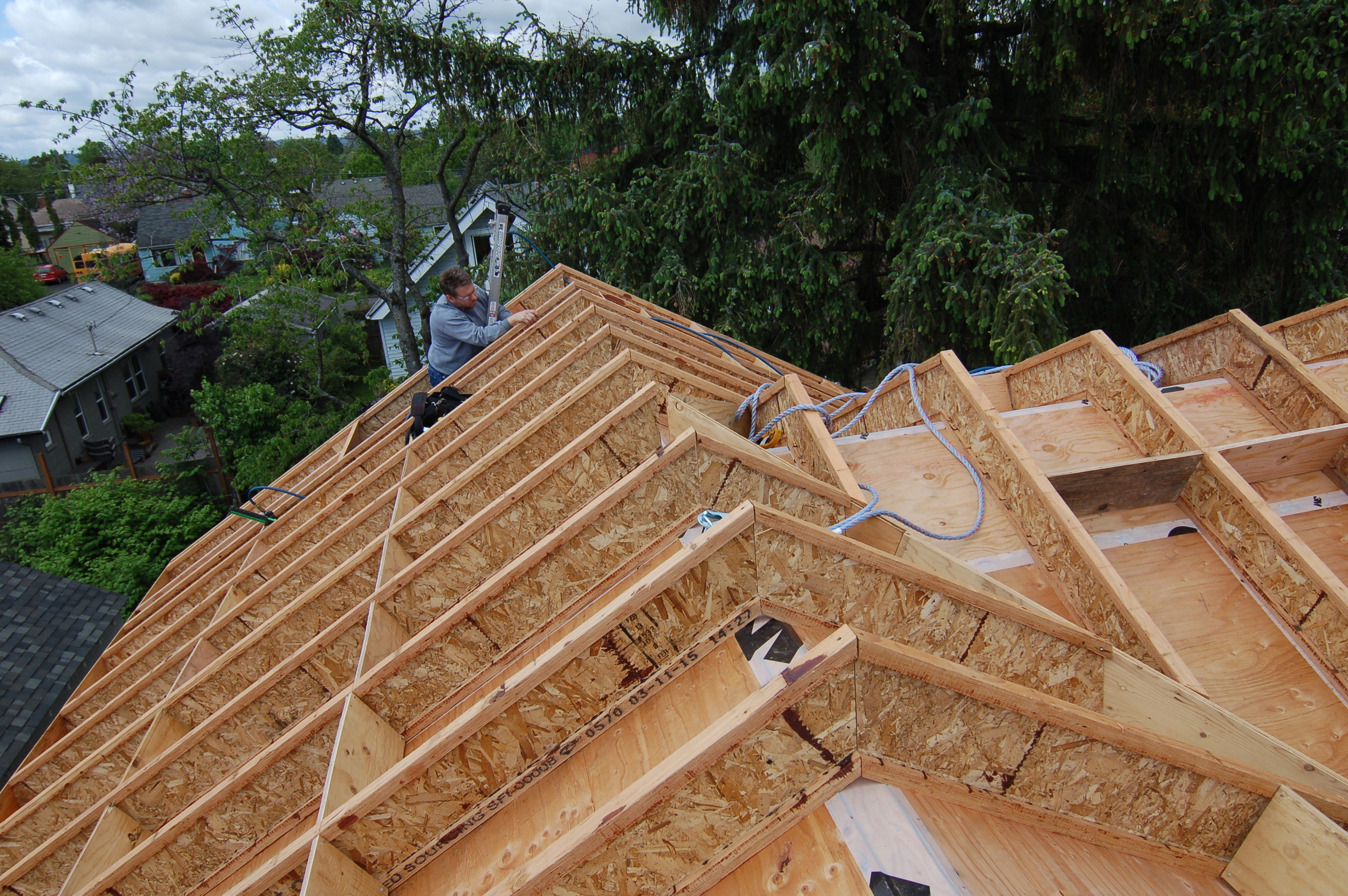
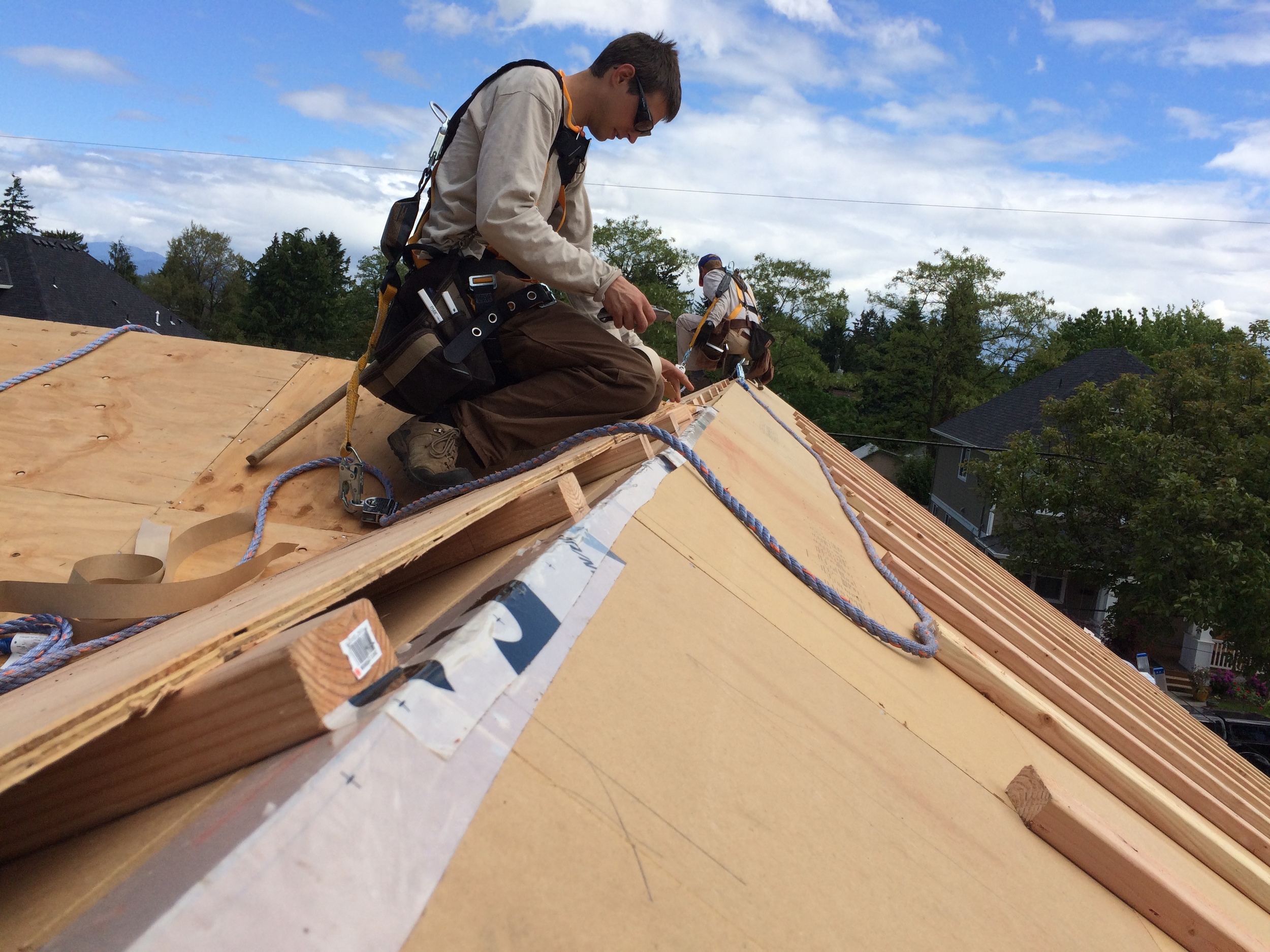
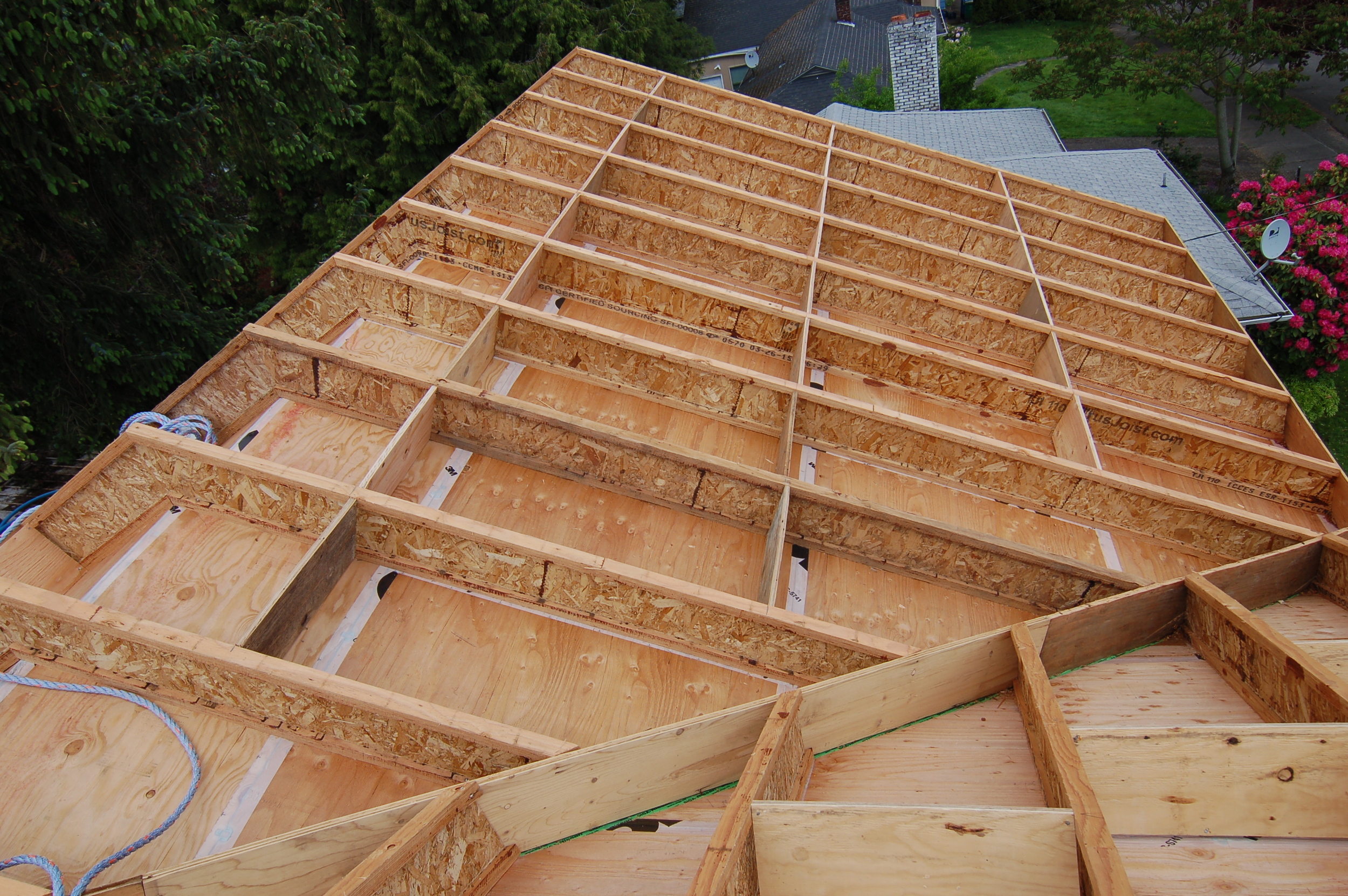
Most homes have one roof...pretty normal, right?
A few years back I was talking with a roofer about how heat is the big killer for most roofs. I half-jokingly said that we should just build a shade over the roof to protect it. Something like a second roof that takes all the sun damage and weather and preserves the 'real' roof.
Well, basically that is what we have done here. We have your typical 1/2" plywood roof that we have air sealed. Then we added another structural layer to this to hold more insulation. On top of this we added a weather protection layer made out of wood fibers and wax called Agepan. Above all this we added a vented cavity for drying and another 1/2" plywood layer!
So where I was joking about 2 roofs, we actual have 3 of them on this project! 1-structural, 2-Vented Thermal Barrier, 3-Weather-Proof Top Layer with a metal roof on this...Hmm we may officially have 4 I guess!
Thanks for Coming to Our First Tour!...
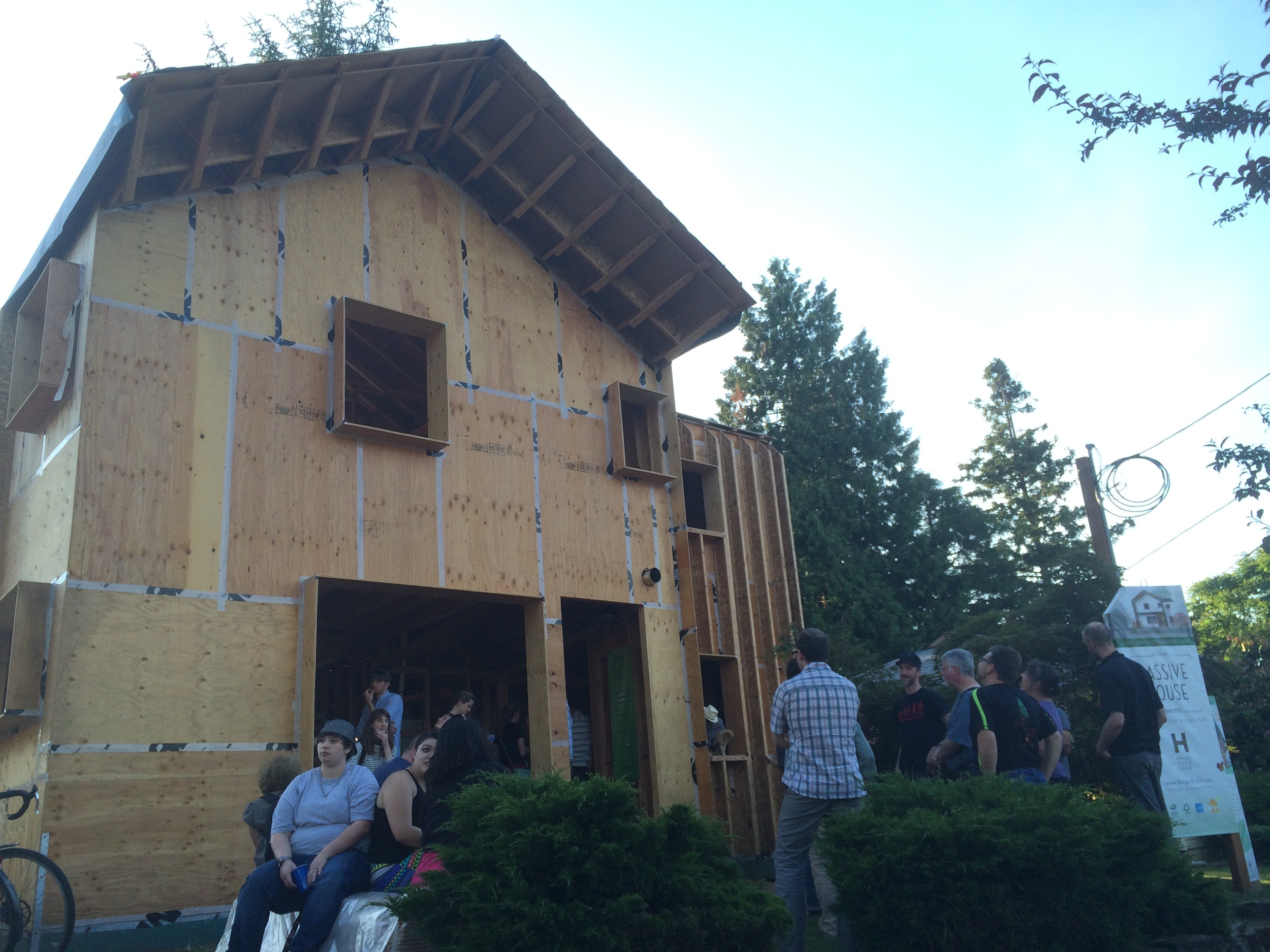
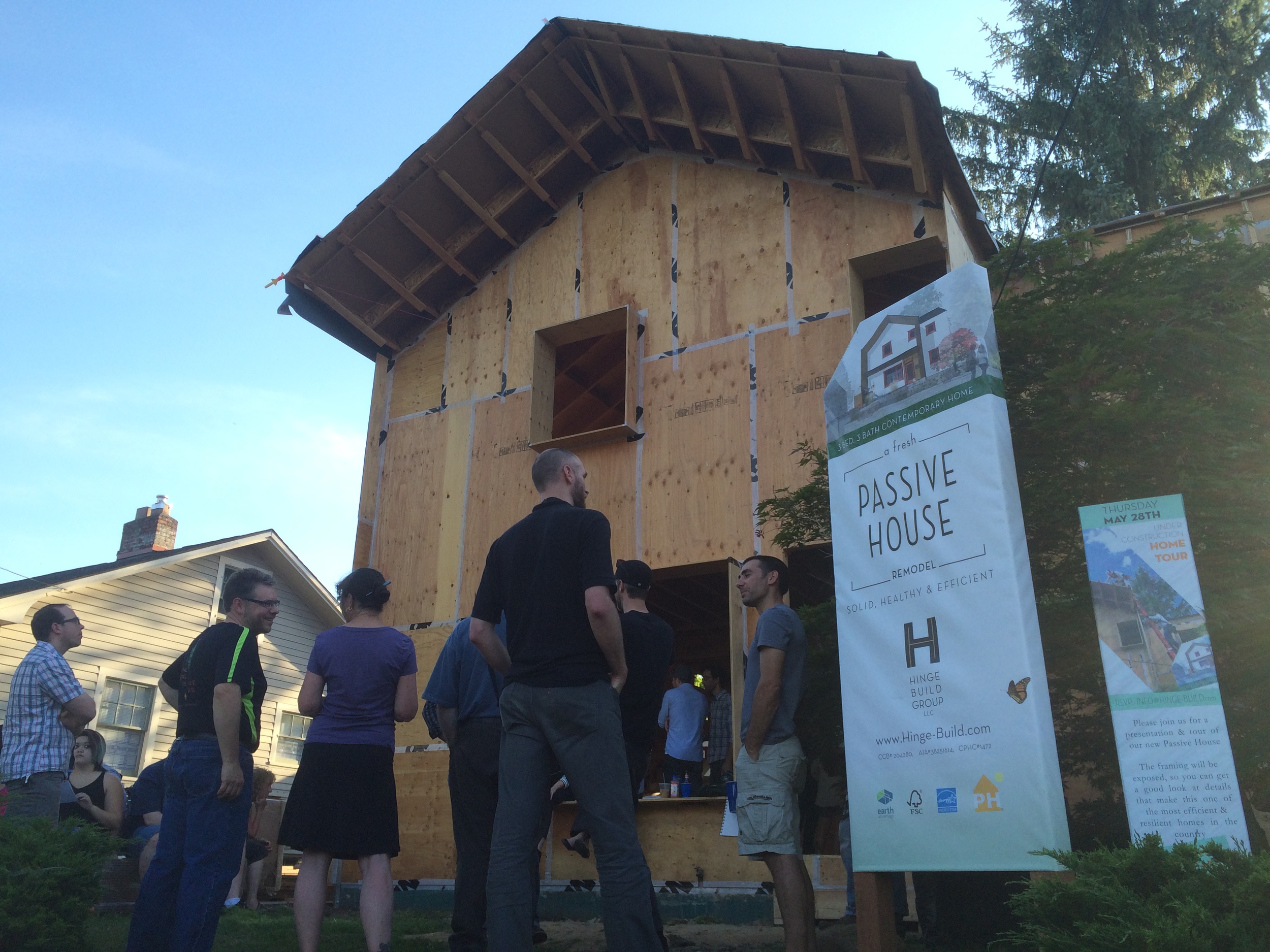
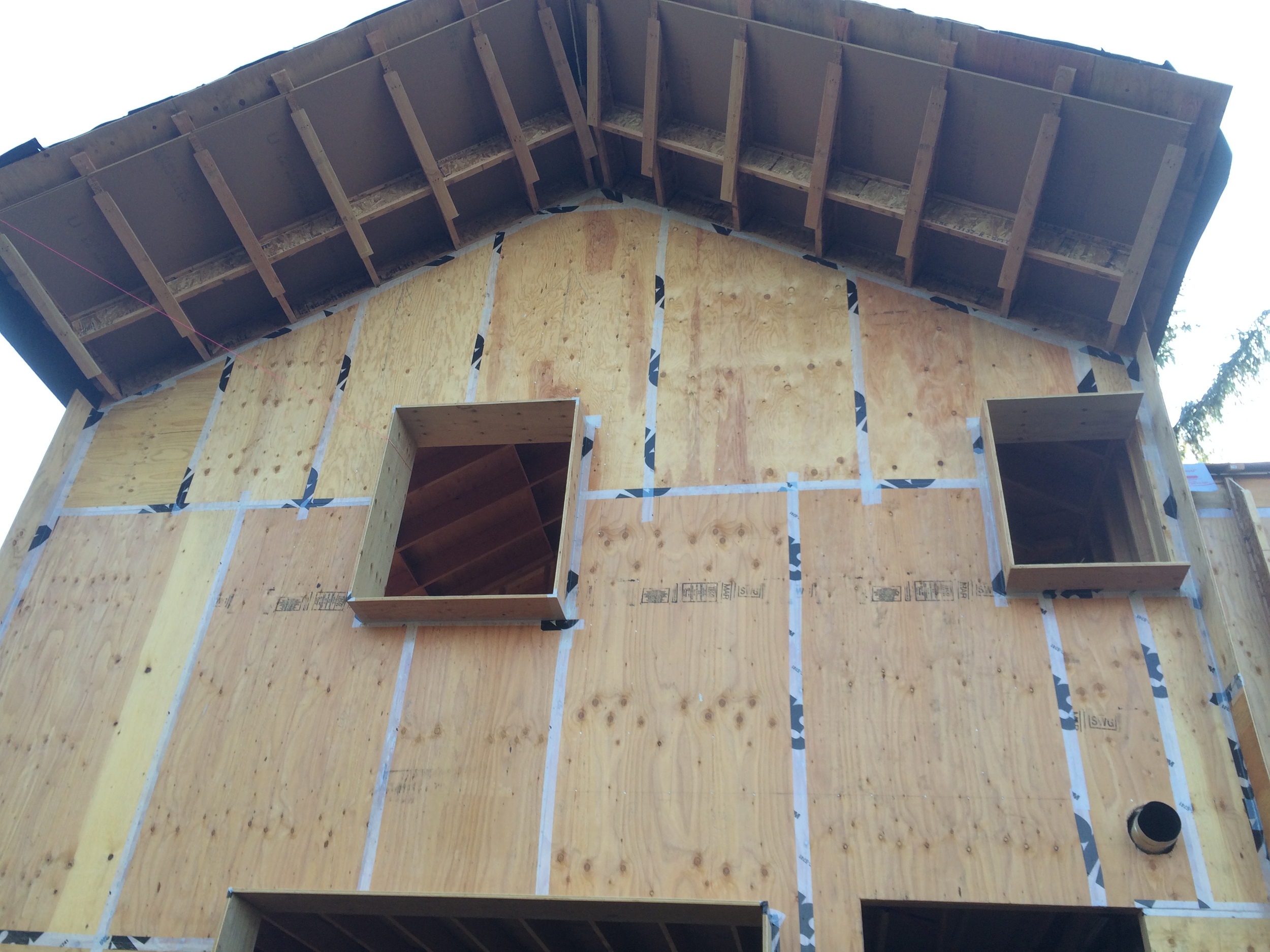
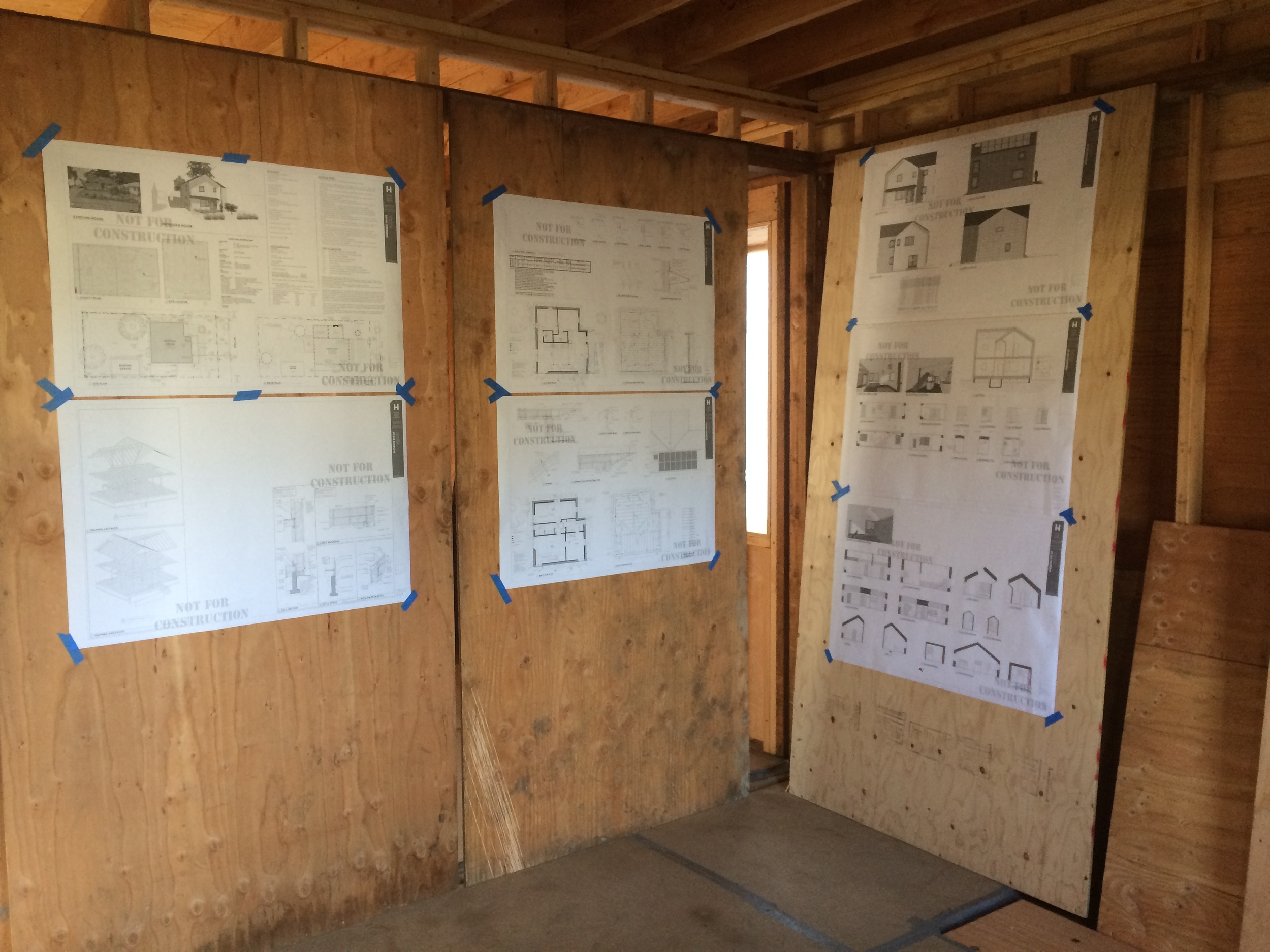
We had a fantastic turnout for our first Open House/Tour!
Thanks to all who showed! In all we had over 40 people tour the project and listen to a quick presentation on what we are trying to achieve, and how Passive House can help us build better buildings.
We will have another tour on June 27th as part of the Build Local Alliance's Summer Event! We hope you can make that as well.
As always, educating tradespeople and homeowners is one of our main missions, and if you can't make these public tours, feel free to contact us for a private tour or to chat about high-performance building.
We LOVE this stuff!
New Website!...
New Posts Coming!
As we transition to our new website, we will be relocating the blog posts from our old site.
Please be patient as we get everything back in order here.
Thanks!
Second Floor Framing...
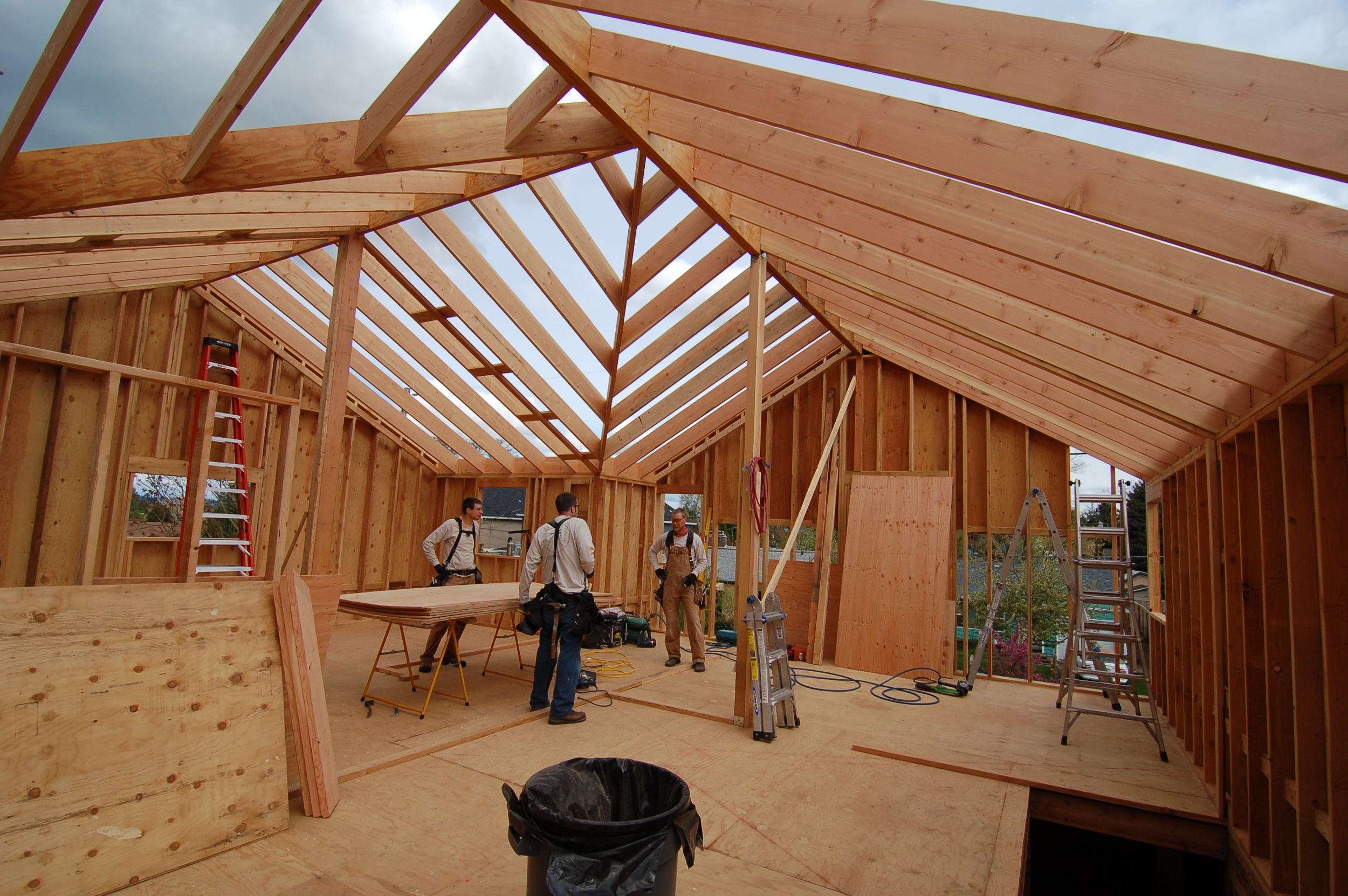
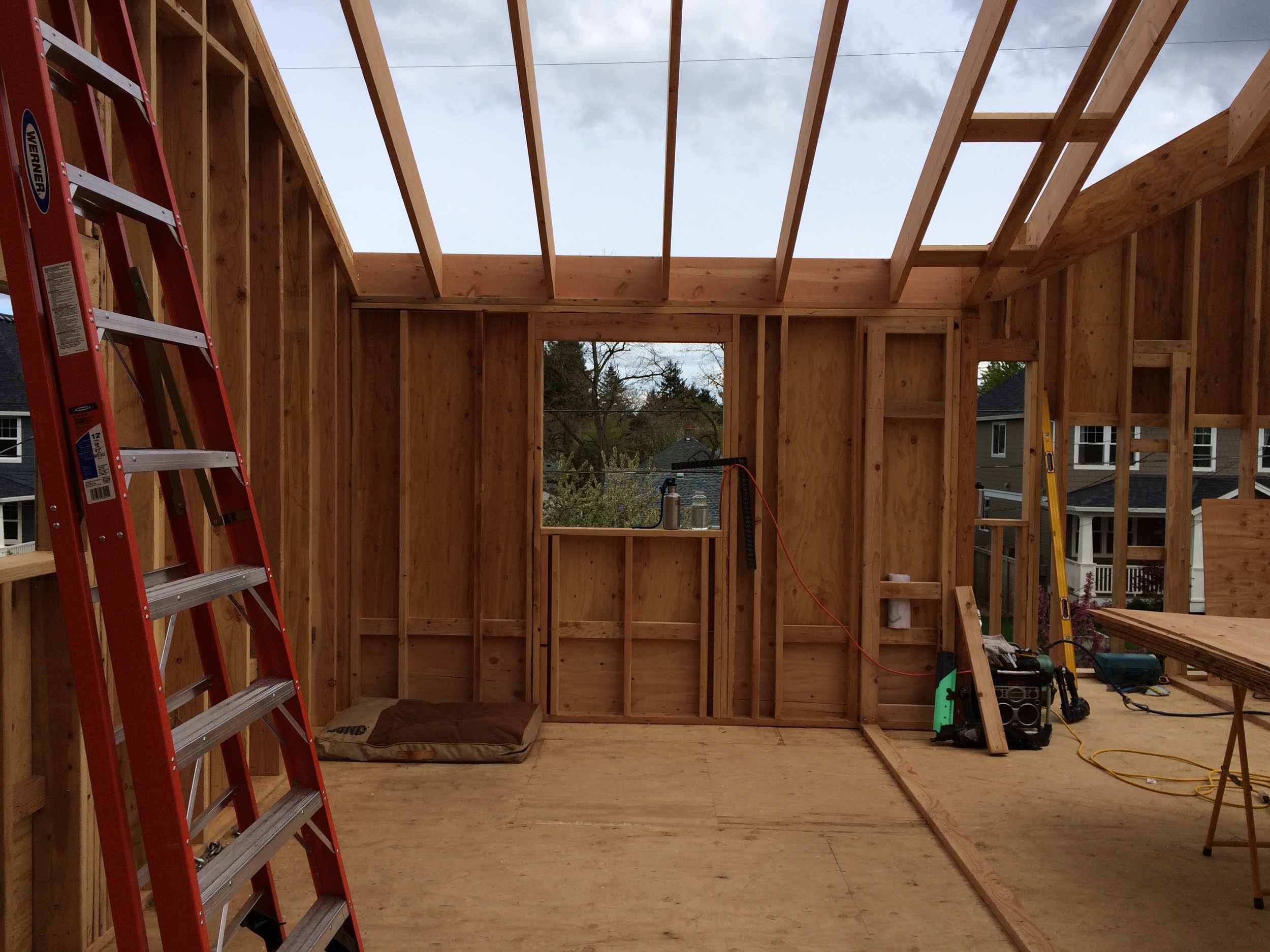
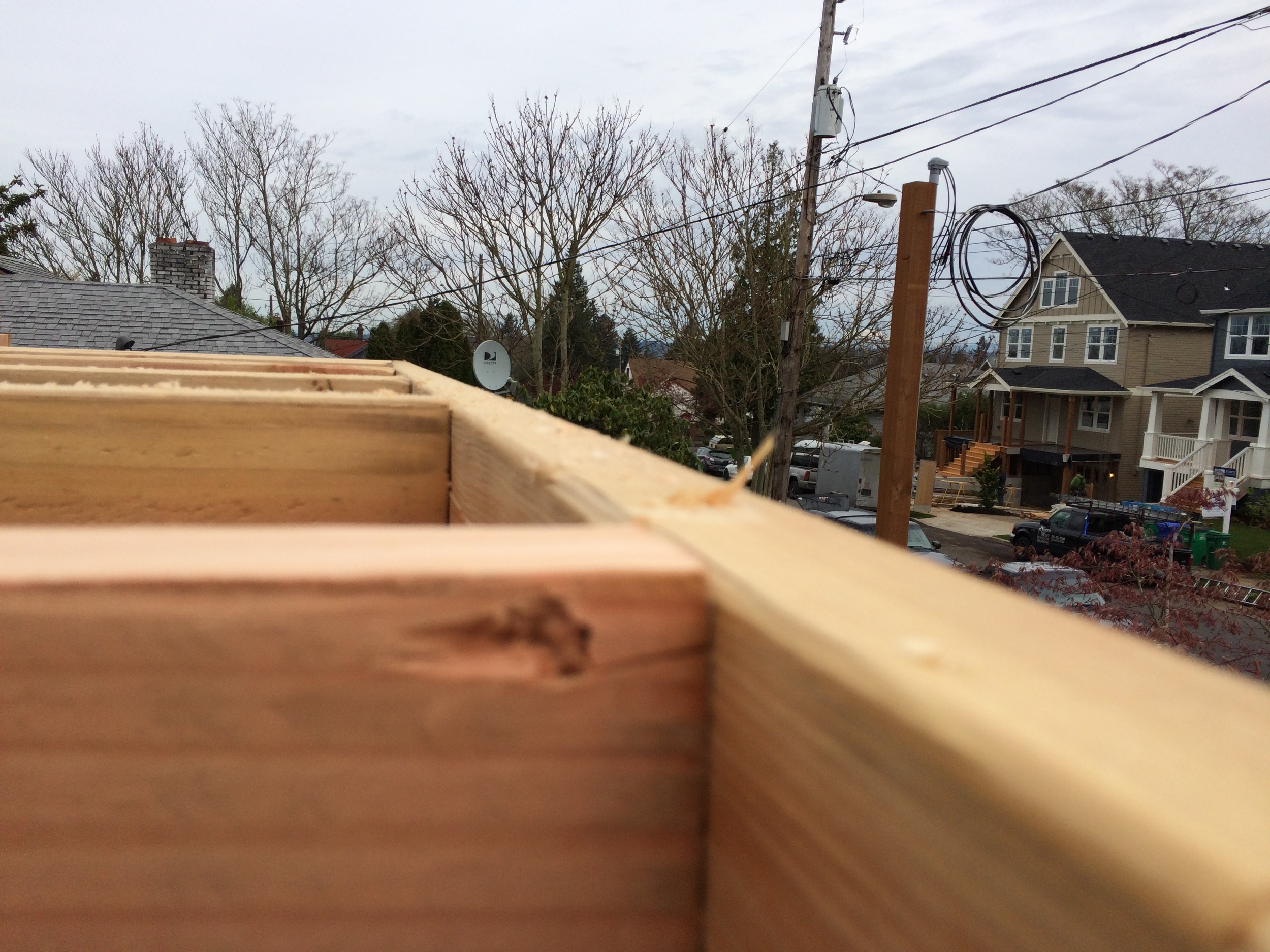
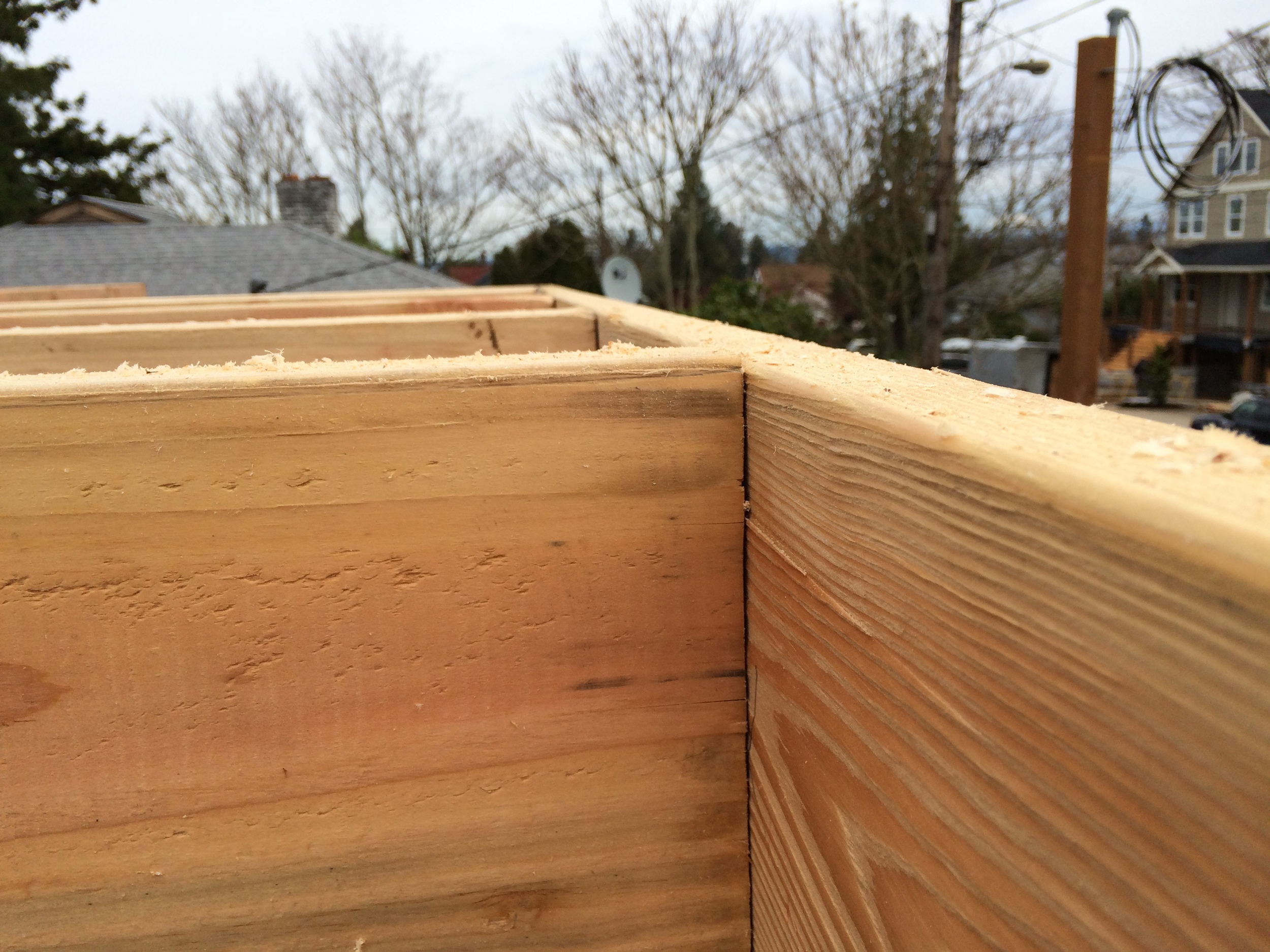
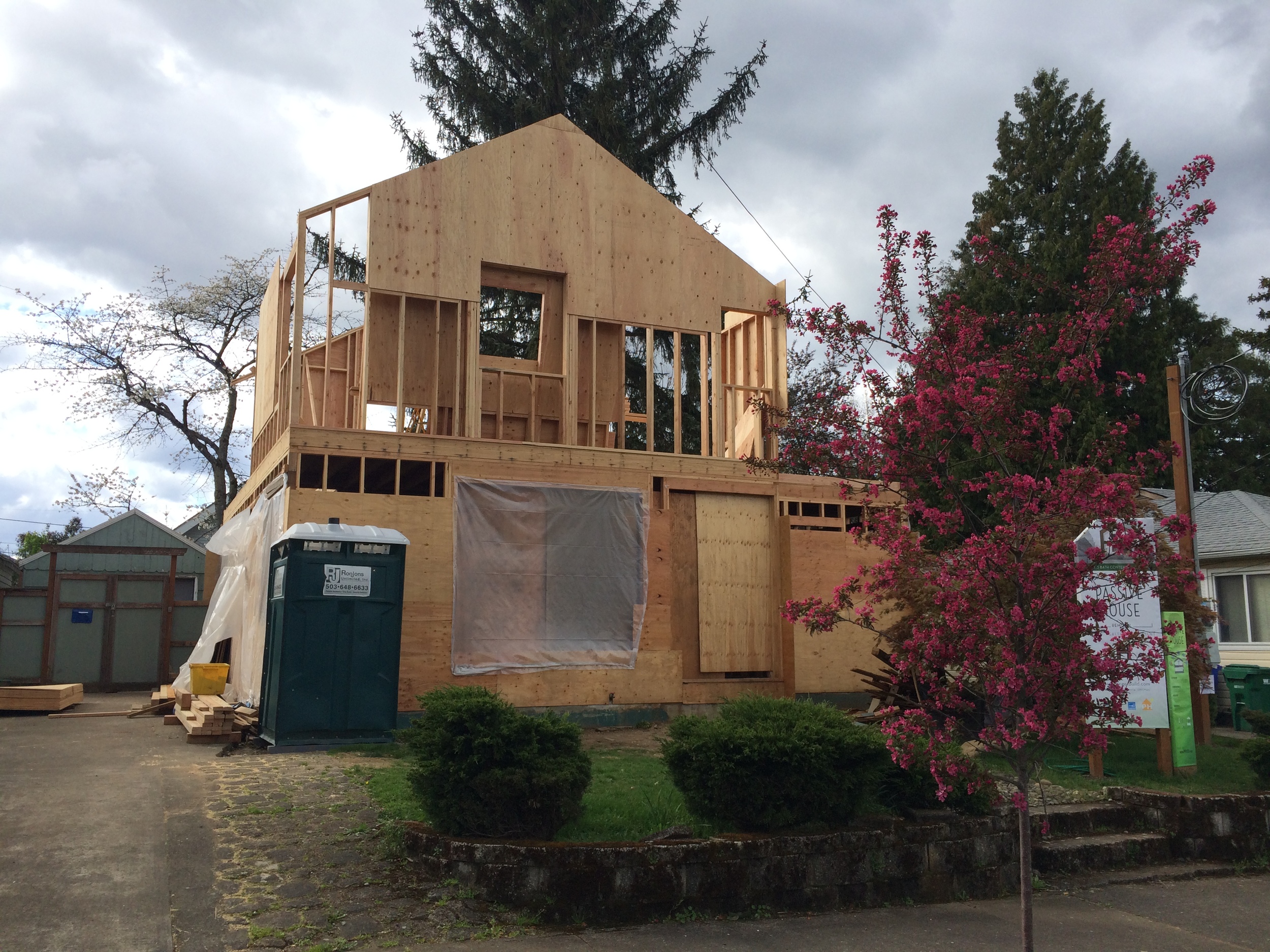
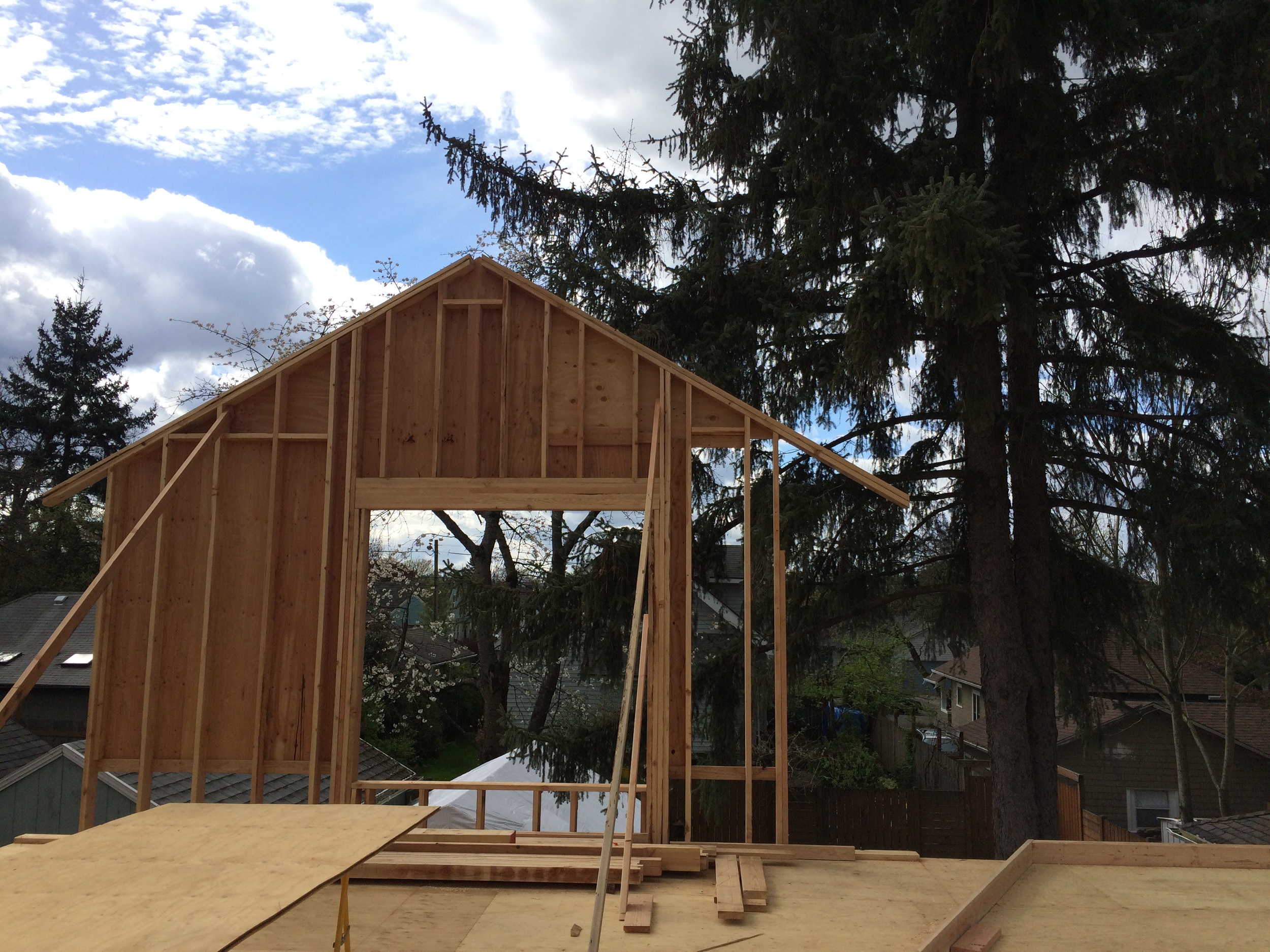
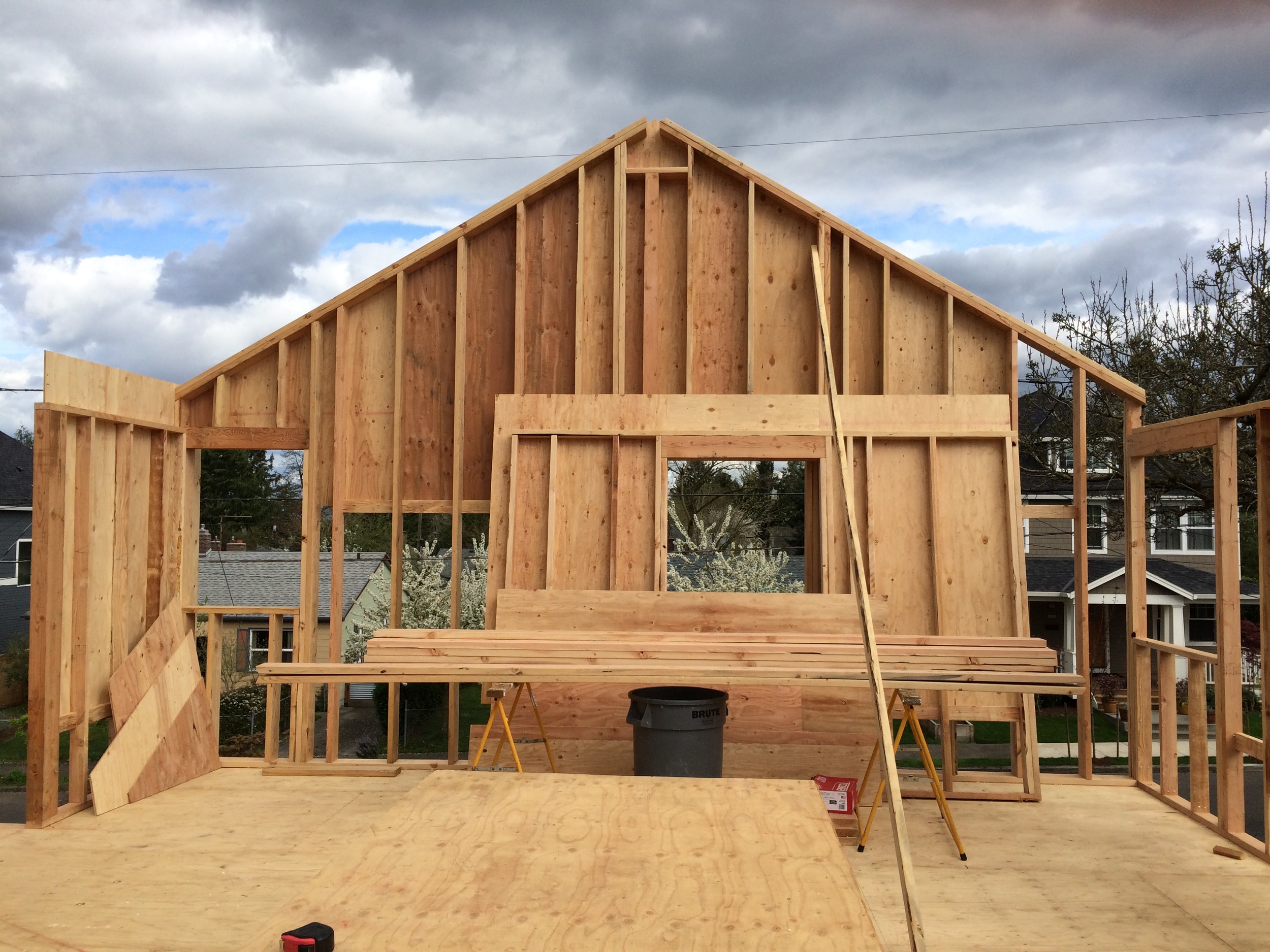
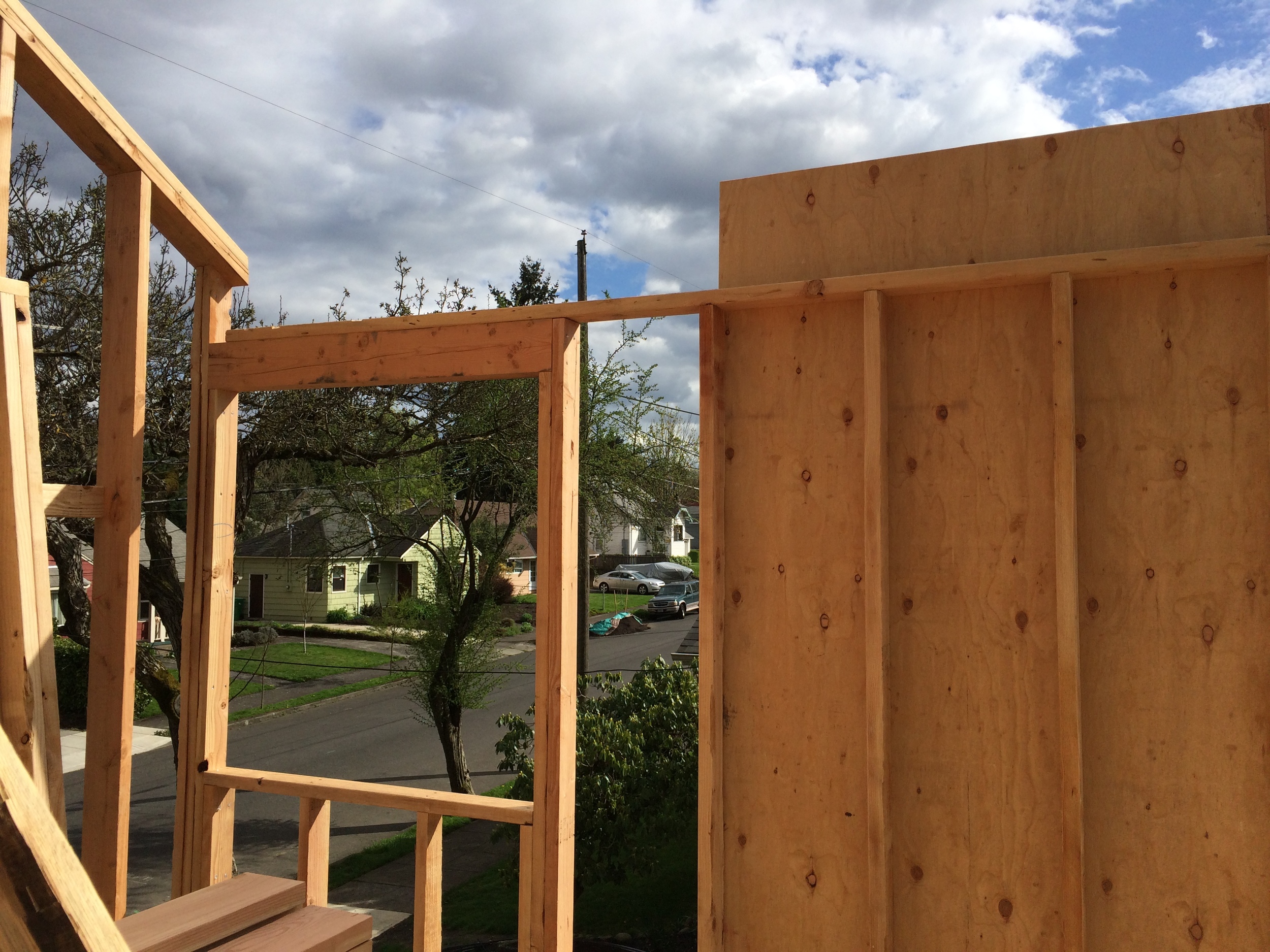
For the second floor framing, we built a dead flat, mostly square (as we can get with this age a home) floor for the framing to sit on.
Since we are not production framers, we called on our good friend Sparks Baughman Construction to help us out.
They did a really great job and we thank them for their help on the framing of the second floor and the many roofs this home has.
First Floor Framing...


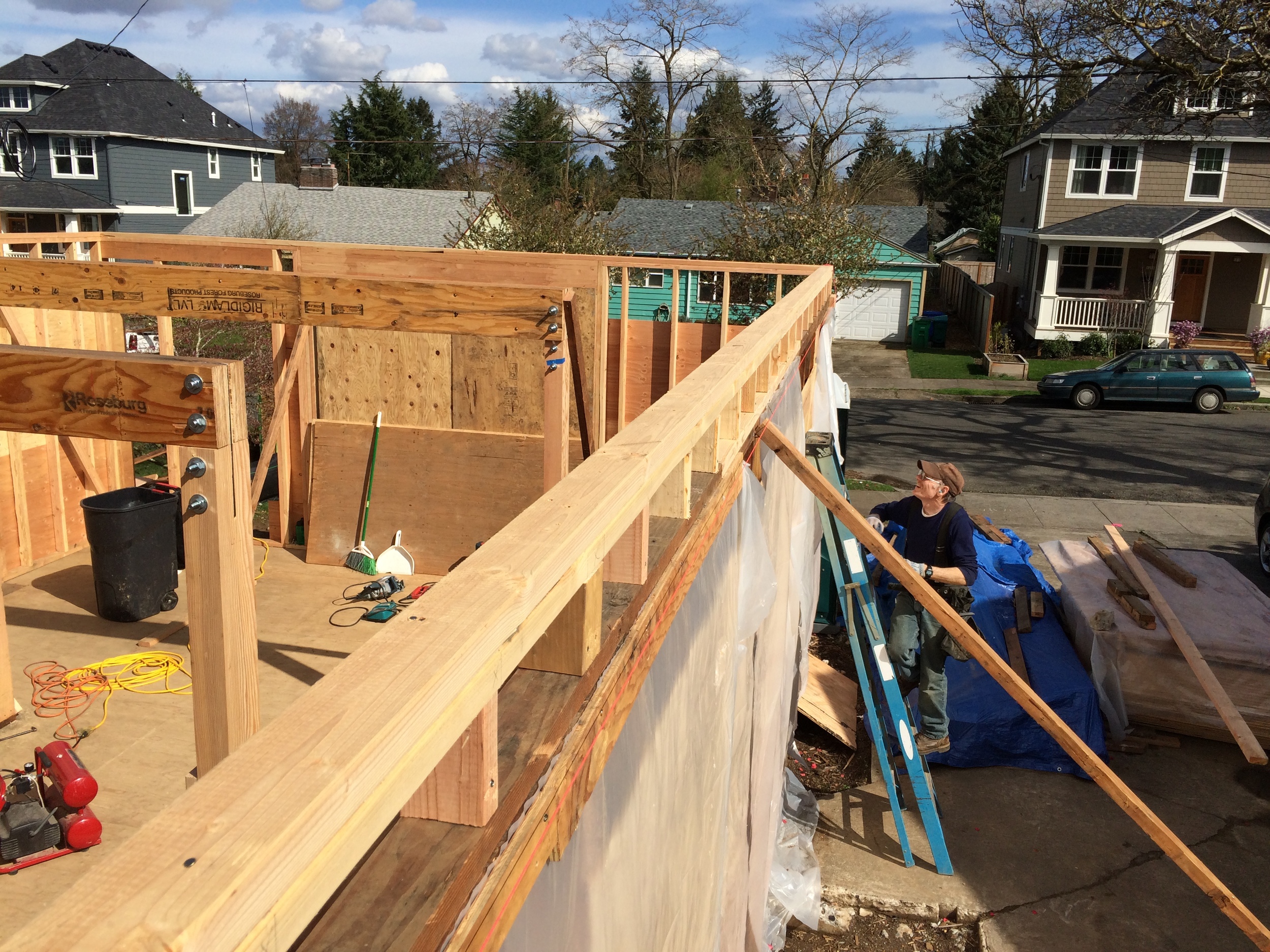

The first floor framing was a challenge to say the least!
We wanted to save as much of the existing home as we could, but as we opened it up, we realized that much of the framing was subpar, and there were several areas where rot had gotten to the wood members or the wood was just not in good shape from decades of hot/cold & wet/dry cycles. It was dirty from the intrusion through the bad sheathing, it was brittle from being heated and cooled so much, and it was an odd size that varied quite a bit even amongst itself.
In the end, we saved a lot less of the home than we had hoped to, and spent a lot more time saving the parts we did than we probably should have (certainly more than we budgeted for!). All the corners were out of plumb, and had to be taken apart and reattached. All the heights were off so much and we decided we were doing so much work that we might as well add a few inches to the ceiling height of the first floor. Kind of a bonus, but a lot of work!
We love older homes, and we love saving them as much as we can. But, some days we had a really tough time making choices of what to keep and when to recycle it.
The Chimney!,,,


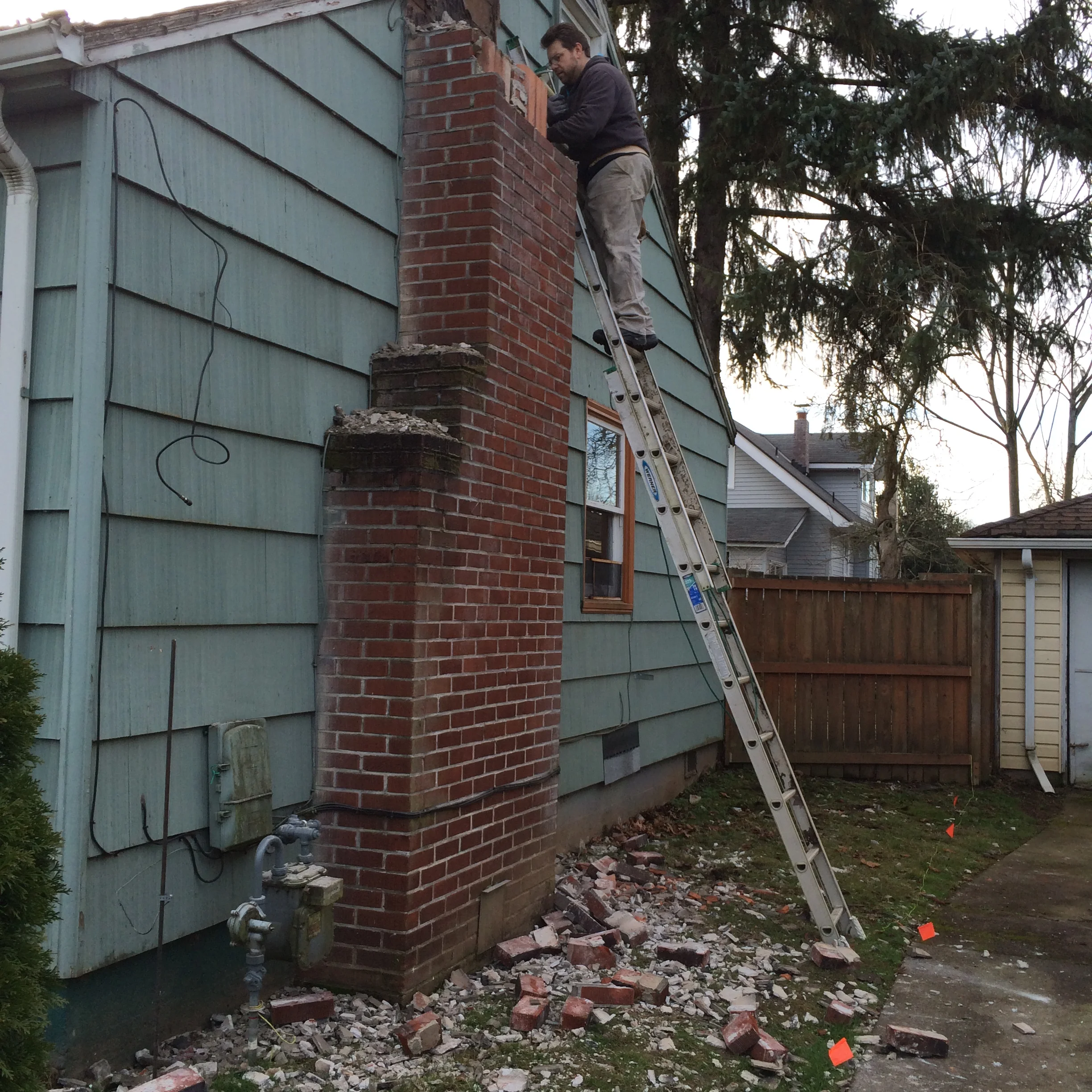


One of the more controversial issues with a Passive House is that chimneys are not really allowed. At least not masonry chimneys that span from the inside to the outside. That is exactly what we had, and it had to go...sniff.
The issue here is that the masonry is a really great thermal bridge to the outside. If you have a masonry fireplace, put your hand on the block some chilly night and see how cold it is. We have these things in order to heat our homes supposedly, but since the invention of central heating in the mid 20th century, they are more decorative and very seldom used. There are also air quality issues, maintenance issues, and other things as well that make them a bad idea...however everyone has to admit
“Fire is Awesome!”
We love fire! Who doesn't?! Communists that's who! So it was really hard to take down our fireplace chimney. Actually it was quite physically easy — another reason to not have a giantpile of sort-of-held-together bricks attached to the side of your house.
We think you should have fire at your house...but outside...in a fire pit. If you must have the ambiance of fire indoors, consider an ethanol unit. Portable options = fire without the mess.
Materials Matter...


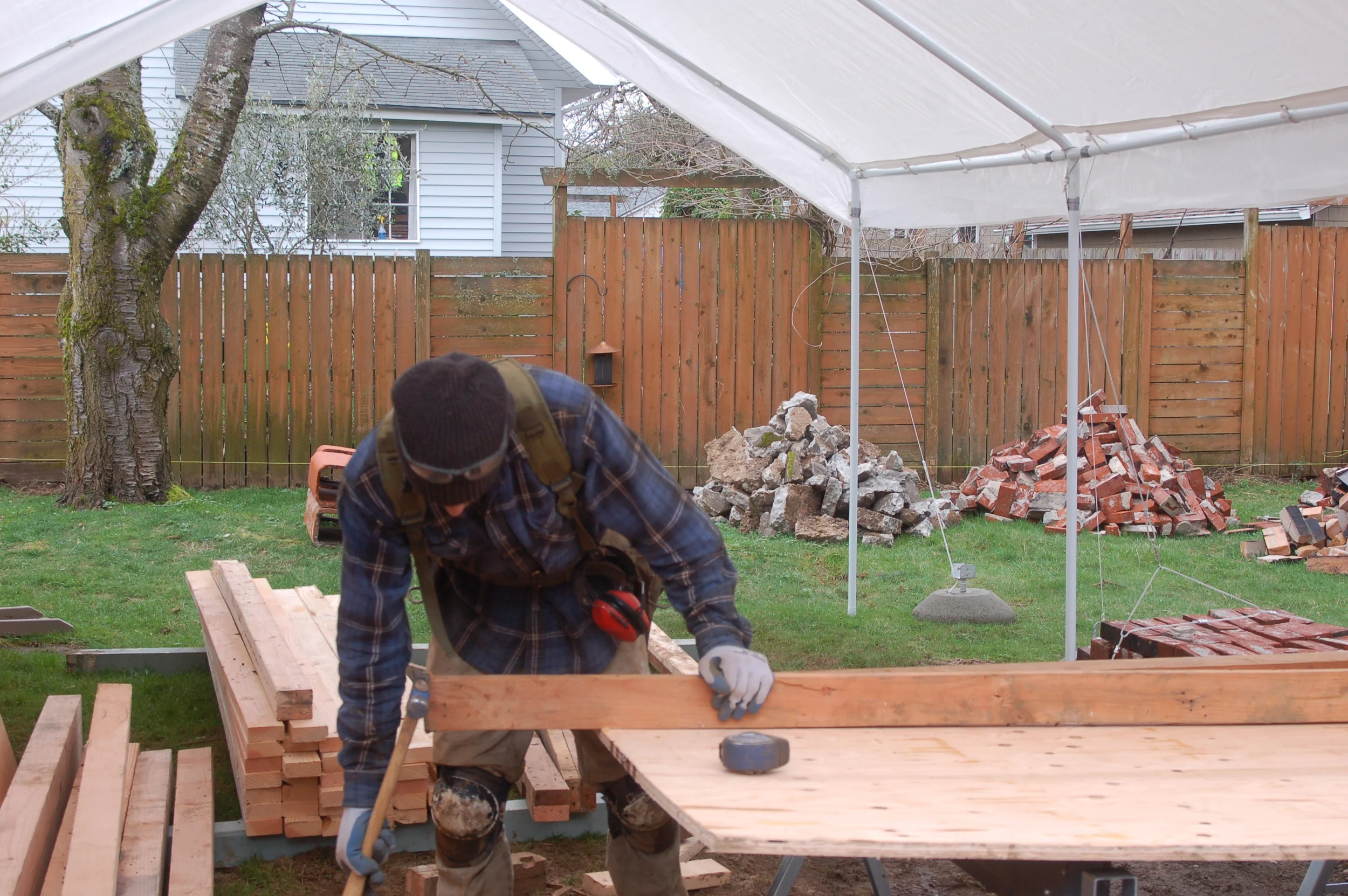

We save as much of an existing home as we can...Sometimes to a fault!
Not sure how we are going to use most of these bricks, or rocks from this site, but we would rather keep them around while we figure that out.
We carefully pulled all the rabbeted fir sheathing off the house so we can get new FSC certified plywood directly onto the studs for the full shear value. This gave us a stockpile of wood that we will clean, seal, and use as accent walls in the new home.
Other builders might not take the time to do this, but we like the idea of having connections from the old home to the new one.
Oregon Mills are Amazing!...

Did you know that we live in a temperate rain forest? Seems like a pretty good place to get material from.
We strive for reducing our carbon footprint in all aspects of our business.
Since we live in a temperate rain forest it only makes sense to know that our wood materials are coming from close by.

We use a lot of wood to build our homes. It is the best material out there for building, and even larger structures are now being built with engineered wood products. When managed correctly, it is a great renewable resource, and Oregon has a lot of it!
Because of this we try as best we can to buy all FSC certified wood harvested responsibly from Oregon forests. We have relationships with distributors in the area that deal with only FSC certified products & local lumber mills that grow responsibly.
The Forest Stewardship Council is a not-for profit organization that sets standards for responsible forest management. A voluntary program, the FSC uses the power of the marketplace to protect forests for future generations.
This often doesn’t cost anything extra, and can even save money if you know where to look. The payback of keeping our forests managed correctly & our hard-earned greenbacks in the region though is priceless!
On top of buying the greenest wood we can, we also reuse as much of the wood on site as we can. We are reusing the old sheathing we removed as finish trim and accent wall finishes inside the home. At Hinge, we feel it is our responsibility to do all we can to protect the forests we have grown up loving so that they as large & healthy for our grandkids as they were for us.
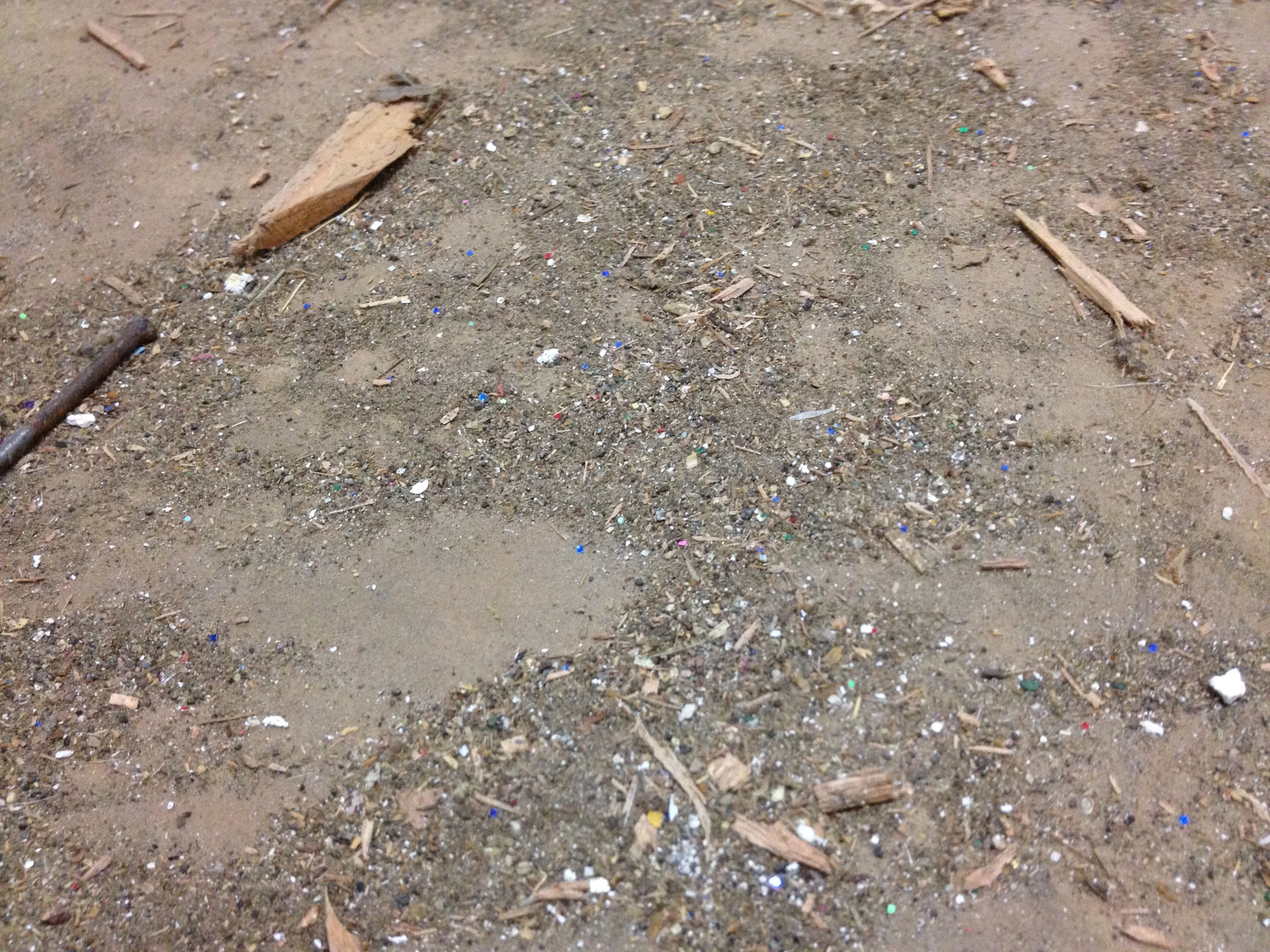
Demo- Lavender Perfume & Glitter....

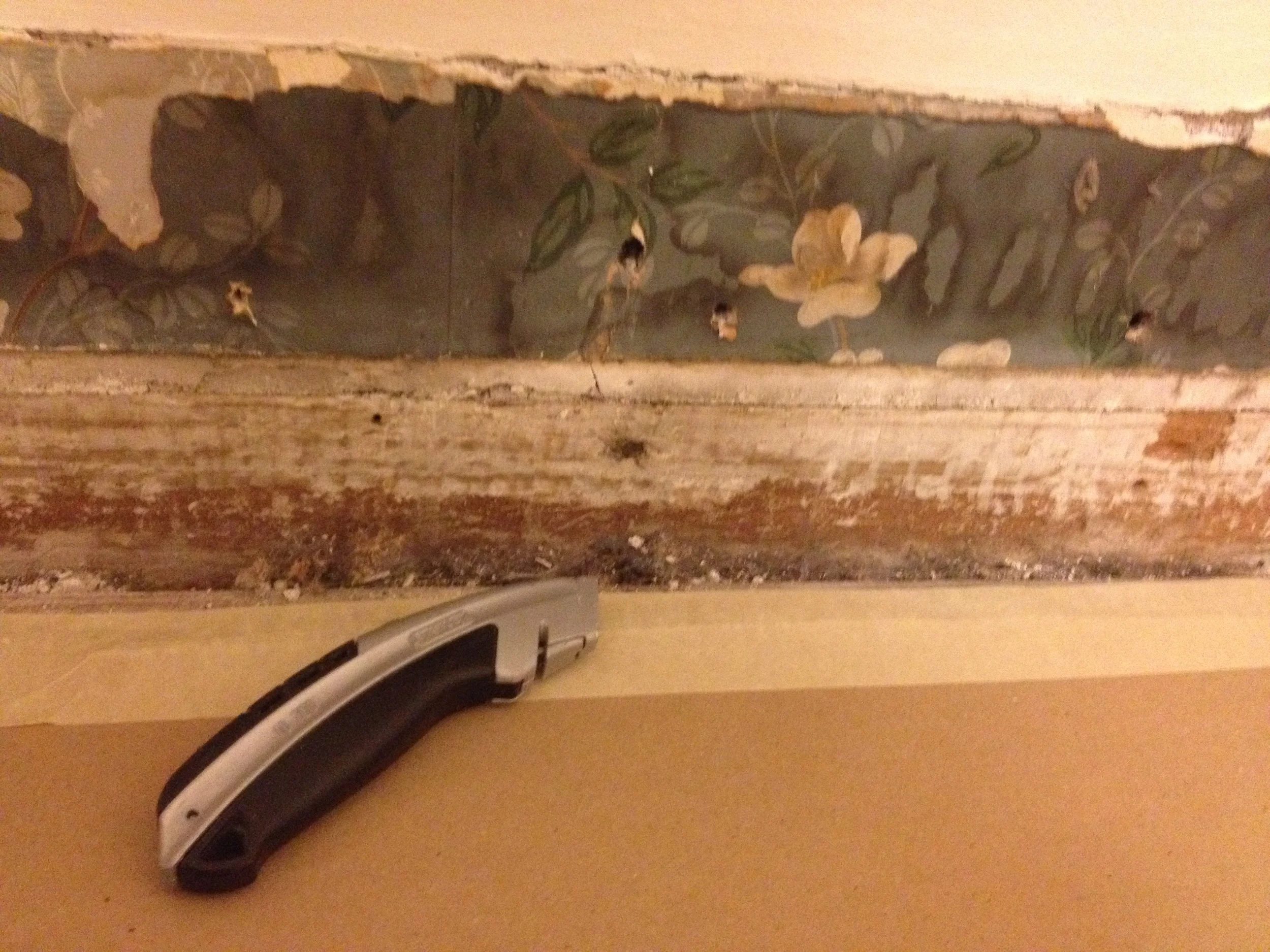


When you physically take apart a place that has been someone's home for half a century, things get discovered.
Here, as we were taking up the solid White oak floor in the bedroom, we realized a few things.
First there was the GLITTER! A lot of glitter! I remember having a conversation with another architect friend about how clean he thought wood floors were compared to carpet because carpet held in all this 'stuff'. Had to chuckle when we found a lot of STUFF, under this floor.
Also, there was a distinct scent in the air. Between the crew, we decided it would best be described as "English Lavender Perfume". Scents are powerful things, and you can't help but think of the person or people that are associated with them. We all had certain people that it reminded us of; grandmother, aunt, old girlfriend? We think it is important to remember that the places we build hold memories, and impressions of lives that live there.
We hope that they enjoyed the home very much. I know I did when I lived there, and I can only hope that the new home we are building on this spot will house future good memories!
The Crawl Space...


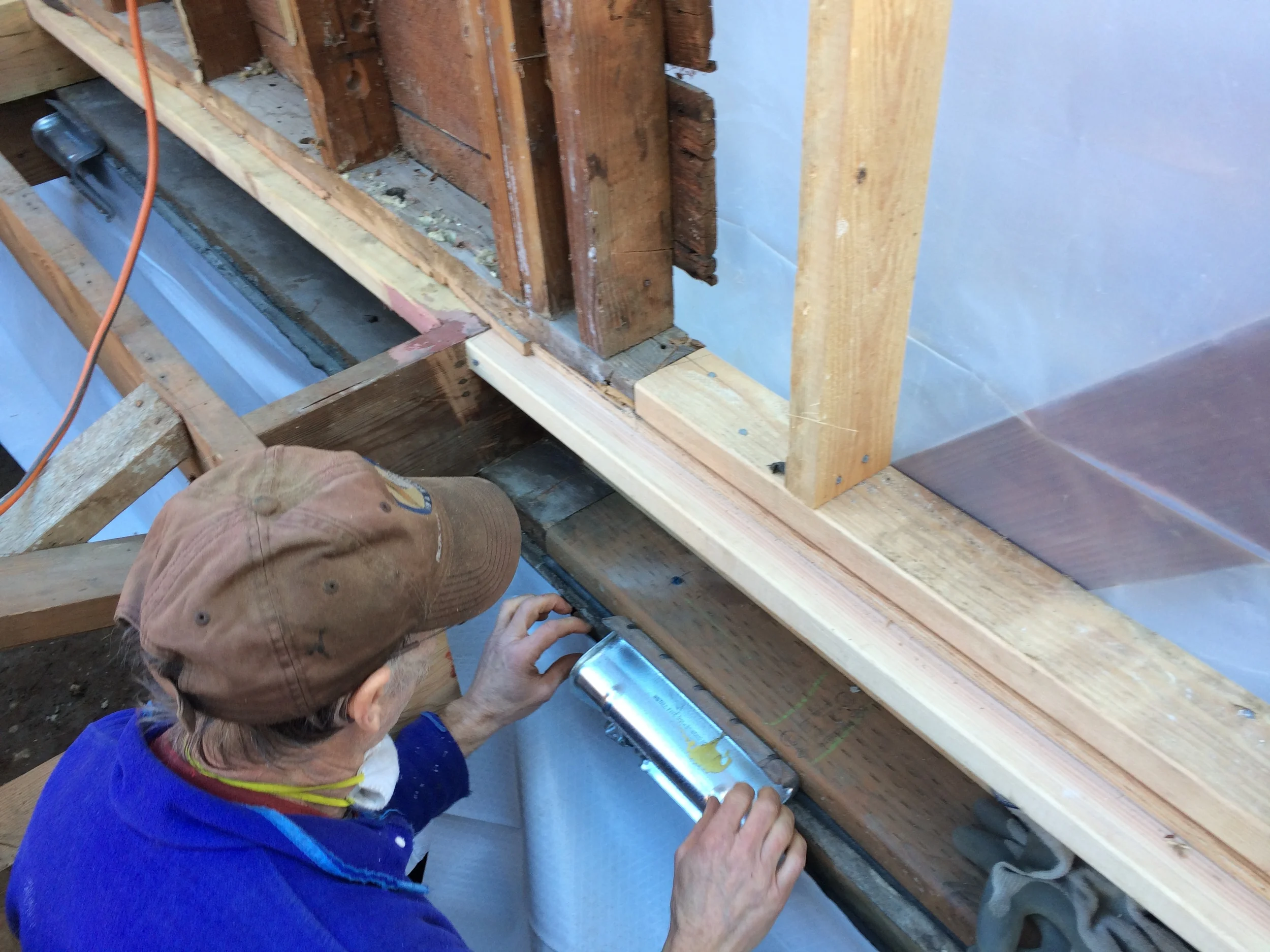

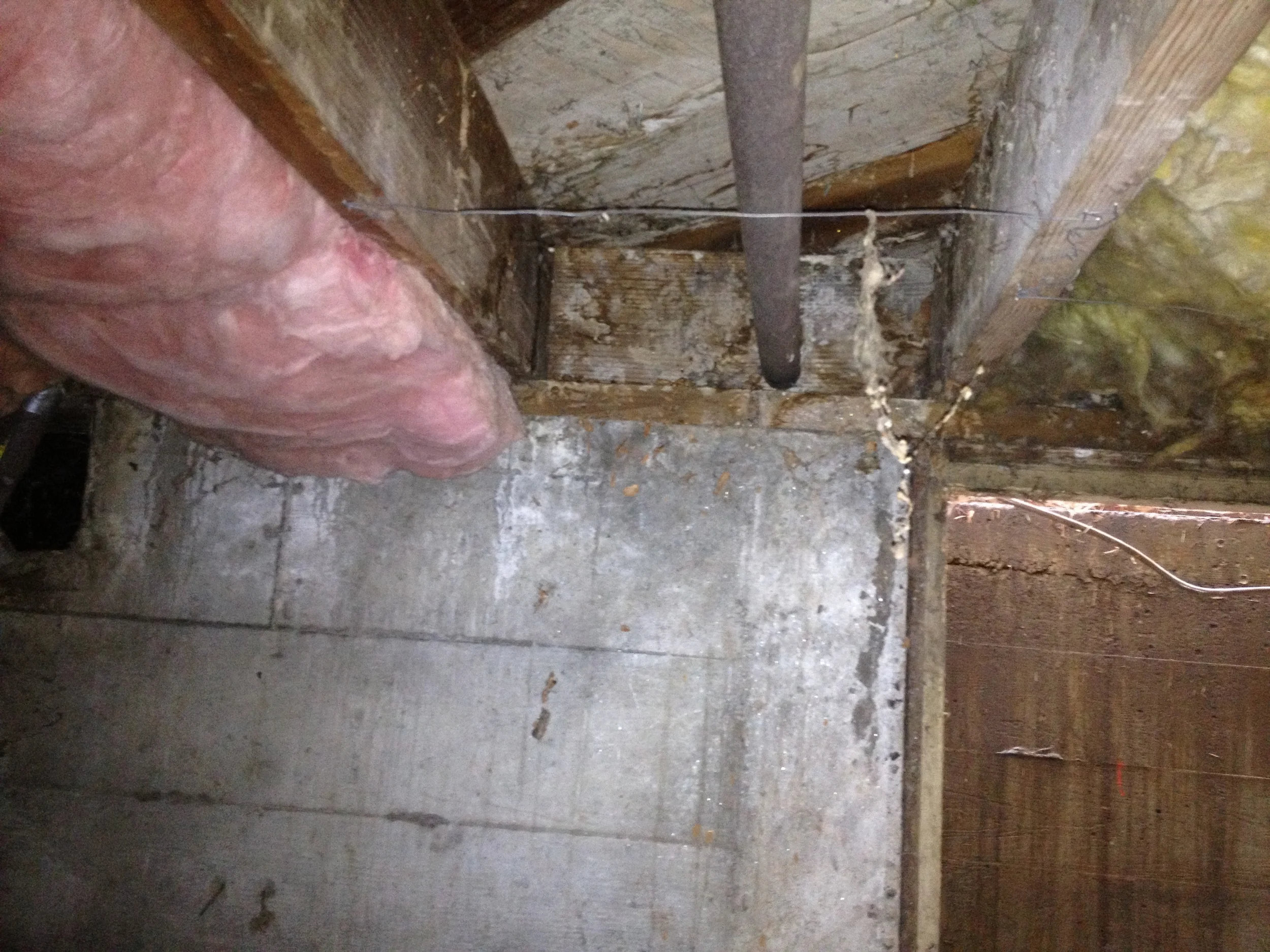
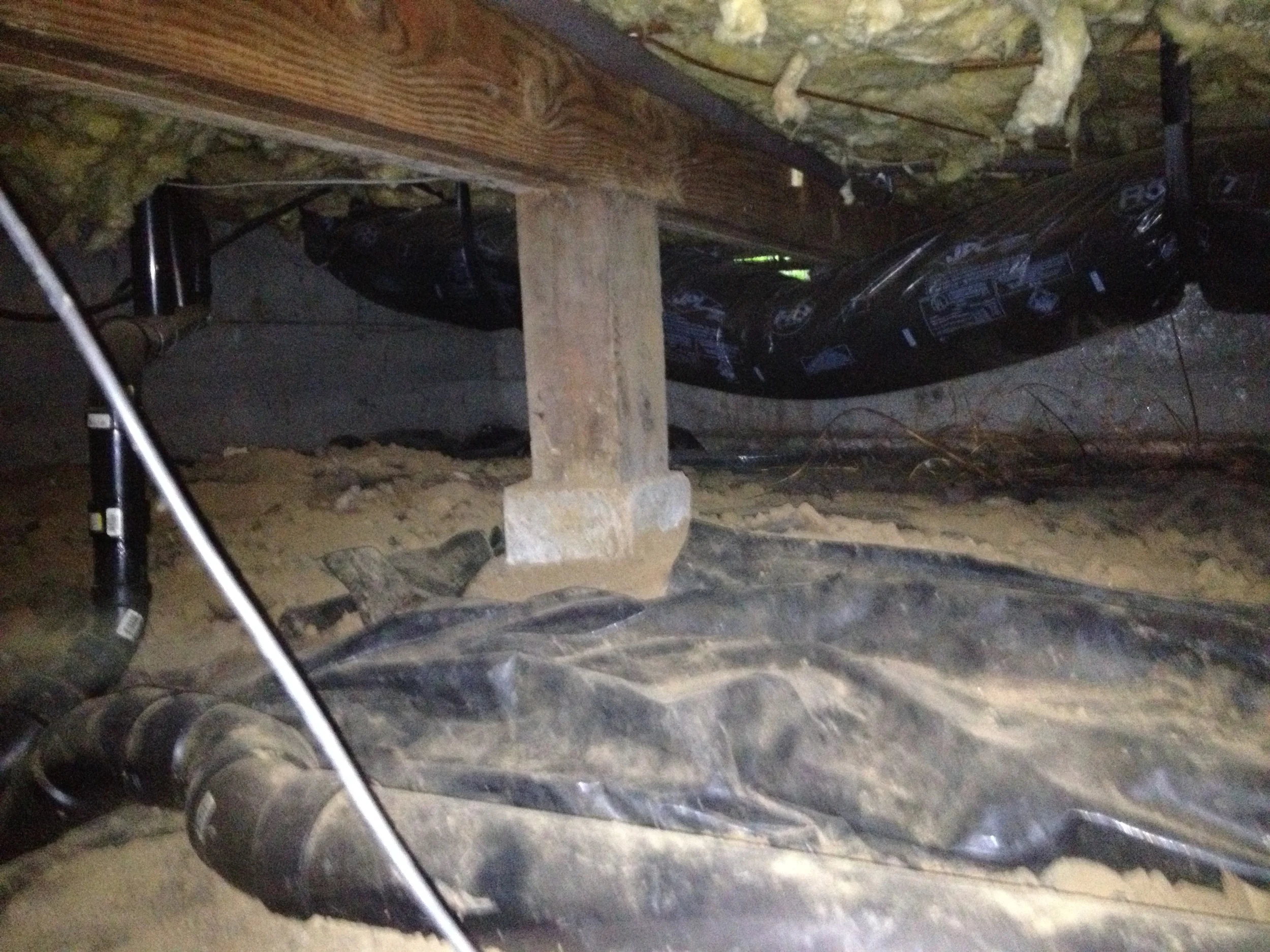

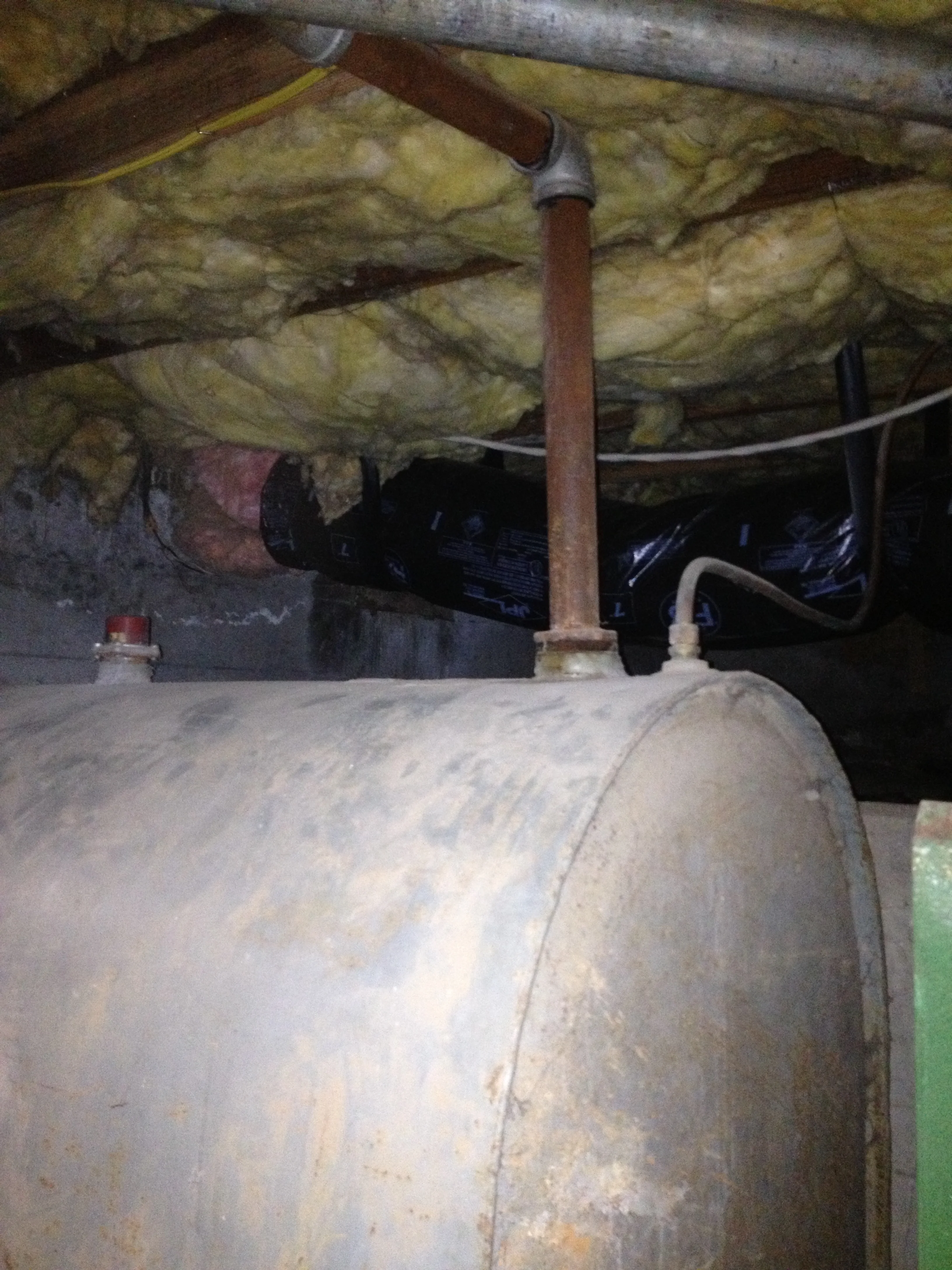
The crawl space originally was such a huge mess!
The thin black plastic was not installed well to begin with, some of the neighborhood animals had gotten in there we think (the smell was NOT good), and water, and dirt made the space quite gross. We were very glad that we had decided to replace much of hte brocken and cracked rabbeted floor boards with plywood instead.
Once the subfloor was open it was far easier to remove the old plastic, add the new foundation elements needed (lots of them!), and install a new vapor barrier.
The new barrier is a 12mil, fiberglass mesh reinforced, multi-ply membrane that is taped at all the seams. It runs up the sides of the concrete stem walls in order to keep the moisture at a minimum in the crawl.
Not only does this make for a cleaner crawl space, but also a cleaner living space, and a place to potentially store some items. The original home had an above ground oil tank that we removed, and there is a nice concrete slab area in the center of the house.... perfect for some wine racks, maybe??
PERMIT!...Finally!.....

I have to admit that we were a bit naive on the time it would take to get this job permitted. Too many times we had been able to talk/convince our way to an over-the-counter, same day permit & this good fortune led us to think that we could expedite the permitting process on this job as well. In our defense, we were told by a city official that reviewed a draft of our plans that we may be looking at only a 7 day wait for a full permit….that did not happen!
However!…After waiting for OVER 2 MONTHS to clear the permitting process (for no particular reason BTW), we finally received the full permit from the city and have been moving ahead with the project at a MUCH faster pace!
It both helps and hinders us to be doing a major remodel instead of the more typical full tear down approach. Taking a building apart piece by piece, and reusing material when you can, slows things down a bit, but we think it is worth it in the end.
Full Speed Ahead!